Etiqueta: 2018

  • 60 Segundos de Oscuridad

    60 Segundos de Oscuridad

    60 seconds of darkness


    Technical Info / Información Técnica:

    (2018) / 00:04:38 / HD 1920×1080 / 2D / 25 fps / PAL / 16:9 / Color / Sound: Stereo / Argentina


    Short Synopsis / Sinopsis Corta:

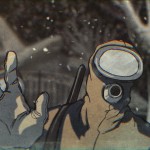
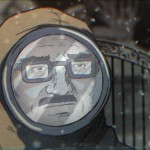
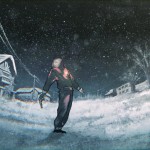
    A mysterious snowfall, a city visited by Death. Desperation looms over the city as an excruciating situation gives birth to madness.


    Una nevada misteriosa, una ciudad visitada por la Muerte. La locura y los límites de lo soportable traen sus consecuencias de la mano de la desesperación.


    Logline:

    Based on «El Eternauta» a classics science-fiction comic from Argentina. In an apocalyptic world where humanity is the victim of a deadly snowfall, two residents of Buenos Aires fighting against adversity, go out into the street to explore a city that used to be a part of their calm everyday life but now has turned into a dangerous and hostile place.


    Basada en la historieta clásica de la ciencia ficción Argentina «El Eternauta». En un mundo apocalíptico donde la humanidad es víctima de una nevada mortal, dos vecinos de los suburbios de Buenos Aires, adaptándose a lo extraordinario, salen a la calle a explorar un terreno que antes era cotidiano, ahora convertido en peligro y hostilidad.


    LongSynopsis / Sinopsis Larga:

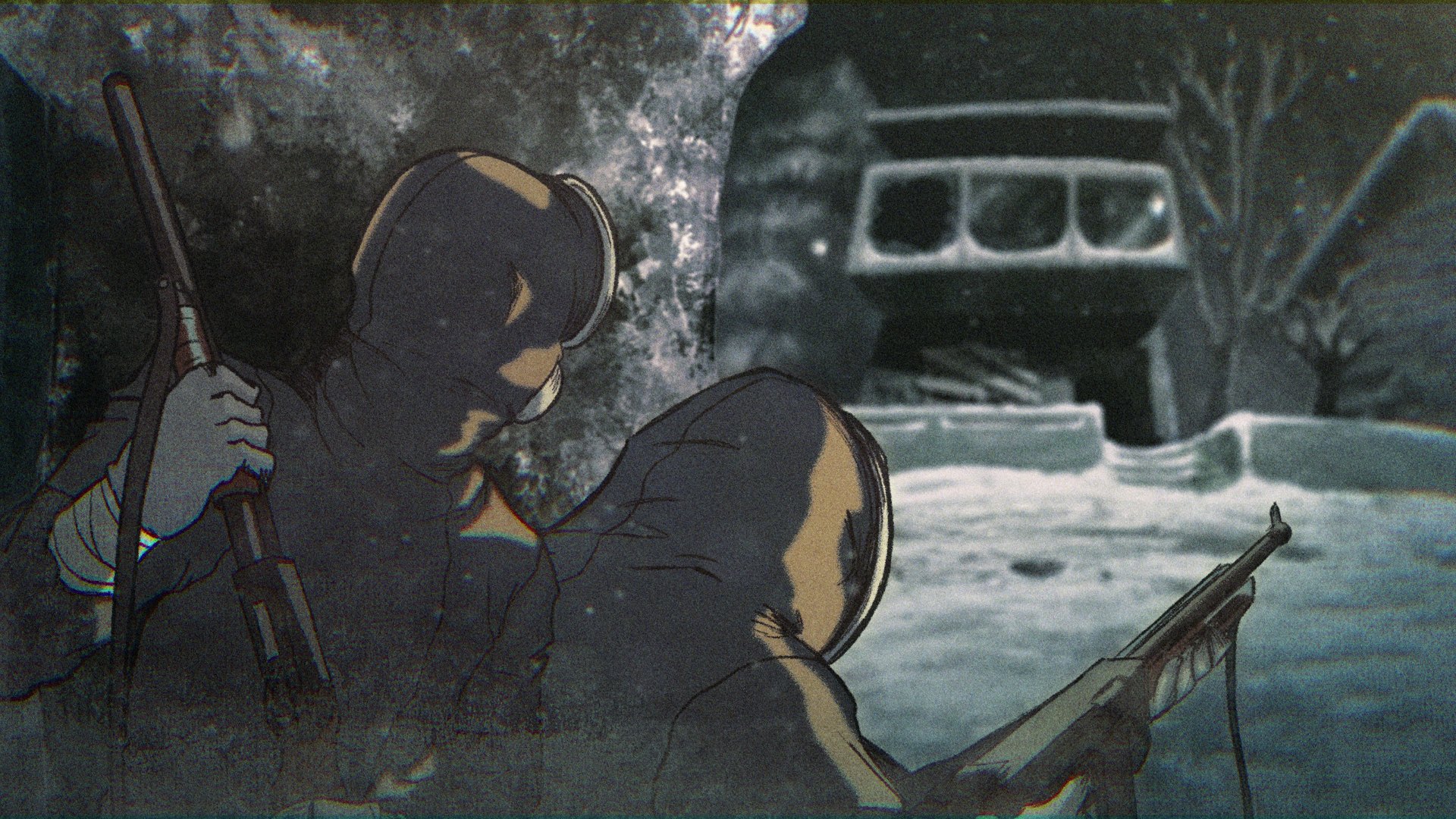
    A mysterious snowfall covers a quiet and destroyed city of Buenos Aires during the 50s. Two men, armed and wearing diving suits to protect them from the snow, observe how the situation leads a distressed man, who wears an insulation suit made up of bags of waste, to despair.

    Desperation looms over Buenos Aires as an excruciating situation gives birth to madness. The city, and maybe the whole world, was going insane.


    Una nevada misteriosa cubre una callada y destruida ciudad de Buenos Aires de los años 50. Dos hombres armados y aislados del exterior por sus trajes de buzo, observan como la situación lleva al extremo a un pobre hombre que tiene apenas logrado un traje aislante con bolsas de residuos. La locura, los límites de lo soportable, traen sus consecuencias de la mano de la desesperación, y la consecuente comprensión de lo abismal de aquella situación que toda la ciudad, y quizás el mundo entero, estaban atravesando.


    Director´s Biography / Biografía del Director:

    PABLO CONDE

    www.condepablo.com

    During the years 2004 and 2005 he was a student of Mariano Navarro in the EAH (Escuela Argentina de Comic). In 2005 he made the animated series «El Gaucho Zoilo» which he later edited on DVD along with animated short films. During 2006 and 2007 he studied «Image and sound design» at the University of Buenos Aires. In 2008, he took an advanced course in After Effects on the Image Campus and studied «Animation film production» at the Institute of Cinematographic Art of Avellaneda. In 2009 he did an editing course in the Da Vinci, participated and won the «Project I7» of Intel with the short film «Black Cloud» in the category «Video Editing (short film)». During 2008 and 2010 he studied traditional animation in «Club Cartun» under the teachings of Professor Claudio Briasco and Javier Tedin. In the middle of 2009, he started working as a post producer in a post-production company (Barraca Post), doing animation work, editing and post-production of video. As of 2012, he works as animator, animation director, illustrator and post producer freelance. In 2012 he finished the animated short film «Adelante (Forward)». In that same year participates in the third contest of national cartoon of Argentina «Francisco Solano López» with the script of the play «The Hunter of Nightmares». In 2013 he won the second prize in the annual competition of the legislature of Buenos Aires with the comic «Falta Envido». In 2017 he won the second prize in the sixth edition of «I saw you» organized by young Amia with the animated video clip «Surf» by the band Etc. That same year he finished «60 Segundos de Oscuridad», a short animated tribute to the comic «The Eternauta». In 2017 he held a theater workshop at the school of Lito Cruz. In 2018 he made a character and color design course with the artist Amelia Vidal. Actually, he is working on an animated series project, in the pre-production and script stage.


    Durante los años 2004 y 2005 fue alumno de Mariano Navarro en la EAH (Escuela Argentina de Historieta). En el 2005 realizó la serie animada «El Gaucho Zoilo» la cual más adelante editó en dvd junto a cortometrajes animados. Durante el 2006 y 2007 estudió «Diseño de imagen y sonido» en la UBA. En el 2008 realizó un curso avanzado de After effects en la Image Campus y estudió «Producción de cine de animación» en el IDAC. En el 2009 realizó un curso de edición en la Da Vinci, participó y ganó el concurso «Proyecto I7» de Intel con el cortometraje «Nube Negra» en la categoría «Edición de Video». Durante el 2008 y 2010 estudió animación tradicional en «Club Cartun» bajo las enseñanzas del profesor Claudio Briasco y Javier Tedin. A mediados del 2009 ingresó a trabajar como post productor en una post productora de publicidad (Barraca Post), realizando trabajos de animación, edición y post producción de video. A partir del 2012 trabaja como animador, director de animación, ilustrador y post productor free lance. En el 2012 termina el cortometraje animado «Adelante (Forward)». En ese mismo año participa del 3er concurso de historieta nacional de Argentina «Francisco Solano López» con el guión de la obra «El Cazador de Pesadillas». En el 2013 gana el 2do premio en la competencia anual de la legislatura de Buenos Aires con el comic «Falta Envido». En el 2017 gana el 2do premio en la 6ta edición de «yo te vi» organizado por Amia Joven con el videoclip animado «Surf» de la banda Niño Etc. En el 2017 comienza el taller de teatro en la escuela de Lito Cruz. En 2018 termina «60 Segundos de Oscuridad», cortometraje animado homenaje al comic «El Eternauta». Actualmente se encuentra en pre producción de una serie animada.


    Director’s Statement / Declaraciones del Director:

    From the first moment I read the comic «El Eternauta» I felt the urge to do an animated version of it. I thought that traditional 2d animation would be the most appropriate format to adapt it (even better than actors, stop-motion, 3D animation or any other technique). Following this concept, I strived for a characters designs, backgrounds and narrative that would be as faithful as possible to the original work so that when people watched, they’d say: «this is how I imagined the comic in motion». I contacted many artists who, driven only by their love for art (since there was no funding from any sponsor) gave their utmost dedication and time to reach the same goal.


    Desde el primer momento en que leí la historieta «El Eternauta» sentí el llamado a hacer algo animado sobre ella. Creía que la animación tradicional en 2D sería el formato más adecuado para adaptarla (más que con actores, Stop Motion, 3D o cualquier otra técnica). Bajo este concepto, apunté a un diseño de personajes, de fondos y narrativa que sean fieles a la obra, para que cuando alguien lo viera dijera «así es cómo me imaginaba la obra en movimiento». Fui contactando artistas que por el amor al arte (puesto que no hubo financiación para la realización de la obra) dieron su tiempo y dedicación apuntando al mismo objetivo.


    Overview / Ficha técnica:

    Script / Guión: Pablo Conde


    Producer / Producción: Pablo Conde, Javier Tedin, Mariano Suárez, Javier Domenichini

    Director / Director: Pablo Conde

    Director Assistant / Asistente de Director: Javier Tedin

    Storyboard & Animatic: Pablo Conde

    Layouts: Pablo Conde, Javier Tedin, Javi Domenichini

    Animation / Animación: Javi Domenichini, Pablo Conde, Javier Tedin, Mariano Suárez

    Clean Up & color: Pablo Conde

    Concept Art: Pablo Conde, Agustín Huberty, Damián Escobar

    Adaptation and Character Design / Adaptación y diseño de personajes: Javier Domenichini, Pablo Conde, Javier Tedin

    Escenarios (boceto y plantado): Damián Escobar, Pablo Ontivero, Diego Ferrer

    Escenarios (color y clean up): Diego Ferrer

    Post producción, efectos y color: Pablo Conde

    Sonido: Pablo Conde

    Mezcla y Mastering: Damián Helmer

    Dirección de actores de voz: Jorge Gabriel Riveros López, Pablo Conde

    Actores de Voz (grabados en «Boyacá» estudio): Javier Gómez (el Eternauta), Adrián Wowczuck (el Loco)

    Canción «Caminito»  compuesta por Juan de Dios Filiberto (música) y  Gabino Coria Peñaloza (letra) en 1926, interpretada por Carlos Gardel.

    Arreglo y partitura (adaptación «Caminito»): Diego Maniowicz

    Bandoneón: Diego Maniowicz

    Piano: Julián Corach

    Grabado en «Libres» estudio de grabación y mezcla de audio (por Juan Valente)

    Mezclado en «Boyacá» estudio (por Juan Valente y Federico Santa Ana)

    Mastering en «Verbo Films» estudio (por Fernando Conde)


    Festivals, Awards and Nominations / Festivales, Premios y Nominaciones:

    – Anima Latina, Latin American Animation Film Festival; 06/2018; Argentina


    Links:

    Web: http://www.condepablo.com/animaciones_cortos.html#60Segundos


    Contact / Contacto:

    Gisela Chicolino

    FilmsToFestivals Distribution Agency
    info@filmstofestivals.com


  • Aquel Verano Sin Hogar

    Aquel Verano Sin Hogar

    That summer without a home


    – Technical Info / Información Técnica:

    (2018) / 00:09:14 / ratio 16/9 / COLOR / SOUND: Stereo / Camera: Canon 518 – Super 8mm / Lentes  C-8 / 24 FPS / 2k / 2048 x 1080 / Argentina / Documentary, Fiction


    Storyline:

    A summer away from home. The afternoons at the cemetery. Storm and destruction.


    Un verano lejos de casa. Las tardes en el cementerio. La tormenta y la destrucción.


    Short Synopsis / Sinopsis Corta:

    Michel wanders through the fields surrounding the town. Kill time by driving your motorcycle on dirt roads. Night falls in the old cemetery and the boys swim among the dead. It’s a summer away from home. The storm and the destruction reign.


    Michel deambula por los campos aledaños al pueblo. Mata el tiempo conduciendo su motocicleta por caminos de tierra. Anochece en el viejo cementerio y los chicos nadan entre los muertos. Es un verano lejos de casa. Reinan la tormenta y la destrucción.


    – Director´s Biography / Biografía del Director:

    SANTIAGO REALE

    https://santiagoreale.com

    Santiago Reale (1988, Casbas, Argentina). Holds a degree in audio-visual arts from the National University of La Plata. Studied film critic at the Federico Fellini Institute. Reale directed the short film “This is my jungle” (FICIC & FICUNAM: Best Short Film Award). He is currently developing his first feature film “La noche es de los animales”, produced by Juan Schnitman and Paolo Donizetti of Los Salvajes Cine.


    Santiago Reale. Casbas 1988. Es guionista y director. Es Licenciado en Artes Audiovisuales por la Universidad Nacional de La Plata. Realizó como director el cortometraje “Esta es mi selva” (Ficunam ‘15). En 2016 participó de Talent Campus BA. En 2017 resulto ganador de las becas Campus Arché + Hangar Lisboa + Márgenes Madrid. En 2018 su cortometraje “Aquel verano sin hogar” tuvo su estreno mundial en Doclisboa y obtuvo el premio a Mejor Cortometraje en el Festival Internacional de Cine de Mar del Plata. Trabajó como jurado de preselección en el Fondo Nacional de las Artes. Actualmente se encuentra desarrollando su ópera prima “La noche es de los animales” producida por Juan Schnitman, Paolo Donizetti, Paula Zyngierman y Roberto Doveris.


    Director’s Statement / Declaraciones del Director:

    Aquel verano sin hogar forma parte de una trilogía sobre Laguna Alsina. Un pequeño pueblo de la provincia de Buenos Aires rodeado de campo que sufre históricamente de inundaciones que afectan a la región. Mi relación con el lugar parte de haber vivido hasta los doce años en la zona y permanecer en contacto con diferentes jóvenes del pueblo. Conocí a Michel durante el rodaje de Esta es mi selva y seguimos en contacto durante años. En aquel momento él tenía once años y su vínculo con el pueblo me trasladaba al pasado. A mi infancia repleta de mitos y leyendas sobre la laguna. Aquel verano sin hogar parte de estas historias para reconstruir la memoria de un pueblo y de sus jóvenes. Pero mi intención es hablar desde el presente. Poder transformar la realidad a través de los cuerpos. Michel es un joven perdido en el campo, pero también es un lobo que por las noches recorre la laguna esperando la destrucción. Las historias del pasado regresan desde un lugar lejano, cerca del mar.


    – Overview / Ficha técnica:

    Script / Guión: Santiago Reale

    Producer / Productor: Juan Protto, Daniela Echeverri

    Executive Producer / Productor Ejecutivo: Santiago Reale

    Director / Director: Santiago Reale

    Director Assistant / Asistente de Dirección: Franco D´Alessandro

    DoP & Camera / Dirección de Fotografía y Cámara: Franco D´Alessandro

    First Assistant Camera / 1er Asistente Cámara: René Pérez

    Film Editor / Edición: Santiago Reale

    Sound design / Diseño de sonido: Santiago Reale

    Sound / Sonido: Joaco Caminos, Juan Protto

    Música / Music: Manque La Banca

    Cast / Elenco: Michel Fernández


    Festivals and Awards / Festivales, Premios y Nominaciones:

    – 16 Doclisboa, Int’l Documentary Film Festival; 10/2018; Portugal

    – 33 Mar del Plata International Film Festival (Best Short Film); 11/2018; Argentina

    – 3 GRABA, Festival Audiovisual; 03/2019; Argentina

    – 5 Pico Fest, Festival Nacional de Cine; 08/2019; Argentina

    – 67 Condor de Plata Award (Best Short Film); 08/2019; Argentina

    – 15 FestiFreak, Festival Internacional de Cine Independiente de La Plata; 09/2019; Argentina

    – 7 FIDBA, Festival Internacional de Cine Documental de Buenos Aires (Special Mention); 09/2019; Argentina

    – 26 Festival de Cine Latinoamericano de Rosario; 09/2019; Argentina

    – 2 FICMAI, Festival Internacional de Cine de Maipú (Best Short Film); 10/2019; Argentina

    – 17 Shnit Worldwide Short Film Festival; 10/2019; Argentina

    – 7 Festival Latinoamericano de Cortometrajes Cortópolis (Special Mention); 10/2019; Argentina

    – 35 Concurso Nacional de Cine Independiente de Cipolletti (Best Short Film); 11/2019; Argentina

    – 8 FECILBBA, Festival Latinoamericano de Cine Independiente de Bahía Blanca; 11/2019; Argentina

    – 6 Tlanchana Fest, Festival de Cine y Arte Digital; 08/2020; Mexico

    – 6 Bogotá Experimental Film Festival; 08/2020; Colombia

    – 5 FCEE, Festival de Cine Etnográfico de Ecuador; 09/2019; Ecuador


    Links:

    Trailer English Subtitles: https://vimeo.com/285876565

    Facebook: https://www.facebook.com/enelreinoproducciones/

    Instagram: https://www.instagram.com/enelreino/


    Contact / Contacto:

    Gisela Chicolino

    FilmsToFestivals Distribution Agency
    info@filmstofestivals.com


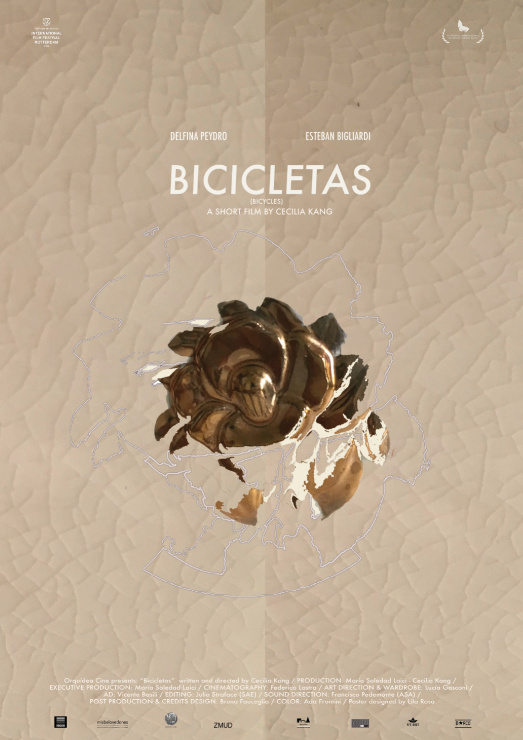
  • Bicicletas

    Bicicletas

    Bicycles


    – Technical Info / Información Técnica:

    (2018) / 00:27:00 / ratio 1:85.1 / COLOR / SOUND 5.1 / 2k / 24 FPS / Argentina / Dramedy, women, relationship


    Short Synopsis / Sinopsis Corta:

    Lila is a young film director who is struggling to overcome the stupor of a blank sheet. One day, her boyfriend Candi comes with a new bicycle lock, a gift from a beautiful girl. This will force her to go outside searching for something new.


    Lila es una joven directora que está luchando para vencer el sopor de una hoja en blanco. Candi, su novio, llega un día con un candado de bicicleta nuevo, regalo de una chica linda. Esto será un detonante para Lila para salir de la casa hacia algo nuevo.


    Synopsis / Sinopsis:

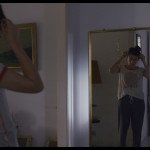
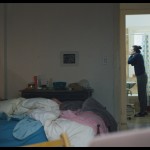
    Lila is a young film director who is struggling to overcome the stupor of a blank sheet. She lives with her boyfriend and spends all day procrastinating in different rooms of the house, outside the real world. One day, he arrives with a new bicycle lock, a gift from a beautiful girl. This will trigger in Lila a torment of uncertain fantasies that will force her to go outside searching for something new.


    Lila es una joven directora que está luchando para vencer el sopor de una hoja en blanco. Se la pasa todo el día procastinando en las distintas habitaciones de su casa, fuera del mundo real. Vive con su novio Candi. Un día, él llega con un candado de bicicleta nuevo, regalo de un chica linda. Esto desencadenará en Lila un tormento de fantasías inciertas, y será un detonante para salir de la casa hacia algo nuevo.


    – Director´s Biography / Biografía del Director:

    CECILIA KANG

    Cecilia Kang (1985, Buenos Aires) has made many fiction and non-fiction short films, such as “Videojuegos” (Berlinale 2015, Official Competition “Generation”). In 2016, she premiered her first feature documentary film «Mi último fracaso» («My last failure»). In 2017, she co-founded with Soledad Laici Orquídea Cine, an independent production company for author films. In the present, she is developing her first feature fiction film called «Hijo mayor» («Elder son»).


    Nació en Buenos Aires en 1985. Estudió Dirección en la E.N.E.R.C. Dirigió varios cortometrajes que participaron en diversos festivales internacionales, entre los cuales se destaca “Videojuegos” (2014), así como su primer largometraje documental “Mi último fracaso” (2016). En 2017 creo con Soledad Laici Orquídea Cine, una compañía de cine independiente para películas de autor. Actualmente, se encuentra desarrollando su primer largometraje de ficción, “Hijo mayor”.


    Director’s Statement / Declaraciones del Director:

    This is an erratic comedy about a woman and the capacities that she carries with herself to get insane. I wanted to talk about those little things, those little obsessions that reign us on a daily basis and that impede us when we start creating, producing.


    Quería hablar sobre aquellas pequeñas cosas, pequeñas obsesiones que nos reinan en el día a día y que nos obstaculizan a la hora de ponernos a crear, producir. También me interesaba la posibilidad de darle vida a Lila, un personaje extraño de su presente pero a la vez tan propio a la realidad en la que vivimos, en donde la inercia del día a día y el apabullamiento de información hacen que uno viva el tiempo, a veces, de forma distorsionada. Es un cortometraje que le interesa hablar de las distintas superficies que se superponen, una arriba de la otra, en la vida de Lila, en su soledad o en compañía. Hacen de ella la persona que es, marcando sus virtudes y defectos. Superficies que por momentos la ahogan y por otros la hacen sentirse bien. Caminos sin principio o final, caminos sin retorno salvo el devenir propio en la vida de uno.


    – Overview / Ficha técnica:

    Script / Guión: Cecilia Kang

    Production Company / Compañía Productora: MISBELOVEDONES – ORQUÍDEA CINE

    Producer / Productor: María Soledad Laici, Cecilia Kang

    Director / Director: Cecilia Kang

    Director of Photography and Camera / Dirección de Fotografía y Cámara: Federico Lastra

    Production Designer / Dirección de Arte: Lucía Gasconi

    Film Editor / Edición: Julia Straface (SAE)

    Sound design / Diseño de sonido:

    Música / Music: El Asesino Del Romance

    Cast / Elenco: Delfina Peydro, Esteban Bigliardi


    Festivals, Awards and Nominations / Festivales, Premios y Nominaciones:

    – 43 TIFF, Toronto International Film Festival; 09/2018; Canadá

    – 40 Festival del Nuevo Cine Latinoamericano de La Habana; 12/2018; Cuba


    Links:

    Trailer English Subtitles: https://vimeo.com/303065847


    Contact / Contacto:

    Gisela Chicolino

    FilmsToFestivals Distribution Agency
    Gisela@filmstofestivals.com


    ORQUÍDEA CINE

    María Soledad Laici

    www.orquideacine.com


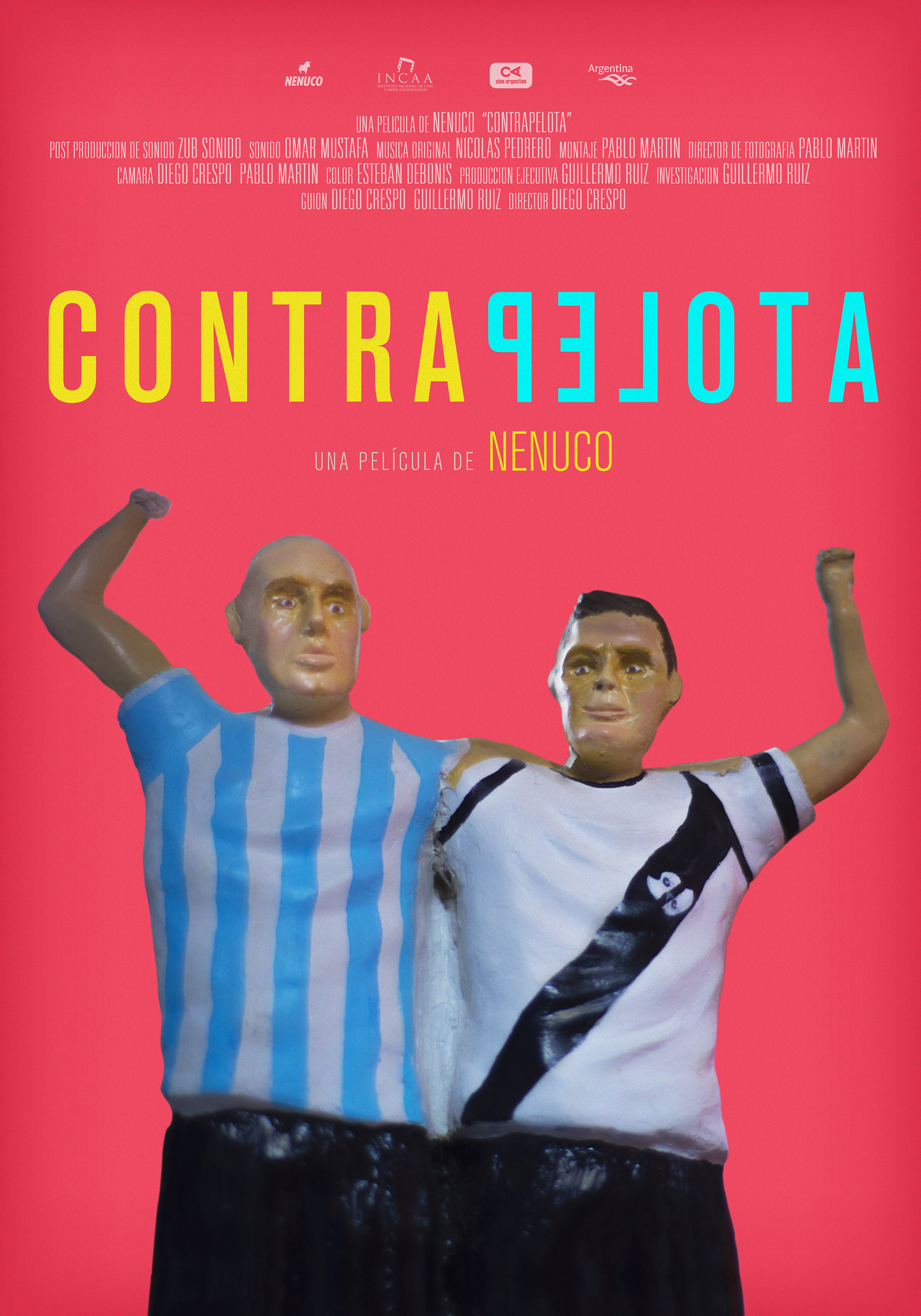
  • ContraPelota

    ContraPelota

    Counter Ball


    Technical Info / Información Técnica:

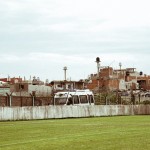
    (2018) / 01:21:44 / Canon 6D – Canon 7D / HD / 1920×1080 / Color / Fps: 25 / 16:9 / PAL / Stereo / Argentina / Documentary Feature, personal portrait, sport


    Tagline:

    You can’t live off football.


    Del fútbol no se vive.


    Synopsis / Sinopsis:

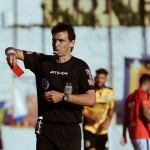
    A referee who is a Joan Manuel Serrat impersonator in the evenings, a coach who resorts to self-help phrases to motivate the team, an idol player with retirement plans, and a club official who comes up with ideas to help the club survive. What the film narrates is simple and honest.  A portrait of the world of the promotion football league in Argentina.


    Un árbitro que por las noches imita a Serrat, un DT que apela a mensajes de autoayuda para motivar a su equipo, un jugador héroe que planea retirarse y un dirigente que pone su ingenio para que el club sobreviva. Lo que la película narra es simple, genuino. Un retrato del mundo del fútbol de ascenso en Argentina.


    Alternative Synopsis / Sinopsis Alternativa:

    As an ensemble piece, the film recounts four short stories, which together depict part of the broad gamut of characters and situations in Argentina’s promotion football league. It’s a simple and honest account that looks into their everyday lives, giving rise to the digressions that frame the unique essence of this category: the passion.


    En formato coral, la película narra cuatro historias breves, que vistas en conjunto retratan el espectro de personajes y situaciones que coexisten en el mundo del fútbol del ascenso en Argentina. Lo que se cuenta es simple y genuino, indagando en lo cotidiano, dando lugar a las digresiones que hacen a la esencia única de esta categoría: la pasión.


    Long Synopsis / Sinopsis Larga:

    The film tells brief stories which depict characters and situations of the promotion football league in Argentina. A referee who is a Joan Manuel Serrat impersonator in the evenings, a coach who resorts to self-help phrases to motivate the team, an idol player with retirement plans, and a club official who comes up with ideas to help the club survive. With the sport as a backdrop, the film looks into the everyday life, the strategies and the resourcefulness to stay afloat in the amateur world.  It’s a simple and honest account, giving rise to the digressions that frame the unique essence of this category: the passion.


    La película narra historias breves, que retratan personajes y situaciones del fútbol de ascenso argentino. Un árbitro que por las noches imita a Serrat, un DT que apela a mensajes de autoayuda para motivar a su equipo, un jugador héroe que planea retirarse, y un dirigente que pone su ingenio para que el club sobreviva. Con el deporte como telón de fondo, se indaga en lo cotidiano, donde aparecen los “rebusques” y el ingenio para seguir flotando en el mundo del deporte amateur. Lo que se cuenta es simple y genuino, dando lugar a digresiones que hacen a la esencia única de esta categoría: la pasión.


    Alternative Long Synopsis / Sinopsis Larga Alternativa:

    As an ensemble piece, the film recounts four short stories, which together depict part of the broad gamut of characters and situations in Argentina’s promotion football league. The protagonists are marked by the local economy and the lack of resources, an inherent predicament in the amateur category. With the sport as a backdrop, the film looks into their everyday lives, and the odd jobs they take to make the living that football can’t provide them. It’s a simple and honest account, giving rise to the digressions that frame the unique essence of this category: the passion.


    En formato coral, la película narra cuatro historias breves, que vistas en conjunto retratan el espectro de personajes y situaciones que coexisten en el mundo del fútbol del ascenso en Argentina. Los protagonistas se ven atravesados por lo económico y la falta de recursos, problemática intrínseca de esta categoría amateur. Con el deporte como telón de fondo, se indaga en lo cotidiano, en los rebusques de cada uno para generar el sustento que el fútbol no les da. Lo que se cuenta es simple y genuino, dando lugar a las digresiones que hacen a la esencia única de esta categoría: la pasión.


    Director´s Biography / Biografía del Director:

    DIEGO CRESPO

    Web: https://vimeo.com/174235873

    Nacionality: Argentina/Italy


    Diego Crespo (Buenos Aires, 1977) studied journalism at TEA. Soon after, he started a career as a news producer working with several TV channels (Channel 9, Channel 13, TN). At the same time, he took screenwriting and dramaturgy courses with Mauricio Kartún, among others, which led to screenwriting jobs with TV networks such as Infinito, Discovery Channel, Playboy, Fox Sports, Dory Media, Paka Paka, Disney Channel, Claxson, Tevé Pública. Then he would take on cinematography and direction. He directed both documentary and fictional series for History Channel, Canal Encuentro, TecTV, Fox Life, DeporTV. He wrote and directed his first documentary feature film “Counter Ball” in 2016 with INCAA support.


    Diego Crespo (Buenos Aires, 1977) estudió periodismo en TEA y se desempeñó como productor periodístico en Canal 9, Canal 13, TN. Realizó talleres de guión y dramaturgia con Mauricio Kartún y se desarrolló como guionista para: Infinito, Discovery Channel, Playboy, Fox Sports, Dory Media, Paka Paka, Disney Channel, Claxson, Canal 7. Como director realizó series documentales y de ficción para History Channel, Canal Encuentro, TecTV, Fox Life, DeporTV.


    Director’s Statement / Declaraciones del Director:

    Thanks to a screenwriting job for a TV series that dealt with the world of the promotion football league I spent almost a year hearing fascinating stories. Time went by, I started working with a camera, took on directing, and the idea of making a feature film took shape. But something had permeated through me after that bath of football and marginality. Years later, the executive producer/former editor and I set out to conduct the journalistic research that led to the selection of the four stories that would make it to the big screen. That is how “Counter Ball” was born, and that is how it got developed in ten years of hard work.

    Amateur football in Argentina is the life and dreams of its officials, fans, players, coaches, and referees. There are many unknown people who, while do not seem important for the business, keep the sport alive. The documentary depicts what happens in this scenario, pointing up specific situations that the protagonists go through in their real lives in order to carry their dreams on.

    In “guerrilla” style, we set up a small film crew that would help to record the conflicts and situations in a quiet manner. What happened around us, what we intended to portrait, is an amazing and colorful world filled with almost incredible happenings. We were direct witnesses of the joy, the naughtiness, the rivalry, the excess. That is why “Counter Ball” meets with football in a privileged social court that allows for the research of relations and personalities.  To look into the impressive diversity of shapes, convictions, rituals, icons, pitches motivations. This is how the football in Argentina is felt.


    A raíz de cierto trabajo como guionista para una serie televisiva sobre el mundo del fútbol del ascenso, durante casi un año conocí decenas de historias fascinantes. Pasó el tiempo, fui agarrando la cámara, comencé a dirigir y la idea de hacer una película fue tomando forma. Pero algo había permeado en mí luego de aquel baño de fútbol y marginalidad, ya que años más tarde, junto al productor ejecutivo y montajista de entonces, encaramos la investigación periodística para seleccionar cuatro historias que merecieran ir al cine. Así arrancó “Contrapelota”, madurando durante casi 10 años de trabajo.

    El fútbol amateur en Argentina es la vida y los sueños de dirigentes, hinchas, jugadores, directores técnicos y árbitros. Cantidad de desconocidos que no cuentan demasiado para el gran negocio del fútbol pero que permiten que siga vivo. El documental cuenta eso que ocurre dentro de este escenario, encarnado en situaciones concretas que atraviesan a los protagonistas en la vida real para seguir adelante con sus sueños.

    De forma “guerrillera”, armamos un equipo de filmación muy reducido para llegar a los conflictos y situaciones de manera silenciosa. Lo que ocurría a nuestro alrededor, y es lo que intentamos retratar, es un mundo increíble, destellante de color, de situaciones casi inverosímiles. Fuimos testigos directos de la alegría, la picardía, la competencia, la desmesura.

    Por eso, “Contrapelota” se encuentra con el fútbol en una arena social privilegiada donde investigar relaciones y personalidades. Para contar la impresionante diversidad de formas, creencias, rituales, íconos, canchas, motivaciones. Así se siente el fútbol en la Argentina.


    Overview / Ficha técnica:

    Script / Guión: Diego Crespo, Guillermo Ruiz


    Producer / Producción: Diego Crespo, Guillermo Ruiz

    Executive Productor / Productor Ejecutivo: Guillermo Ruiz

    Director / Director: Diego Crespo

    Director of Photography / Dirección de Fotografía: Pablo Martin

    Camera / Cámara: Diego Crespo, Pablo Martin

    Film Editor / Edición: Pablo Martin

    Sound design / Diseño de sonido: Omar Mustafá

    Música / Music: Nicolás Pedrero

    Color Correction / Corrección de Color: Esteban Debonis

    Cast / Elenco: Omar Santorelli, Domingo Sganga, Germán Bermúdez, Matías Cejas


    Festivals, Awards and Nominations / Festivales, Premios y Nominaciones:

    – BAFICI; 04/2018; Argentina


    Links:

    Trailer: https://vimeo.com/244355510

    Facebook:


    Productor Biography / Biografía del Productor:

    Guillermo Ruiz (Villa Mercedes, San Luis, 1976) is a journalism graduate of TEA (1999). He has worked as a researcher, news producer, and executive producer in several shows and documentary series. He has also worked as a screenwriter and content developer for national and international networks such as Nat Geo, Discovery Channel, Fox Sports, History Channel, Infinito, TELEFE, Canal 13, Tevé Pública, TN, Canal Encuentro, TecTV, DeporTV. In 2016, he wrote and produced the documentary feature film “Counter Ball” with INCAA support.


    Guillermo Ruiz (Villa Mercedes, San Luis, 1976) es egresado de la carrera de periodismo en TEA (1999). Se desempeña como investigador, productor periodístico y productor ejecutivo en diversos programas y series de TV, de corte documental. También es guionista y desarrollador de formatos para señales nacionales e internacionales como Nat Geo, Discovery Channel, Fox Sports, History Channel, Infinito, TELEFE, Canal 13, Tevé Pública, TN, Canal Encuentro, TecTV, DeporTV. Con el apoyo del INCAA, en 2016 escribió y produjo el documental “Contrapelota”.


    Contact / Contacto:

    Gisela Chicolino

    Gisela@filmstofestivals.com


    NENUCO

    Guillermo Ruiz

    www.nenuco.com.ar   


  • El Rocío

    El Rocío


    Poison Dew


    Technical Info / Información Técnica:

    (2018) / 01:19:00 / Color / 16:9 / 5.1 / Entre Ríos, Argentina / Drama, Thriller, women, social issue, environmental / 2nd Film


    Short Synopsis / Sinopsis Corta:


    The story revolves around modern life in rural Entre Ríos. Sara discovers that agrochemicals sprayed by her neighbor for soy cultivation poisoned her daughter. The treatment compels them to travel to Buenos Aires. To get money for it, Sara devotes herself to drug trafficking. This becomes a threat to her freedom and the safety of her children.


    Sara vive con su hija Ailén en una zona rural de Entre Ríos. La niña comienza a enfermarse por las fumigaciones en los campos. Sara pelea por detenerlos, pero es inútil. La salud de su hija se agrava, y tiene que viajar de urgencia a Buenos Aires. Sin recursos para hacer el viaje, recurre a viejos contactos y se pone a traficar cocaína del campo a la ciudad.


    Synopsis / Sinopsis:

    Sara lives with her daughter Ailén in a humble neighborhood of Entre Ríos. The child starts to get sick, she cannot breathe. A doctor tells her that these attacks are caused by fumigations in the fields near her home. She fights to stop them, but it’s useless. The health of her daughter is aggravated, and she has to travel urgently to Buenos Aires. Without resources to make the trip, she resorts to old contacts and starts to traffic cocaine from the countryside to the city. Sara begins to receive threats. She has to risk everything if she wants to save her daughter.


    Sara vive con su hija Ailén en un barrio humilde de Entre Ríos. La niña comienza a enfermarse, no puede respirar. Un médico le cuenta que estos ataques son provocados por las fumigaciones en los campos cercanos a su casa. Ella pelea por detenerlos, pero es inútil. La salud de su hija se agrava, y tiene que viajar de urgencia a Buenos Aires. Sin recursos para hacer el viaje, recurre a viejos contactos y se pone a traficar cocaína del campo a la ciudad. Sara comienza a recibir amenazas. Está envuelta en una red, que la atrapa cada vez más. Ella tiene que arriesgarlo todo, si quiere salvar a su hija.


    Director´s Biography / Biografía del Director:

    EMILIANO GRIECO

    www.emilianogrieco.com

    Emiliano Grieco born in Paraná (Entre Rios, Argentina) in 1981. He began his studies in Communications, specializing in image, at National University of Entre Rios (UNER). Then travel to Buenos Aires, to study documentary direction with Professor Gustavo Hennekens, takes film courses and seminars with leading documentary film masters including Fernando Birri and Jorge Prelorán. Then studies University Degree at National Institute of Arts (UNA). Bachelor of Media Arts.


    Nació en Paraná en 1981. Estudió Comunicación Social y Artes Audiovisuales, además de cursos sobre cine documental con docentes como Fernando Birri, Jorge Prelorán y Pablo Reyero.


    Filmography / Filmografía:

    Hijos del Río (2010) Corto Documental

    Los Secretos Del Manglar (2012) Cortometraje

    Diamante (2013), Largometraje documental: Festival Internacional de Cine de Barranquilla

    La Huella en la Niebla (2014): Opera prima de Ficción: TIFF Torino Film Festival


    Overview / Ficha técnica:

    Script / Guión: Bárbara Sarasola Day

    Production / Producción: Daniel Werner

    Director / Director: Emiliano Grieco

    Director Assistant / Asistente de Dirección:

    Cinematography / Dirección de Fotografía: Alejandro Baltasar Torcasso

    Art Director / Director de Arte: Ángeles Frinchaboy

    Sound Director / Director de Sonido: Nahuel Palenque

    Editing / Edición: Leandro Aste, Emiliano Grieco

    Original Music / Música Original: Juan Nanio

    Cast / Actores: Daina Provenzano, Tomas Fonzi, Olivia Olmedo, Eva Bianco


    Festivals, Awards and Nominations / Festivales, Premios y Nominaciones:

    – 33 Mar del Plata International Film Festival; 11/2018; Argentina

    – 21 FICMeC, Festival Internacional de Cine Medioambiental de Canarias; 05/2019; Spain

    – 8 Mic Género, International Film Festival with Gender Perspective; 08/2019; México

    – 8 Leonardo Favio, Festival de Cine Nacional; 08/2019; Argentina

    – 5 Festival Internacional de Cine de Guayaquil; 09/2019; Ecuador

    – 6 Cine a la Vista! Internacional Youth Film Festival; 09/2019; Argentina

    – 23 FAM, Florianópolis Audiovisual Mercosur; 09/2019; Brasil


    Links:

    Instagram: https://www.instagram.com/elrociopelicula/


    Contact / Contacto:

    Gisela Chicolino

    Gisela@filmstofestivals.com


    Werner Cine

    http://wernercine.com


  • Entre Dos Aguas

    Entre Dos Aguas

    In-between Streams


    Technical Info / Información Técnica:

    (2018) – 00:13:00 – Argentina – 25 fps – 1:85:1 – 4K – Color – Sound 5.1


    Short Synopsis / Sinopsis Corta:

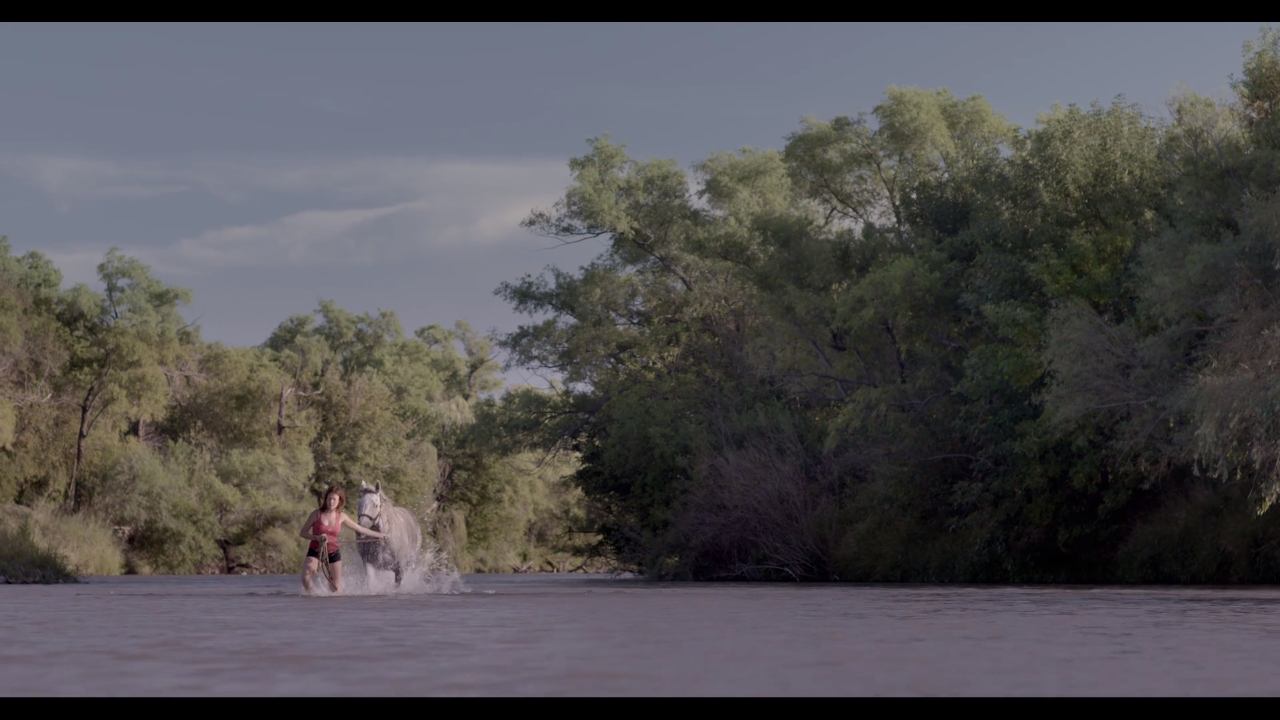
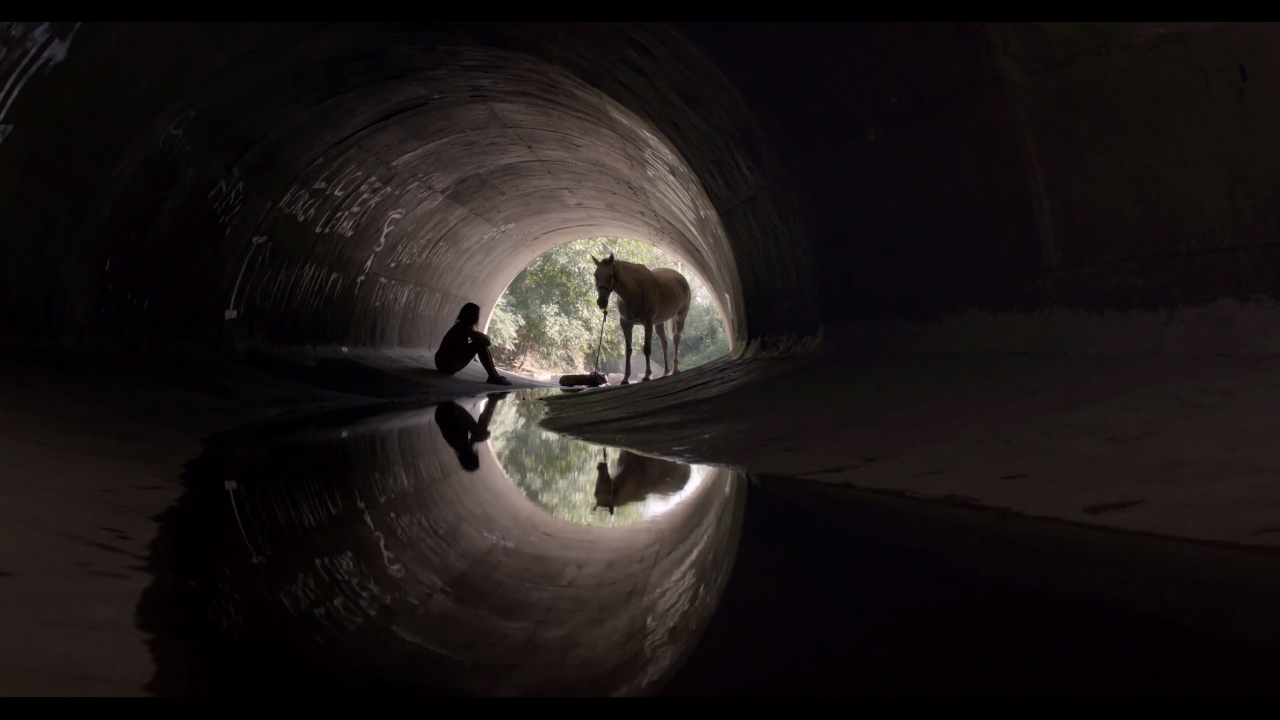
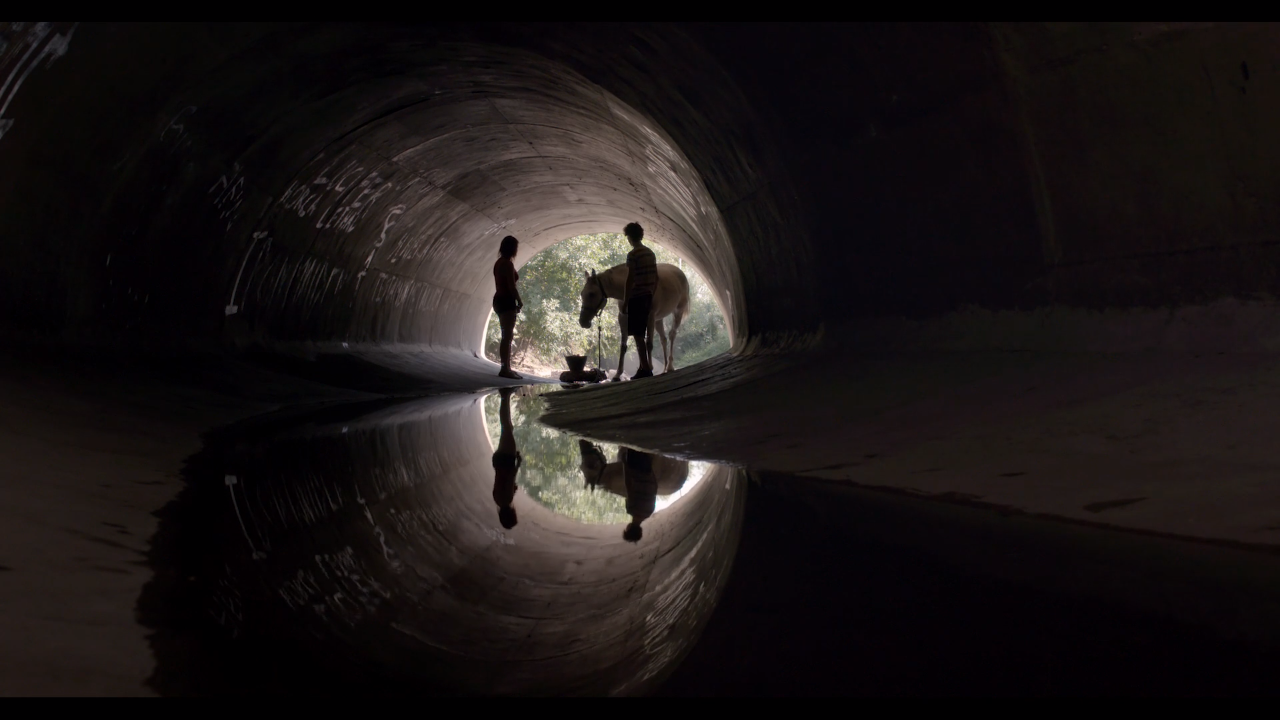
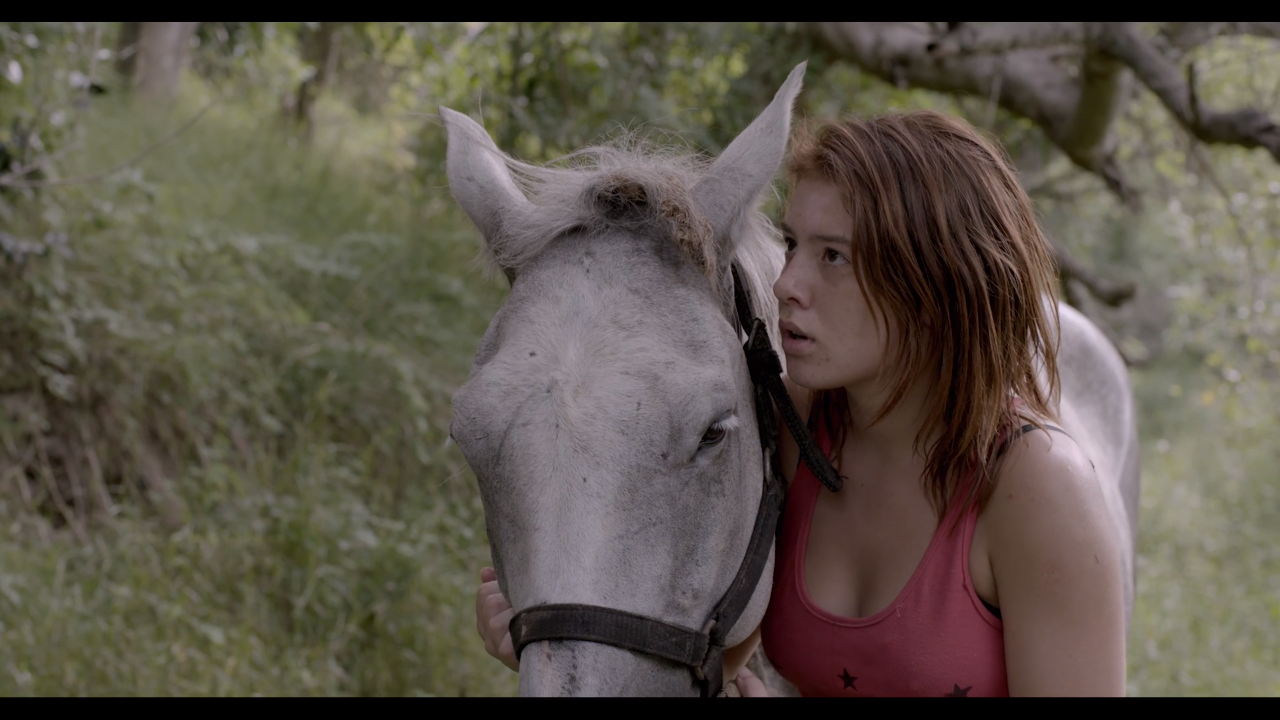
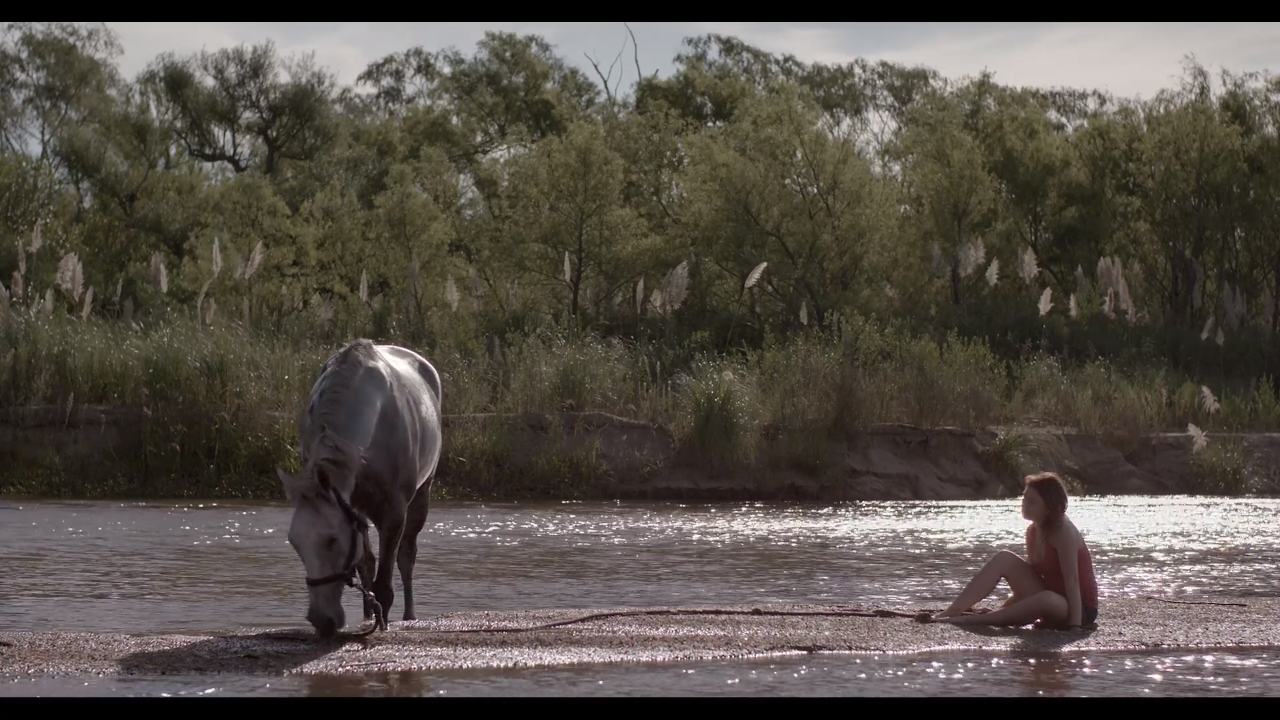
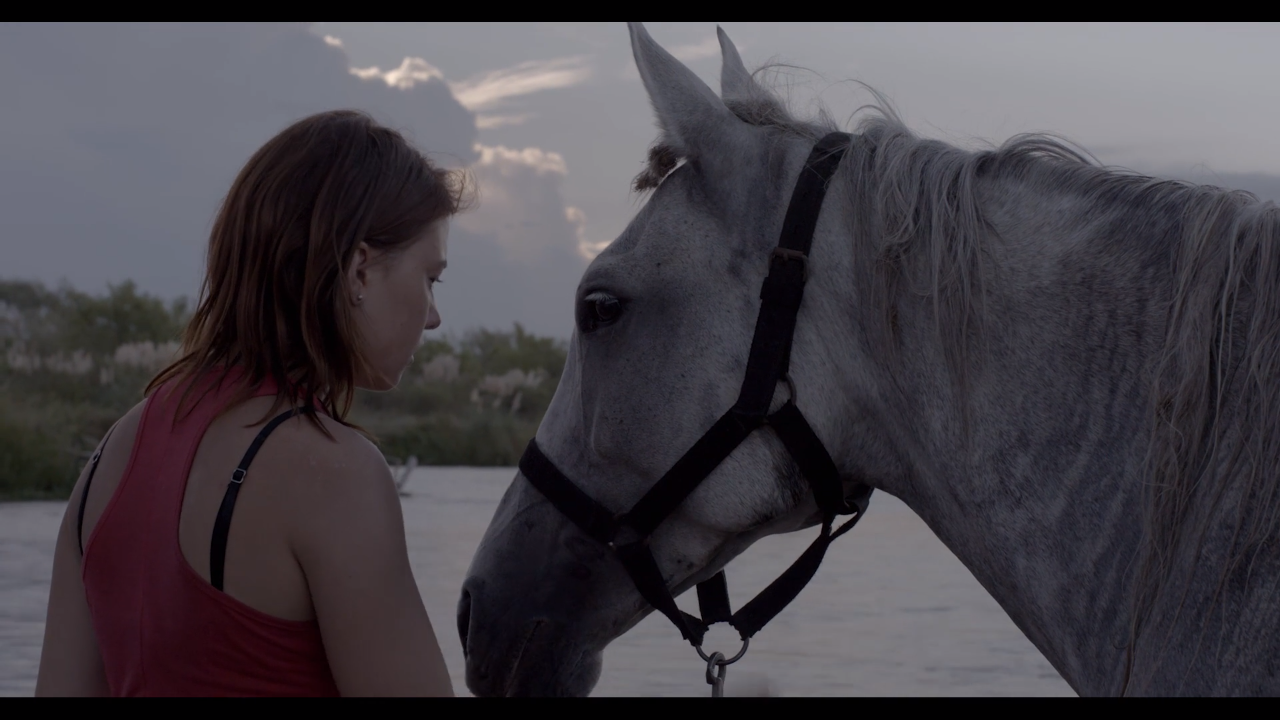
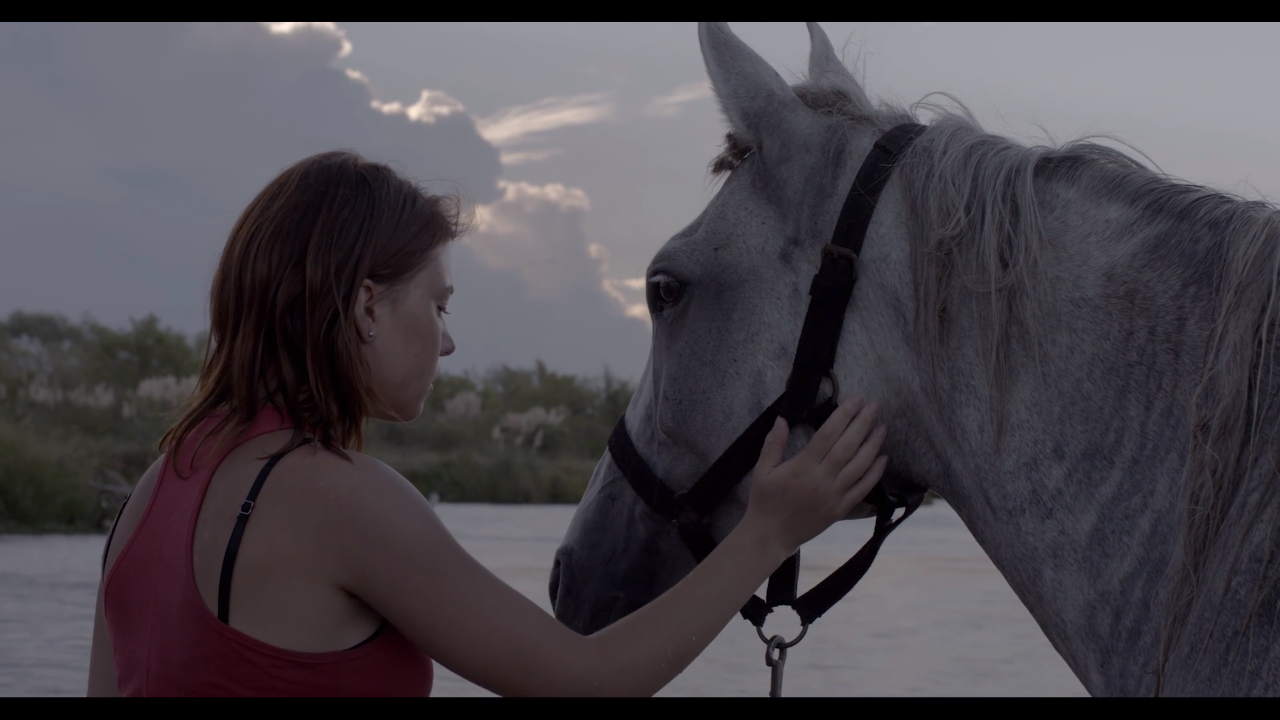
    A teenager girl wants to save a horse that’s about to die in the slaughterhouse, and she’s willing to do anything to save it.


    Una adolescente roba un caballo que está a punto de morir en un frigorífico y va a hacer lo necesario para intentar salvarlo.


    Synopsis / Sinopsis:

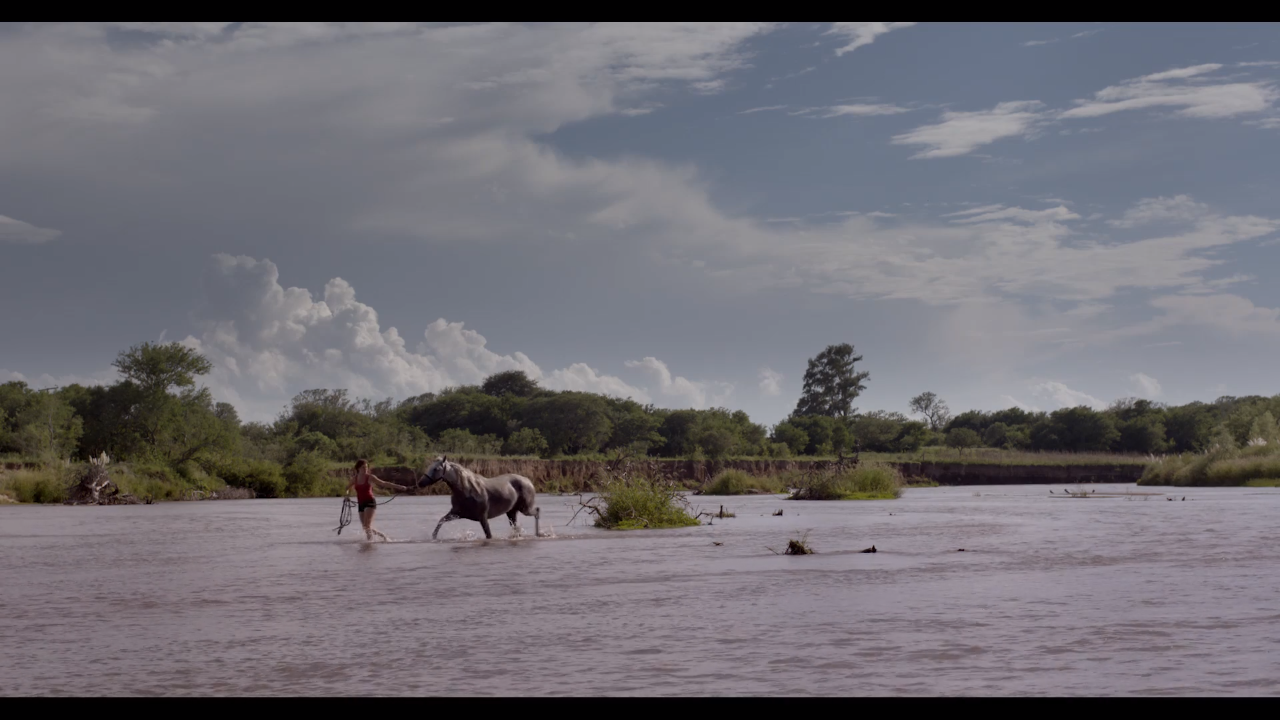
    Sofia (15) decides to rescue a horse that’s being taken to a slaughter-house. Juan (17) is determined to follow her for love. She steals the horse and hides in an aqueduct. The owners of the horse find her. She escapes through the river but is not going to be easy… Same as standing between childhood and adulthood or between reality and utopia.


    Sofía (15) decide rescatar un caballo que está a punto de ser sacrificado en un matadero. Juan (17) la sigue en sus peripecias por amor. Ella logra robar el animal y se esconde en un acueducto pero los dueños del caballo no tardan en encontrarla. Intenta escaparse con el caballo  en una difícil travesía por el rio pero no le resultará nada fácil.


    Director´s Biography / Biografía del Director:

    MATÍAS LUCCHESI

    Matias Lucchesi was born in Córdoba, Argentina, in 1980. His short film “Distancias” (2010) won the prize for best short at Biarritz Film Festival. He shot his first feature film “Ciencias Naturales” with a completely independent production and with no financial support. The film was awarded Best Feature Film Generation at Berlinale 2014; Best Film, Best Actress and Best Script at Guadalajara Film Festival; Special Mention at San Sebastian Film Festival. “El Pampero”, his second feature film was presented in several films festivals such as Miami, Lima, Sao Paulo, Huelva, Mannheim, among others.


    Matías Lucchesi nació en Córdoba, Argentina en 1980. Cursó distintos estudios de teatro y  dramaturgia. Su cortometraje “Distancias” (2010) fue ganador del Festival de Cine de Biarritz. Su primer film “Ciencias Naturales” ganó Mejor Película en la sección Generation de Berlinale 2014; Mejor Película, Actriz y Guión en Guadalajara 2014 y Mención Especial del Jurado en Horizontes Latinos del Festival de San Sebastián 2014. El Pampero, su segundo largometraje participó en Festivales como BAFICI, Miami, Lima, Sao Paulo, Huelva y Mannheim.


    Overview / Ficha técnica:

    Script / Guión: Matías Lucchesi

    Director / Director: Matías Lucchesi

    Executive Production / Producción Ejecutiva: Matías Lucchesi

    Producer: Eugenia Vera, Mario Pedernera

    Cinematography and Camera / Dirección de fotografía y Cámara: Sebastián Ferrero

    Art Director / Director de Arte: Ayelen Mufari, Cecilia Audisio

    Sound Design / Diseño de Sonido: Martin Litmanovich, Melina Stasiak

    Editing / Edición: Lucía Torres

    Cast / Actores: Paula Hertzog, Santiago Luna


    Festivals, Awards and Nominations / Festivales, Premios y Nominaciones:

    – BAFICI; 04/2018; Argentina

    – FICIC, Festival Internacional de Cine Independiente de Cosquín; 05/2018; Argentina

    – Festival Nacional de Cine de General Pico; 06/2018; Argentina


    – Contact / Contacto:

    Gisela Chicolino

    FilmsToFestivals

    Gisela@filmstofestivals.com


    Salta la liebre / Origami / Sedecine

    www.saltalaliebre.com

    Argentina


  • La Astucia y la Fuerza

    La Astucia y la Fuerza


    Strength And Cunning


    Technical Info / Información Técnica:

    (2018) / 00:10:00 / HD 1920×1080 / Cámara Sony A7Sii / 16:9 / 2K / 25 fps / Color / Sound: 5.1 / Argentina / Documentary, Human Rights


    Synopsis / Sinopsis:

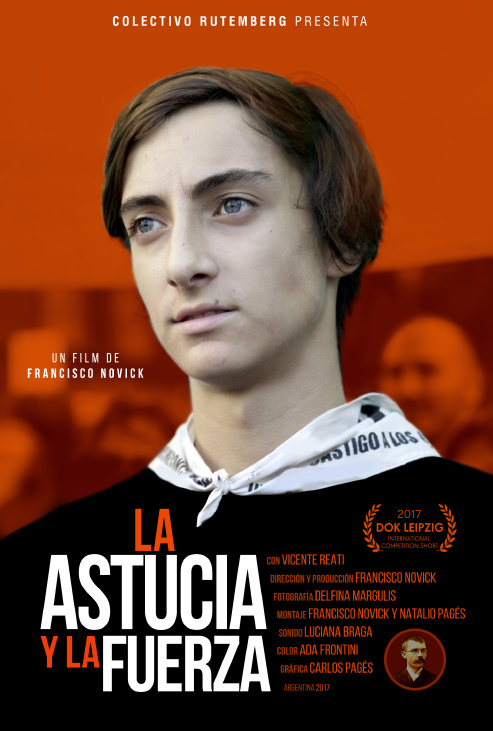
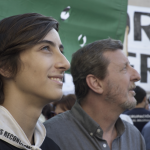
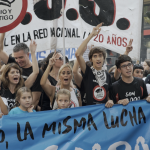
    On the commemoration of the military dictatorship that kidnapped and killed his grandparents, Vicente, a 15-year-old boy, joins his father in a massive demonstration in Buenos Aires. For the first time, Vicente will embrace a central role at the forefront of the march. A story about commitment transcending generations told from the heart of a collective cause.


    Vicente, un joven de 15 años, acompaña a su padre a una multitudinaria marcha en Buenos Aires, en la conmemoración de la dictadura militar que secuestró y asesinó a sus abuelos. Este año, Vicente asumirá por primera vez un rol central en la primera línea de la marcha. Un relato sobre el compromiso de las nuevas generaciones en la lucha por la memoria, narrada desde las entrañas de una manifestación popular.


    Director´s Biography / Biografía del Director:

    FRANCISCO NOVICK

    www.rutemberg.com

    Francisco Novick (Buenos Aires, 1993) is a film director and producer. He has a background in Economics (University of Buenos Aires) and cinema (ENERC). For three years he worked as a producer in Gema Films, an art-house production company. He has produced projects such as SOLDIER (Manuel Abramovich, 2017, premiered at Berlinale 2017), THEATRE OF WAR (Lola Arias, 2018, premiered at Berlinale Forum 2018) and RUBÉN BLADES IS NOT MY NAME (Abner Benaim, 2018, premiered at SXSW 2018). STRENGTH AND CUNNING, his first short film as a director, was premiered at DOK Leipzig 2017 and received two awards at the Buenos Aires International Documentary Film Festival FIDBA 2018.


    Francisco Novick (Buenos Aires, 1993) es director y productor de cine. Estudió Economía en la Universidad de Buenos Aires y Realización Cinematográfica en la ENERC. Trabajó tres años como coordinador de producción en Gema Films, productora dedicada al cine de autor. Entre otros proyectos, produjo VETERANOS (Lola Arias, 2017), SOLDADO (Manuel Abramovich, 2017) y YO NO ME LLAMO RUBÉN BLADES (Abner Benaim, 2018). LA ASTUCIA Y LA FUERZA, su primer cortometraje como director, tuvo su premiere mundial en el festival alemán DOK Leipzig 2017 y ganó Mención de Honor y Premio de Distribución en la última edición del Festival de Cine Documental FIDBA 2018. Actualmente se encuentra rodando TIEMPO PERDIDO, su ópera prima.


    Director Statement / Declaraciones del Director:

    Over the past decades, the demonstration that takes place on March 24 –known as the March for Memory, Truth, and Justice– is a key political event for millions of Argentinians. The whole country takes the streets of Buenos Aires to commemorate the horrors of the last military dictatorship. Families who lost their relatives, people who survived, their children and beloved ones, join political parties, human rights organizations and independents in a deeply moving ceremony at the downtown square. When thousands cry out «present, now and forever!”, I assure you, the blood runs cold. Vicente Reati, the main character of my film, is a 15-year-old boy who attends these demonstrations as far as he remembers. His parents were kidnapped and tortured many years before he was born; his grandparents are still missing. For him, this years’ demonstration will mean something else: he will march alone, at the forefront of the demonstration. A new level of autonomy will require extra doses of commitment. At the end of the day, he will not be the same one. This film tells the story of a popular march and, at the same time, how these events impact on a subjective level. Big demonstrations are usually filmed in a very objective way: faces lost in a human tide. Instead, I thought it would be important to show the events from the inside; to feel the experience of walking with a large crowd, to perceive small moments and mundane details. That’s why I tried to enhance a sense of real time, in a cinema verité style. STRENGTH AND CUNNING portrays a historical event for Latin America, strangely seen in our regional cinema. It’s an attempt to show the world how people actively fight to defend their own collective memory. These actions are notably human, passionate acts of life. To convey them into a film, that was my main goal.


    Desde hace décadas, la marcha del 24 de marzo –conocida como Marcha por la Memoria, la Verdad y la Justicia– es un hecho político fundamental para millones de argentinos. Un pueblo se moviliza pacíficamente por las calles de Buenos Aires para recordar los horrores de la última dictadura militar y levantar las banderas de los caídos en aquel genocidio. La marcha se organiza de forma comunitaria. Las familias de los desaparecidos, los sobrevivientes, sus hijos y familiares, confluyen junto a partidos políticos, agrupaciones de derechos humanos y sectores independientes en un acto en la plaza central de la ciudad. Por sobre todas las cosas, se trata de un hecho profundamente emocionante. Cientos de miles de personas gritan al unísono “Presentes, ahora y siempre”. Escucharlos hiela la sangre. Vicente Reati, el protagonista de este cortometraje, es un adolescente de 15 años, que asiste a la marcha desde que tiene uso de razón. Sus padres fueron secuestrados y torturados mucho antes de que él naciera; sus abuelos continúan desaparecidos. La marcha de este año significará un paso importante para Vicente: marchará solo, al frente de la movilización. Para Vicente, esta repentina autonomía requerirá otro nivel de compromiso e involucramiento. Al terminar el día, no será el mismo. LA ASTUCIA Y LA FUERZA narra el desarrollo de una marcha popular y, a la vez, cómo esta repercute en la vivencia subjetiva de uno de sus protagonistas. Las grandes movilizaciones suelen filmarse como un hecho objetivo: los rostros se pierden en un mar de gente indiscernible. En cambio, aquí creí importante registrar la marcha desde adentro; sentir la experiencia de caminar junto a la multitud, sus pequeños momentos y detalles cotidianos. Por eso busqué realzar la sensación de tiempo real, dejando fluir las imágenes y sonidos propios de estas marchas en un estilo cercano al cinema verité. LA ASTUCIA Y LA FUERZA retrata un evento de enorme relevancia social, extrañamente ausente en el cine de mi país. Es un intento por mostrarle al mundo la lucha de un pueblo en defensa de su memoria colectiva, presentada como una acción humana y fundamentalmente, como un hecho emotivo. Ese ha sido mi objetivo principal.


    Overview / Ficha técnica:

    Script / Guión: Francisco Novick

    Producer / Producción: Francisco Novick

    Director / Director: Francisco Novick

    Cinematography / Director de Fotografía: Delfina Margulis

    Sound Design / Dirección de Sonido: Luciana Braga

    Editing / Montaje: Francisco Novick, Natalio Pagés

    Graphic Design / Diseño Gráfico: Carlos Pagés

    Cast / Elenco: Vicente Reati


    Festivals, Awards and Nominations / Festivales, Premios y Nominaciones:

    – 60 International Leipzig Festival for Documentary and Animated Film; Germany

    – 15 BogoShorts; Colombia

    – 20 Rencontres du Cinema Sud-Américain de Marseille; 03/2018; France

    – 6 FIDBA (Special Mention, Distribution Award); 09/2018; Argentina

    – 35 Chicago Latino Film Festival; 03/2019; US

    – 8 Tenemos que Ver, Festival Int. de Cine y Derechos Humanos; 06/2019; Uruguay

    – 6 MAFICI; 09/2019; Argentina


    Links:

    Web: http://rutemberg.com/index.php/la_astucia_y_la_fuerza/

    Trailer: https://vimeo.com/235291277


    Contact / Contacto:

    Gisela Chicolino

    FilmsToFestivals Distribution Agency
    info@filmstofestivals.com


    Colectivo Rutemberg

    www.rutemberg.com

  • La Cena Blanca de Romina

    La Cena Blanca de Romina

    Romina white´s gala


    Technical Info / Información Técnica:

    (2018) / 01:02:00/ Full HD 1920×1080 / 25 FPS / PAL / COLOR / SOUND DOLBY / Argentina / Documentary Feature, Women Rights


    Logline:

    Una adolescente mata a la hija engendrada por una violación.

    A teenage girl killing her baby daughter conceived in rape.


    Short Synopsis / Sinopsis Corta:

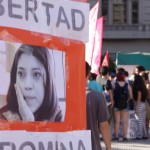
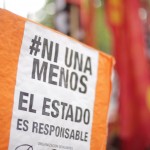
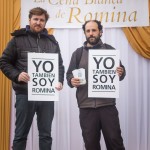
    The case of Romina Tejerina, a teenage girl killing her baby daughter that was conceived in rape, reveals the impunity of sexual violence and the epidemic of child and teen mothers. Thousands of women across the country defend Romina and hold the church and the State responsible.


    El caso de Romina Tejerina, una adolescente que mata a la hija engendrada por una violación, devela la impunidad de la violencia sexual y la epidemia de madres niñas y adolescentes. Miles de mujeres en todo el país toman la defensa de Romina y apuntan a la responsabilidad de Iglesia y el Estado.


    Synopsis / Sinopsis:

    The White Gala is a magical night for graduating girls; that day they become princesses, as in fairy tales. Romina couldn’t make her dream come true: the day of her White Gala she was in prison; she had killed her baby conceived in a rape which remained unpunished. The case of Romina Tejerina reveals the impunity of sexual violence and the epidemic of child and teen mothers. Thousands of women across the country defend Romina and hold the church and the State responsible.


    La Cena Blanca es una noche mágica para las chicas que terminan la secundaria, ese día serán princesas como las de los cuentos. Romina no pudo cumplir su sueño: el día de su Cena Blanca estaba presa; había matado a la beba concebida tras una violación que quedó impune. El caso de Romina Tejerina devela la impunidad de la violencia sexual y la epidemia de madres niñas y adolescentes. Miles de mujeres en todo el país toman la defensa de Romina y apuntan a la responsabilidad de Iglesia y el Estado.


    Director´s Biography / Biografía del Director:

    Hernan Martin is an image and sound designer who graduated from the University of Buenos Aires in 2001. Since then he has participated in the militant filmmaking group Ojo Obrero (Worker’s Eye). He has made several short and mid-length documentaries assuming diverse technical and producing roles. He has been a member of DOCA (Documentary Filmmakers of Argentina) since 2006, having been elected President twice. In 2008, he was invited to the first encounter of ENDOCXXI, celebrated in Caracas, Venezuela. In 2009, the first feature documentary of the group, Casino, was released, in which he assumed filming and film editing tasks. He also took part in the features Who Killed Mariano Ferreyra? (direct sound) and Cut it out, a Movie about Call Centres (film editing).


    Francisco Rizzi is an image and sound designer, who graduated from the University of Buenos Aires in 2003. A member of the militant filmmaking group Ojo Obrero (Worker’s Eye), he has been part of the production team in several short and mid-length documentaries. He has been a member of DOCA (Documentary Filmmakers of Argentina) since 2007. He has been professionally dedicated to the field of sound for over twenty years, and for the last ten years, he has been a foley artist, taking part in over a hundred movies from all over the world. He is also a teacher and a thesis tutor in the Foley area in sound directing at the National School of Film Experimentation and Production of Argentina (ENERC). He took part in Casino, the first feature documentary of the group, as a sound designer.


    Hernán Martín es Diseñador de Imagen y Sonido (UBA) egresado en el año 2001. Desde ese año ha participado del grupo de cine militante Ojo Obrero, con el que ha realizado varias decenas de cortos y mediometrajes documentales desde distintos roles técnicos y productivos. Desde el año 2006 es miembro de DOCA (Documentalistas de Argentina), organización de la que fue dos veces elegido presidente. En el año 2008 participó como invitado a exponer del 1er encuentro del ENDOCXXI realizado en Caracas, Venezuela. En 2009 se estrenó el primer largometraje del Grupo: “Casino”, en el cuál participó de las tareas de registro y montaje. Participó también de los films “¿Quién mató a Mariano Ferreyra?” (Sonido directo) y “Córtenla, una peli sobre call centers” (montaje)


    Francisco Rizzi es Diseñador de Imagen y Sonido (UBA) egresado en el año 2003. Integrante del grupo de cine militante Ojo Obrero desde su fundación en el año 2001, ha formado parte del equipo de realización del grupo en varias decenas de cortos y mediometrajes documentales. Desde el año 2007 es miembro del colectivo DOCA (Documentalistas de Argentina). En el ámbito laboral-profesional desarrolla la tarea de Sonidista desde hace más de veinte años, y hace diez específicamente como artista de foley, participando en más de un centenar de películas de distintas partes del mundo. Al mismo tiempo es docente y tutor de tesis en el área de Foley para la carrera de Dirección de Sonido en la ENERC (Escuela Nacional de Experimentación y Realización Cinematográfica). Cómo Sonidista participó en el primer largometraje del Grupo Ojo Obrero: “Casino” estrenado en el año 2009. También como Sonidista ha participado en la realización de los films “¿Quién mató a Mariano Ferreyra?” y “Córtenla, una peli sobre call centers” del Grupo Ojo Obrero.


    Francisco Rizzi y Hernán Martín son egresados de Imagen y Sonido (UBA). Miembros fundadores en mayo de 2001 del Grupo de cine militante Ojo Obrero. Además de sus actividades profesionales/laborales como Artista de Foley (FR) y Editor y camarógrafo (HM) han realizado varios cortos, medios y largometrajes como “¿Quién mató a Mariano Ferreyra” “Piqueteros Carajo” y “Argentinazo, comienza la revolución”


    Director’s Statement / Declaraciones del Director:

    On Romina’s case

    On June 10th 2005 Jujuy’s courts sentenced Romina Tejerina to fourteen years in prison. Her fearful brown face, covered in tears, appeared around the world and became an icon of the women’s movement. Romina gave birth alone in a bathroom to a premature baby girl and killed her. She said she saw the face of her rapist in her baby. She had hidden her pregnancy. The hospital denied the autopsy which would have confirmed the gestation period to determine if it was an abortion or an infanticide. The Human Rights Secretary of Jujuy requested a life sentence for that girl who was poor, rebellious and, as the prosecutor used to say, liked dancing in short skirts. The priest offered Masses in the streets so she would give up and would not appeal the sentence. The Mayor said that no woman would be raped if she didn’t want it. In a speedy 22-day trial, the rapist was declared not guilty. Women’s organizations considered Romina’s case to be a social crime and they demanded her freedom. They demanded sex education, access to contraception and the right to an abortion to prevent it from happening again. None of that moved a power founded on violence against women, Droit de seigneur, and child abuse. The Jujuy’s Women’s Meeting surrounded the prison to express their solidarity. There was a demonstration at the House of Jujuy each month. The campaign crossed borders. Romina was released in 2012, a few days after her twenty-ninth birthday. She had lived in confinement for the past 9 years.


    El 10 de junio de 2005 la Justicia jujeña condenó a 14 años de prisión a Romina Tejerina. Su cara morena, temerosa, cruzada por lágrimas, dio la vuelta al mundo, convertida en estandarte del movimiento de mujeres. Romina parió en un baño, sola, una beba prematura, y la mató. Dijo que vio en ella la cara de su violador.  Había ocultado el embarazo. En el hospital negaron la autopsia que hubiera confirmado el tiempo de gestación, si era aborto o infanticidio. Del hospital fue a la cárcel. La secretaria de Derechos Humanos provincial pidió perpetua para esa chica pobre y rebelde que, como decía la fiscal, bailaba con polleras cortísimas. El cura organizó misas callejeras para que se resignara y no apelara la condena. El intendente opinó que a nadie la violan si no quiere. En un juicio fulminante de 22 días, el violador  fue absuelto. Las organizaciones de mujeres dijeron que el “caso Romina” era un crimen social y exigieron su libertad. Reclamaron educación sexual, acceso a la anticoncepción y derecho al aborto para que evitar otras Romina. Nada conmovió a un poder cimentado en la violencia contra las mujeres, el derecho de pernada y el abuso infantil. El Encuentro de Mujeres de Jujuy rodeó el penal en solidaridad con la adolescente. Se manifestó cada mes ante la Casa de Jujuy. La campaña cruzó las fronteras. Romina fue liberada en 2012, días después de cumplir 29 años. Los últimos nueve había vivido en el encierro.


    Overview / Ficha técnica:

    Script / Guión: Olga Viglieca

    Producer / Producción: Grupo Ojo Obrero

    Production Manager / Jefe de producción: en Jujuy: Julián Morcillo / La Cena Blanca: Emilce Díaz, Susana Marquis

    Executive Productor / Productor Ejecutivo: Hernán Martín

    Director / Director: Francisco Rizzi, Hernán Martín

    Director of Photography  / Dirección de Fotografía: Alejandro Rath

    Camera / Cámara: Alejandro Rath, Justo «Mono» Salim, Virginia Lavini, Damián Mugnolo, Carmen Ponce

    Dirección de arte: Florencia Blumen

    Film Editor / Edición: Hernán Martín

    Sound design / Diseño de sonido: Francisco Rizzi

    Sound Mix / Mezcla de Sonido: Martín Scaglia

    Música/Music: Ana Tijoux

    Sonido directo: Ignacio Violini (Buenos Aires), Francisco Rizzi (Jujuy), Hernán Martín (Jujuy)

    Image post Production/ Post Producción de Imagen: Juan Martín Hsu (Zebra Post)


    Festivals, Awards and Nominations / Festivales, Premios y Nominaciones:

    – Cinélatino Rencontres De Toulouse; 03/2018; France

    – Festival Cinematográfico Internacional del Uruguay; 03/2018; Uruguay

    – Málaga Film festival: Women Rights Competition; 04/2018; España


    Links:

    Web: http://ojoobrero.org/wordpress/lacenablanca/

    Trailer: https://vimeo.com/220078583

    Facebook: https://www.facebook.com/LaCenaBlancaDeRomina/


    Contact / Contacto:

    Gisela Chicolino

    FilmsToFestivals

    Gisela@filmstofestivals.com


  • La de Messi

    La de Messi

    The One Of Messi


    – Technical Info / Información Técnica:

    (2018) / 00:13:00 / 24 FPS / ratio 16:9 / COLOR / sound 5.1 / Buenos Aires, Argentina / Drama, Childhood, family,


    – Short Synopsis / Sinopsis Corta:

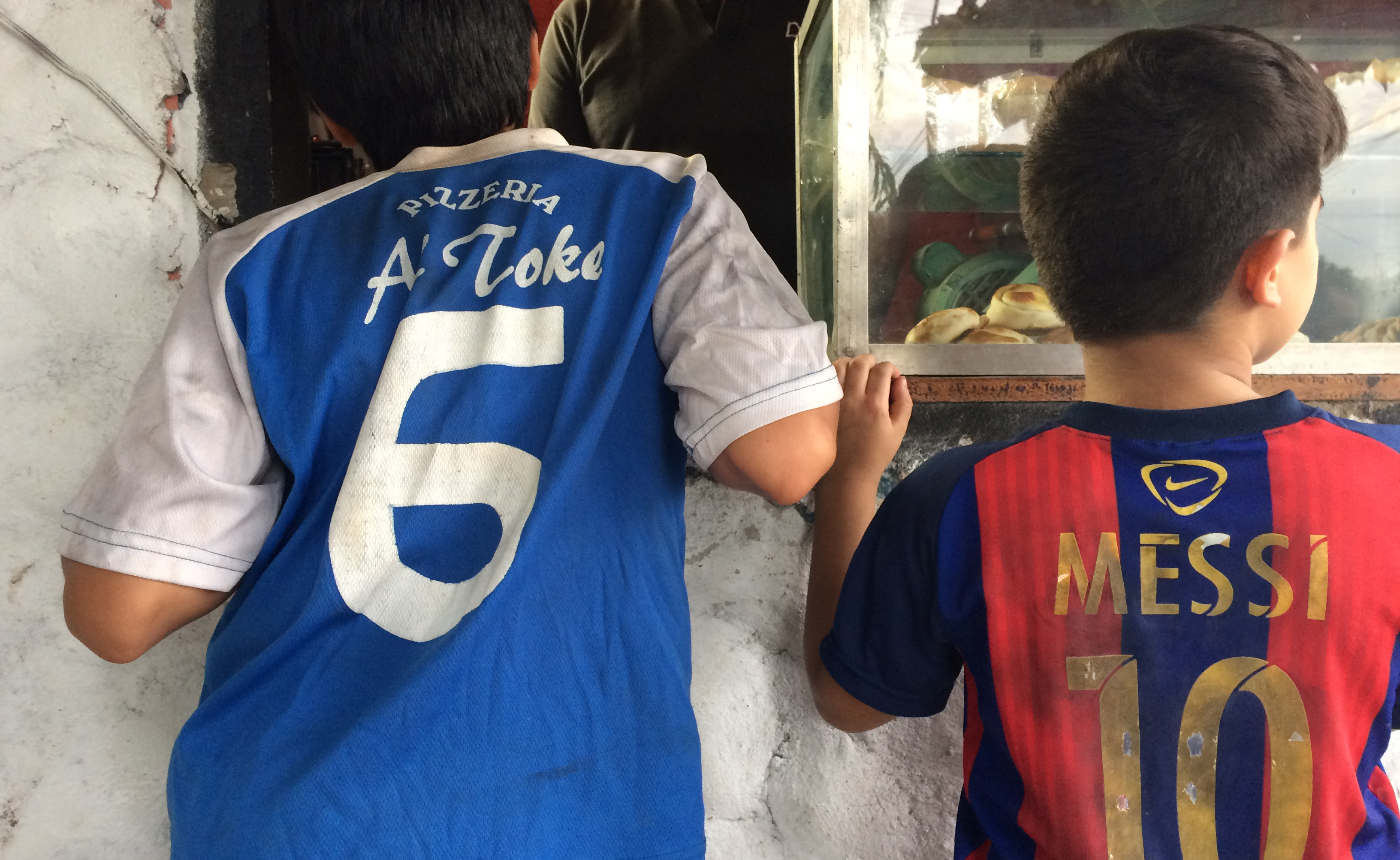
    Lautaro and José take from what others discard, the sustenance of the family. After a violent situation at home, José discovers that his favorite figure, Messi’s, does not look the same.


    Lautaro e José tiram do que outros descartam o sustento da família. Depois de uma situação violenta em casa, José descobre que sua figurinha favorita, do Messi, não parece mais a mesma.


    Lautaro y José toman de lo que otros descartan, el sustento de la familia. Después de una situación violenta en casa, José descubre que su figurita favorita, del Messi, ya no es la misma.


    Synopsis / Sinopsis:

    Lautaro (11 years old) and José (6 years old) learned to find, in others that they throw away, the daily sustenance that their family needs. Lautaro protects a little brother from a situation that occurs violently between his parents. The next day, José discovers a message on his album of world figures. Messi’s, his favorite, is no longer the same as before. Your family either.


    Lautaro y José aprendieron a encontrar en lo que otros desechan el sustento diario que su familia necesita. Lautaro protege a su hermanito de una situación que se intuye violenta entre sus padres. Al día siguiente, José descubre un mensaje en su álbum de figuritas del Mundial. La de Messi, su favorita, ya no luce como antes.  Su familia tampoco.


    – Director´s Biography / Biografía del Director:

    MAURO IVÁN OJEDA

    Mauro Iván Ojeda is an audiovisual producer. In the year 2016 his screenplay «LA DE MESSI» wins Historias Breves INCAA contest and is premiered at the Mar Del Plata international festival, also is selected at San Pablo Film Festival, Film Festival of Quito and Uncipar Festival 2018: it is the winner of the best short film and the first prize of the Association of Cinematographic Chroniclers. In 2018 he writes and directs a horror short film THE NEW BIBLE.


    Mauro Iván Ojeda es realizador audiovisual. En el Año 2016 su guión “LA DE MESSI” gana el concurso Historias Breves de INCAA, el cual dirige y es estrenado en el festival internacional de Mar Del Plata. LA DE MESSI es seleccionado en el festival de cine de San Pablo, Festival de Cine de Quito y Festival Uncipar 2018: resultando ganador como mejor cortometraje y el primer premio de la Asociación de Cronistas Cinematográficos. En el año 2018 escribe y dirige el cortometraje de horror LA NUEVA BIBLIA.


    Mauro Iván Ojeda, es un realizador audiovisual amante del Género fantástico y de Horror, como así también de historias sensibles y de tinte social. Ha estudiado en diversos Institutos de Cine, como así también con la Directora y Productora Paula Hernández y el guionista Pablo Meza, Entre otros cursos y seminarios realizados en estos últimos años. Se desempeña como Director, Guionista, Productor y Productor Ejecutivo. A lo largo de estos últimos 7 años de formación como guionista y director de cine y televisión ha colaborado, escrito, producido y grabado diversos proyectos cinematográficos, tanto en proyectos Ganadores del INCAA, como en producciones independientes. En 2015 dirige un Video Clip para la banda de rock Argentina LOS TRAMPOSOS. En 2016 su guión LA DE MESSI resulta ganador del concurso del INCAA Historias Breves, proyecto que escribe y dirige: Es estrenado en el Festival Internacional De Mar Del Plata 2017 y resulta seleccionado en el 29 Festival de Cine de San Pablo, en el Festival Internacional de Cine de Quito y en el Festival UNCIPAR.


    Filmography / Filmografía:

    – El Tipo De Las Máquinas, Pre-Prod, 2018

    – El Alojamiento, Pre-Prod, 2018

    – Los Mariachis Y El Almirante (Evaluado En Incaa)

    – La Nueva Biblia, Cortometraje Horror, 2018 y Largometraje

    – La de Messi, cortometraje, 2017

    – Los Diez Mundos, guión Largometraje, Primer Suplente Del Concurso De Ópera Prima Del Incaa 2012/2013, Finalista Del Premio Argentores De Latinoamérica 2013.

    – Osmosis


    – Overview / Ficha técnica:

    Script / Guión: Mauro Iván Ojeda

    Producer / Producción: Mauro Iván Ojeda

    Production Manager / Jefe de Producción: Marcela Coria

    Director / Director: Mauro Iván Ojeda

    Director of Photography / Dirección de Fotografía: Carla Stella

    Camera / Cámara: Ati Mohadeb

    Film Editor / Edición: Soledad Venier

    Art Director / Dirección de Arte: Mirella Hoijman

    Sound design / Diseño de sonido: Diego Martínez

    Cast / Elenco: Ariel Pérez Di María (René), Sandra Martínez (Mayra); Abel Ayala (Matías);  Lautaro (Fernando Pastrana); Josecito (Ignacio Galarza).


    Festivals, Awards and Nominations / Festivales, Premios y Nominaciones:

    – 1 Festival Internacional De Cine La Picasa; 02/2018; Argentina

    – 3 Festival De Cine Internacional De Quito; 08/2018; Ecuador

    – 29 Festival Internacional De Cortometrajes De San Pablo; 08/2018; Brasil

    – 40 Festival Internacional De Cine Uncipar (Best Short Film, Best Short Film: Critics Award; 09/2018; Argentina

    – 4 Concurso De Cortometrajes Contra la Violencia a la Mujer; 11/2018; España

    – 34 Festival Nacional De Cine y Video Independiente Cipolletti; 11/2018; Argentina


    Links:


    Contact / Contacto:

    Gisela Chicolino

    FilmsToFestivals

    info@filmstofestivals.com


    Cinematres

    549116699-3895

    info@cinematres.com.ar

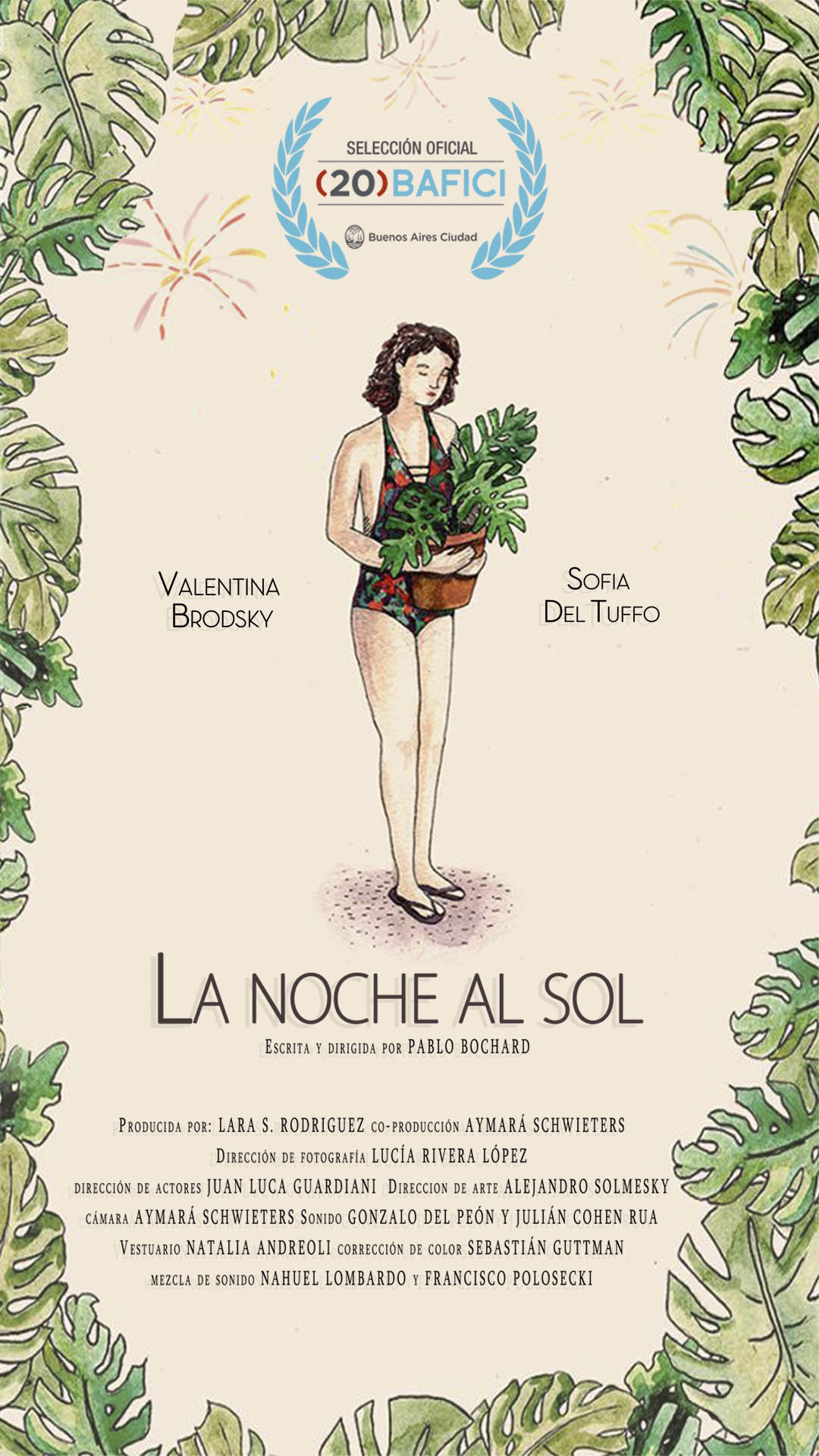
  • La Noche al Sol

    La Noche al Sol


    A Sunny Night


    Technical Info / Información Técnica:

    (2018) – 00:18:22 – XAVC-S – 16:9 – PAL – 23 FPS – HD – Color – Sound Stereo – Argentina – narrative short film, graduation thesis, LGBT


    Short Synopsis / Sinopsis Corta:

    New Year’s Eve is here. The city is in a trance-like state. Among blackouts, fireworks, and cheap cider, a girl lets herself flow with people she doesn’t know, hoping to feel something different.


    Llega noche de fin de año. La ciudad está como en trance. Entre cortes de luz, sidra barata y fuegos artificiales, una chica se dejará fluir entre gente que no conoce, buscando sentir algo diferente.


    Synopsis / Sinopsis:

    New Year eve arrives in Buenos Aires, in time of economic crisis. Ada tries evades reality with Zoe, creating a fantasy world front a camera. But electric light cuts in the house, forcing them to make other plans. Night comes and Ada doesn’t have anyone to toast, so stay with Zoe and her friends. She carried away from events and tries to celebrate, although every situation only confirms her true loneliness.


    Llega año nuevo a Buenos Aires, en una época de crisis económica. Ada intenta evadirse con Zoe, creando un mundo de fantasía frente a una cámara. Pero la luz se corta en toda la casa y deben cambiar los planes. Llega la noche y como Ada no tiene con quién celebrar se queda con Zoe y sus amigos a quién no conoce. Ada se entrega a la noche y trata de pasarla bien, aunque cada situación solo la soledad que la rodea.


    Director´s Biography / Biografía del Director:

    PABLO BOCHARD

    www.pablobochard.com

    Pablo Bochard born in Buenos Aires en 1990, he study in Universidad Nacional de las Artes. To date he has made several short films, including La Revancha (2015) and Nomophobia (2016).


    Pablo Bochard naciò en Buenos Aires en 1990, estudiò en la Universidad Nacional de las Artes. Lleva hasta la fecha realizados varios cortometrajes entre los que se distinguen La Revancha (2015) y Nomofobia (2016).


    Director’s Statement / Declaraciones del Director:

    A Sunny Night is born in the summer of 2017 out of my need to express my emotions and those of the people around me. In the film, I narrate a story about young, unemployed, lonely people with artistic pretensions that attempt to share a New Year’s Eve party. I was interested in recreating an urban summer, rarefied by the overwhelming heat and silences. A summer full of idleness and the obsession to fill time with empty conversations, celebrations and unfamiliar people. The lead character, who is out of place in all the scenes, goes through a silent transformation. As she lets herself go with the flow of situations, she gradually loses her clothing until finally, in a leap of faith towards freedom; she walks through the city in her bathing suit, oblivious to outside eyes.


    La Noche al Sol nace en el verano de 2017, a través de una necesidad de expresar emociones mías y de la gente que me rodea. Quería narrar una historia sobre jóvenes con pretensiones de artistas, desocupados y solitarios que tratan de compartir una fiesta de año nuevo. Me interesaba trabajar sobre un verano urbano enrarecido, de calor agobiante y de grandes silencios. Un verano de ocio y de obsesión por llenar el tiempo con charlas vacías, festejos y gente desconocida. La protagonista, que está desubicada en todas las escenas, sin embargo, va sufriendo una transformación silenciosa. Mientras se deja llevar por el fluir de situaciones que se interrumpen, va perdiendo su vestimenta. Para finalmente dar un salto y se arrojarse, en un acto vacío y liberador, a caminar en maya por la ciudad, olvidándose de la mirada ajena.


    Overview / Ficha técnica:

    Script / Guión: Pablo Bochard

    Director / Director: Pablo Bochard

    Production / Producción: Lara S. Rodríguez

    Cinematography / Dirección de fotografía: Lucía Rivera López

    Camera / Cámara: Aymará Schwieters

    Art Director / Director de Arte: Alejandro Solmesky

    Sound Design / Diseño de Sonido: Nahuel Lombardo, Francisco Polosecki

    Editing / Edición: Pablo Bochard

    Cast / Actores: Valentina Brodsky, Sofía del Tuffo


    Festivals, Awards and Nominations / Festivales, Premios y Nominaciones:

    – 20 BAFICI; 04/2018; Argentina

    – 4 Mostra La Ploma, LGBT IFF; 05/2018; España

    – 7 Muestra de Cine Independiente del Centro; 06/2018; Argentina

    – 15 Outfest Perú, LGBT International Film Festival; 06/2018; Perú

    – 1 Piotr, International LGBTQ & Coming Of Age Short-Films Festival; 09/2018; France


    Links:

    Trailer English: https://vimeo.com/254587725

    Facebook: https://www.facebook.com/lanochealsol/


    – Contact / Contacto:

    Gisela Chicolino

    Gisela@filmstofestivals.com


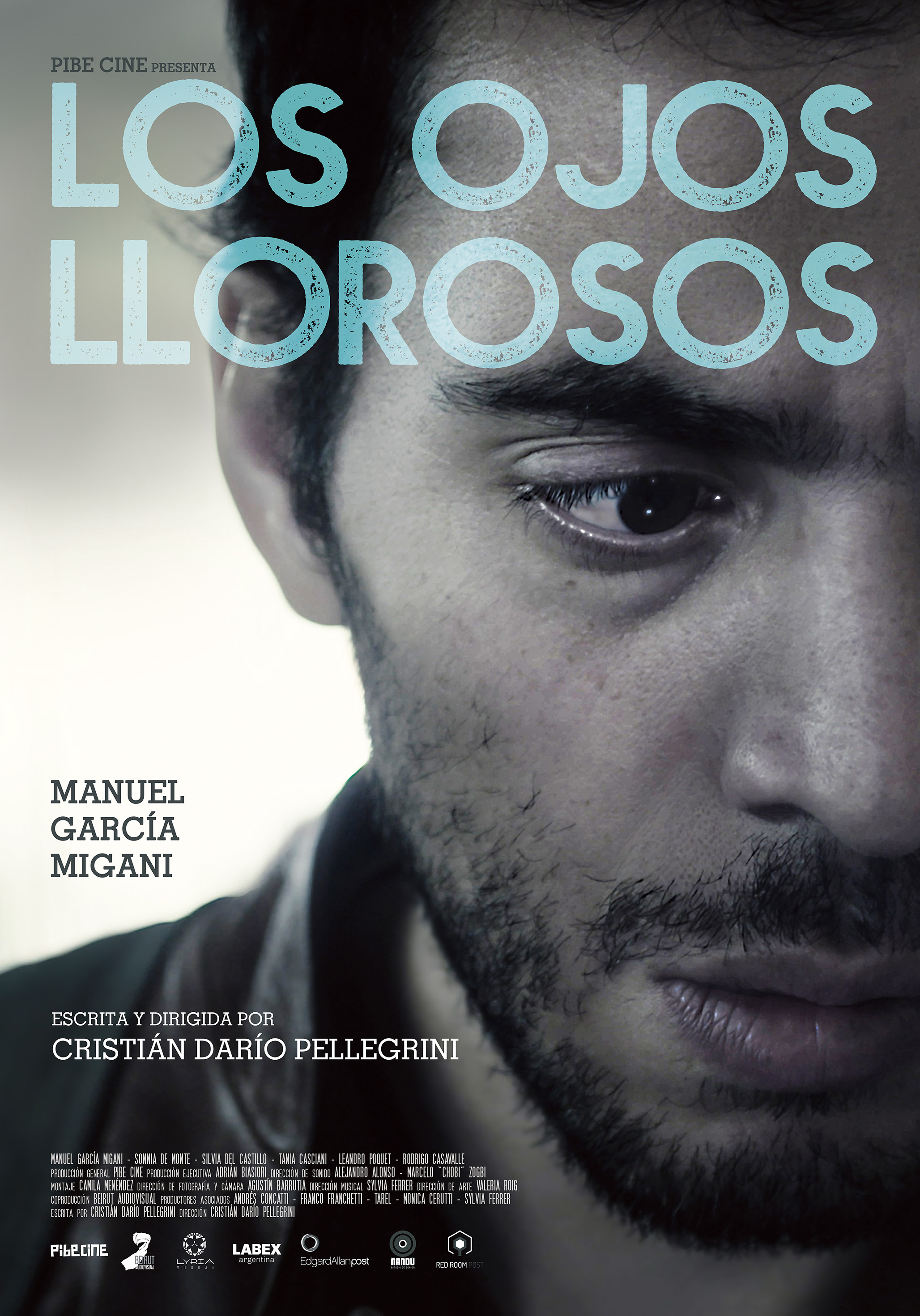
  • Los Ojos Llorosos

    Los Ojos Llorosos


    Misty Eyes


    Technical Info / Información Técnica:

    (2018) / 01:40:00 / Sony FS7 / 4k / 25 fps / 1,9:1 / PAL / Color / 5.1 / Mendoza, Argentina / Drama, LGBT


    Logline:

    A superhero sick with AIDS tries to save his life.


    Un superhéroe enfermo de sida intenta salvar su vida.


    Logline:

    A young journalist sick with AIDS and addicted to cocaine lives scared because his life is in danger of death, to save himself he must take medicine, change his habits and ask for help from his loved ones even if he does not want to.


    Un joven periodista enfermo de sida y adicto a la cocaína vive asustado porque su vida corre peligro de muerte, para salvarse deberá tomar los medicamentos, cambiar sus hábitos y pedir ayuda a sus seres queridos aunque no quiera.


    Short Synopsis / Sinopsis Corta:

    On the day of his birthday, Alice receives the medication to begin treatment for HIV. His deteriorated health puts his life at risk. Without thinking, he starts a trance moved by love and fear, his convictions and imagination, guilt and desire.


    El día de su cumpleaños, Alice recibe la medicación para iniciar el tratamiento contra el VIH. Su salud deteriorada pone en riesgo su vida. Sin pensarlo entra en un trance movilizado por sus convicciones y la imaginación, la culpa y el deseo.


    Synopsis / Sinopsis:

    On the same day of his birthday, Alice receives the medication to begin treatment for HIV. Without thinking, he starts a trance moved by love and fear, his convictions and imagination, guilt and desire. Alice must fight, live and love with the disease.


    El mismo día de su cumpleaños, Alice recibe la medicación para iniciar el tratamiento contra el VIH. Su salud, deteriorada por el SIDA, pone en riesgo su vida. Sin pensarlo entra en un trance movilizado por el amor y el miedo, sus convicciones y la imaginación, la culpa y el deseo. Alice debe luchar, vivir y amar con la enfermedad.


    Long Synopsis/ Sinopsis Larga:

    Alice is a young journalist with AIDS who must start taking medication to stop the disease. On the same day of his birthday, he receives the medication to begin treatment for HIV. Without thinking, he starts a trance moved by love and fear, his convictions and imagination, guilt and desire. Alice has to learn how to live and love with that disease-fighting against family and personal prejudices.


    Alice es un joven periodista enfermo de sida que debe comenzar a tomar la medicación para detener la enfermedad. El mismo día de su cumpleaños recibe la medicación para iniciar el tratamiento contra el VIH. Sin pensarlo entra en un trance movilizado por el amor y el miedo, sus convicciones y la imaginación, la culpa y el deseo. Alice tiene que aprender a vivir y amar con esa enfermedad luchando contra los prejuicios familiares y personales.


    Director´s Biography / Biografía del Director:

    CRISTIÁN PELLEGRINI

    Facebook: https://www.facebook.com/cdpellegrini

    Cristián Pellegrini graduated from the Cuyo Regional School of Film and Video as a screenwriter and filmmaker. In 2010 he directed his first film «Veronica Videla’s Passion» which performed a successful circuit in film festivals obtaining international awards. In 2012 he directed the television series «Augustine» released by canal Acequia and in 2013 the documentary «Bowen, history of a country,» released by TVP. In 2017 he wrote and directed his second feature, «Misty eyes».


    Egresa de la Escuela Regional Cuyo de Cine y Video como guionista y realizador cinematográfico. En el año 2010 dirige su ópera prima “La pasión de Verónica Videla” que realiza un exitoso circuito en festivales LGBT obteniendo premios internacionales. En el 2012 dirige la serie de televisión “Agustín” estrenada por canal Acequia y en el 2013 el Documental “Bowen, historia de un país”, estrenada por la TVP. En el 2016 escribe y dirige su segundo largometraje “Los ojos llorosos” que finaliza en el 2018.


    Director Statement / Declaraciones del Director:

    Is it an autobiographical story? A friend asks me It was a bit difficult to answer. Sometimes, we write stories – like the script of a movie – and we are not aware that later, and unfailingly, we have to take charge of that story and those characters that we created.  Yes, the story is autobiographical. I answer him.  It is impossible not to record it here.  I think that all the stories, to a greater or lesser extent, tell experiences, links and emotions of the author. How can I create a character that does not know how to love if I have not loved or I have not known how to love?  My motivation is vital: I have a desire and need to tell it.  Alice’s crisis is a moment of crossroads, dilemmas and contradictions common to all men. The idea of touching a small fiber in the spectator and moving it, and maybe even transforming it into a story, I really like it.  How is the sex of infected bodies? Should we say it before? Why? Will I have infected it? Will it have infected me? He wonders.  Alice must take antiretroviral medication but she does not want to. Why? How far do you want to go? Does not know.  Tearful eyes propose to address the story of Alice, a person who lives with HIV, without moralizing her strategy and her decisions. Alice does not do anything that could be expected of him. He rebels, he does what he can, what comes out of him, and from that vital impulse, he embarks on a path. Illness is something that happens to you because you live, because you choose, by chance. The image of Alice walking adrift on the cold winter nights in Mendoza, looking for some consolation for her madness; looking for a love, the Pablo; looking for I do not know what to be better; that single image created for the viewers to know and follow, motivates and pushed me to finish this movie.


    ¿Es una historia autobiográfica? Me pregunta un amigo. Fue un poco difícil responder. A veces, escribimos historias – como el guión de una película – y no somos conscientes que luego, posterior e indefectiblemente, tenemos que hacernos cargo de esa historia y de esos personajes que creamos. Sí, la historia es autobiográfica. Le respondo. Es imposible no consignarlo acá. Pienso que todas las historias, en mayor o menor medida, cuentan vivencias, vínculos y emociones del autor. ¿Cómo puedo crear a un personaje que no sabe amar si no he amado o no he sabido amar? Mi motivación es vital: tengo ganas, deseos y necesidad de contarla. La crisis de Alice es un momento de encrucijadas, dilemas y contradicciones común a todos los hombres. La idea de tocar una pequeña fibra en el espectador y emocionarlo, y hasta quizás transformarlo en pos de una historia, me gusta mucho. ¿Cómo es el sexo de los cuerpos infectados? ¿Hay que decirlo antes? ¿Por qué? ¿Lo habré infectado? ¿Me habrá infectado? Se pregunta. Alice debe tomar la medicación antiretroviral pero no quiere. ¿Por qué? ¿Hasta dónde quiere llegar? No lo sabe. “Los ojos llorosos” propone abordar la historia de Alice, una persona que vive con VIH, sin moralizar su estrategia y sus decisiones. Alice no hace nada de todo aquello que se podría esperar de él. Se rebela, hace lo que puede, lo que le sale y desde esa pulsión vital emprende un camino. La enfermedad es algo que le sucede porque vive, porque elige, por azar. La imagen de Alice caminando a la deriva en las noches frías de invierno en Mendoza, buscando un poco de consuelo a su locura; buscando un amor, el Pablo; buscando no sé qué cosa para estar mejor; esa sola imagen creada para que los espectadores lo conozcan y lo sigan, me motiva y empujó a terminar esta película.


    Overview / Ficha técnica:

    Script / Guión: Cristián Pellegrini

    Production / Producción: Adrián Biasiori

    Productor Assistant / Asistente de producción: Franco Franchetti

    Director / Director: Critián Pellegrini

    Cinematography / Dirección de Fotografía: Agustín Barrutia

    Art Director / Director de Arte: Valeria Roig

    Direct Sound / Sonido directo: Alejandro Alonso, Marcelo Zogbi

    Editing / Edición: Camila Menéndez

    Asistentes de fotografía: Santiago Ferreira y Luis Fernández

    Asistentes de arte: Camila Guevara y Alejandra Mugas

    Asistente de sonido: Raúl Sotelo y Hernán González

    Diseño Gráfico: Nicolás Tuzzi

    Prensa y Difusión: Pablo Pereyra

    Maquillaje: Lorena Santisteban

    Peinado: Ariel Cudeiro

    Original Music / Música Original: Sylvia Ferrer, Emiliano Barbuzza Quesada

    Cast / Actores: Manuel García Migani (Alice), Sonnia De Monte (Vilma), Silvia Del Castillo (Silvia), Tania Casciani (Nico), Leandro Poquet (Pablo), Rodrigo Casavalle (Pela), Guillermo Olarte (Retamales), Carlos Romero (Dr. Manzur), Eliana Borbaláz (Enfermera), Alejandra Trigueros (Olga), Sylvia Ferrer (Cantante), Ernesto Latino Saa (Fiscal)


    Festivals, Awards and Nominations / Festivales, Premios y Nominaciones:

    – OUTshine Miami LGBT Film Festival; 04/2018; US

    – FICA Hidalgo, Festival Internacional de Cine de América: “Best Continental Panorama Narrative Film”; 05/2018; México

    – AMOR, LGBT+ International Festival; 06/2018; Chile

    – QFest, Houston International LGBTQ Film Festivals; 07/2018; US

    – Muestra VIHsible; 12/2018; Perú


    Links:

    Trailer: https://vimeo.com/262295071

    Facebook: https://www.facebook.com/pibecine/


    Contact / Contacto:

    Gisela Chicolino

    FilmsToFestivals

    Gisela@filmstofestivals.com


    Pibe Cine

    Adrián Biasiori

    Bio: Productor de cine y tv. Comenzó sus estudios de cine en la Escuela Regional Cuyo de Cine y Video, luego se diplomó en Dirección y Producción de Cine, Video y Televisión en la Universidad Politécnica de Cataluña. Finalizó estudios de posgrado en la Facultad Latinoamericana de Ciencias Sociales FLACSO sobre Educación, Imágenes y Medios. Ha producido y dirigido documentales en Argentina y Chile abordando las temáticas de género y diversidad. Fue Codirector del festival Libercine – Festival de Cine sobre Diversidad y Género de Argentina hasta el año 2011. Es programador en festivales internacionales de cine como DIVA FILM FESTIVAL Valparaíso, Chile y PINK LATINO de Toronto, Canadá. Actualmente tiene en desarrollo el guión, «Lucía Valdez» su primer largometraje de ficción.

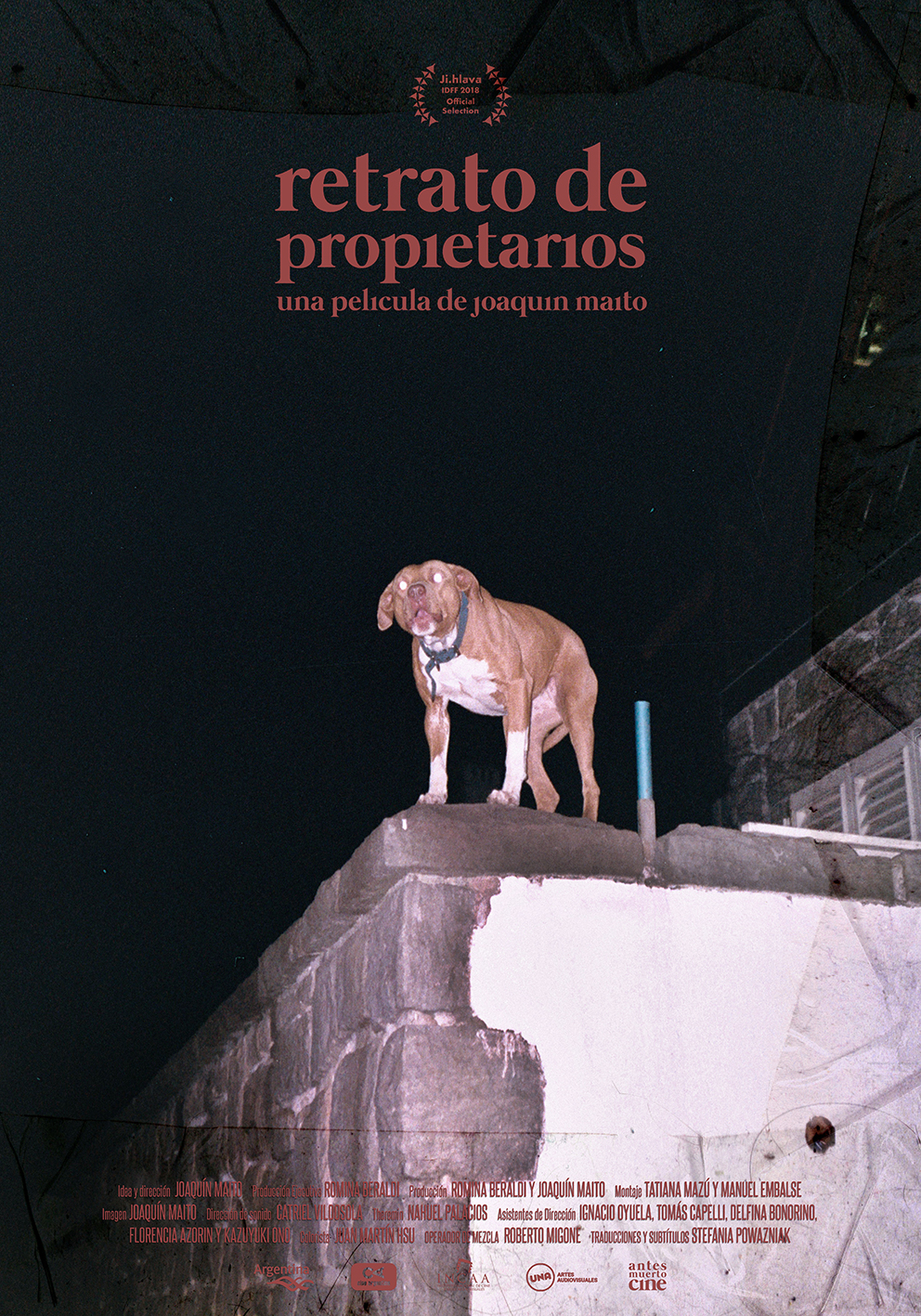
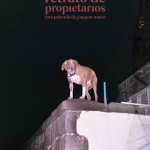
  • Retrato de Propietarios

    Retrato de Propietarios

    Owner’s Portrait     


    – Technical Info / Información Técnica:

    (2018) / 01:19:44 / 25fps / 16:9 / 4k / color / dolby 5.1 / Argentina, Japan, Spain / First Documentary Feature


    – Synopsis / Sinopsis:

    There’s an island far away from the map where there are no more humans, money or work. Only remains a community of cats that transmits a libertarian message through antennas, which immediately spread that frequency throughout the planet. The dogs are the first beings to hear those sounds. Meanwhile, the workers lose their lives working in the factory. In New Year’s Eve, under the enormous fireworks all over the sky, domestic animals take advantage and start to escape from their prisons, to create from the ruins their own freedom. But the owners go out to look for them. In that quest, they listen to the voices of past revolutions and wonder if a new world can be built.


    Hay una isla alejada del mapa donde ya no quedan humanos, dinero, ni trabajo. Sólo permanece allí una comunidad de gatos que transmite un mensaje libertario. Las antenas lo propagan a lo largo y ancho del planeta y son los perros los primeros en escucharlo. Mientras tanto, los obreros pierden la vida trabajando en la fábrica. En año nuevo, bajo un cielo de fuegos artificiales, los animales domésticos aprovechan y escapan de sus prisiones, para crear desde las ruinas su propia libertad. Pero los propietarios salen a buscarlos. En esa deriva, escuchan las voces de las revoluciones pasadas y se preguntan si un mundo nuevo puede crecer en ese instante.


    – Director´s Biography / Biografía del Director:

    JOAQUÍN MAITO

    Joaquín Maito (1987) is an independent filmmaker from Argentina. Together with Tatiana Mazú, he filmed the documentary “The State of Things” in 2012, which was selected for screening at the Argentinian Mar del Plata International Film Festival.


    Joaquín Maito vive en Buenos Aires. Se dedica a la realización del cine, dirección de fotografía y dirección de arte. Se graduó de la Universidad Nacional de las Artes. En 2012 co-dirigió el documental «El estado de las cosas» estrenado en el Festival de Cine de Mar del Plata. En el 2018 formó parte de «Talent Buenos Aires». En la actualidad se encuentra filmando una película colectiva sobre la fe religiosa, que se presentará el próximo año.


    Director’s Statement / Declaraciones del Director:

    Everything started with an image in my head: a world without «pets». That image became a documentary essay with a science fiction atmosphere, about freedom, work, domestic animals and societies in capitalism. Images and sounds are built in the film in a mysterious way, no human voices are heard. On the screen, we see a world that is a great prison, where animals are locked in their homes and humans imprisoned in their jobs. It seems that this confinement, very naturalized by the human species, any escape is allowed. Our destiny as workers is to produce richness, to which we will never have access. A world with a lucky few and many slaves of an economic system that never stops. But the film aspires to a different world, presenting a fable starring cats and dogs that decide not to be part of this prison and escape in search of their freedom. The most extraordinary thing is that pets understand that the only way they have to be free is also releasing humans, so they decide to broadcast a message of freedom through the antennas of the world to reach all beings that inhabit. The humans in their endless routine listen to the message and wonder about this new world that is growing at this moment…


    Todo comenzó con una imagen en mi cabeza: un mundo sin “mascotas”. Esa imagen se convirtió en un ensayo documental con atmósfera de ciencia ficción, sobre la libertad, el trabajo, los animales domésticos y las sociedades en el capitalismo. Las imágenes y los sonidos van construyendo  la película de forma misteriosa, casi que no se escuchan voces humanas. Se nos presenta ante la pantalla un mundo que es una gran cárcel, donde los animales están encerrados en sus casas y los humanos encarcelados en sus trabajos. Pareciera que este encierro muy naturalizado por la especie humana, no admite escapatoria. Que nuestro destino como obreros es producir las riquezas, a las cuales nunca vamos a tener acceso. Un mundo con unos pocos afortunados, y muchísimos esclavos de un sistema económico que no da tregua. Pero la película aspira a un mundo distinto, presentando una fábula protagonizada por gatos y perros que deciden no ser más parte de esta prisión y escapar en búsqueda de su libertad. Lo más extraordinario es que los animales domésticos entienden que la única manera que tienen de ser libre es también liberando al humano, es así que deciden transmitir un mensaje de libertad a través de las antenas del mundo para que llegue a todos los seres que lo habitan. Los humanos en su rutina interminable, escuchan el mensaje y se preguntan por el mundo nuevo que está creciendo en este instante…


    – Overview / Ficha técnica:

    Script / Guión: Joaquín Maito

    Producer / Producción: Romina Beraldi, Joaquín Maito

    Executive Production / Producción Ejecutiva: Romina Beraldi

    Director / Director: Joaquín Maito

    Assistant Director: Ignacio Oyuela, Tomás Capelli, Delfina Bonorino, Florencia Azorin, Kazuyuki Ono

    Director of Photography and Camera / Dirección de Fotografía y Cámara: Joaquín Maito

    Film Editor / Edición: Tatiana Mazú, Manuel Embalse

    Post-Production: Juan Martín Hsu

    Sound design / Diseño de sonido: Catriel vildosola (asa)

    Original Music / Música Original: Nahuel Palacios


    Festivals, Awards and Nominations / Festivales, Premios y Nominaciones:

    – 22 Jihlava International Documentary Film Festival (Best Documentary: First Lights Competition); 10/2018; Czech Republic

    – 19 New Horizons International Film Festivals; 07/2019; Poland

    – 15 Festifreak, International Independent Film Festival; 09/2019; Argentina


    Links:

    Trailer English Subtitles:  https://vimeo.com/259974525

    Instagram: https://www.instagram.com/retratodepropietarios/


    Contact / Contacto:

    Gisela Chicolino

    FilmsToFestivals Distribution Agency
    info@filmstofestivals.com


    Antes Muerto Cine


  • Román

    Román


    ROMÁN


    Technical Info / Información Técnica:

    (2018) – 01:01:00 – Color – Sound 5.1 – 24 fps16/92k – Argentina – second feature film / LGBT


    Short Synopsis / Sinopsis Corta:

    An unexpected sexual awakening and the concealment of an unavoidable desire constitute the main motor of Román.


    Un inesperado despertar sexual y el ocultamiento de un deseo ineludible constituyen el principal motor de Román.


    Synopsis / Sinopsis:

    An unexpected sexual awakening and the concealment of an unavoidable desire constitute the main motor of Román, a tale about self-discovery in which, without even noticing it, a quiet real estate agent starts feeling attracted to another man, twenty years younger than he is.


    Un inesperado despertar sexual y el ocultamiento de un deseo ineludible constituyen el principal motor de Román, un relato acerca del autodescubrimiento en el que un callado agente inmobiliario comienza, casi sin darse cuenta, a sentirse atraído por otro hombre, veinte años más joven que él.


    Director´s Biography / Biografía del Director:

    MAJO STAFFOLANI

    https://www.imdb.com/name/nm8923719/

    Majo Staffolani de Amoriza, was born in Eldorado Misiones, Argentina in 1990.Writer, Producer, Film editor and Director of independent and communitarian movies. Currently teaching and doing workshops in the City of Buenos Aires, Province of Buenos Aires, Misiones and Mendoza. Founder of VIVO SIENDO CINE: Self-managed Production Company which made possible more than twenty audiovisuals productions in a time of five years, among them: Short Films, Teasers, Feature Films and video clips. Founder and General coordinator at CINE ANIMAL, a communitarian film production company created to promote the teaching and neighborhood filmmaking, federal and independent.

    Majo Staffolani nació el 13 de junio de 1990 en Eldorado, Misiones – Argentina. Es guionista, productora y Directora de Cine Independiente. En el 2016 rodó su ópera prima COLMENA en Co – Producción con Colombia, Ecuador, Venezuela y Paraguay. En el 2018 rodó su segundo largometraje ROMÁN con la Producción Asociada de Vanessa Ragone (Productora de «El Secreto de Sus Ojos»).


    Filmography / Filmografía:

    Colmena (2016) – Opera Prima


    Director’s Statement / Declaraciones del Director:


    Overview / Ficha técnica:

    Script / Guión: Majo Staffolani

    Director / Director:Majo Staffolani

    Production / Producción:Majo Staffolani

    Executive Production / Producción Ejecutiva: Alan Ramírez, Joaquín Villafañe, Majo Staffolani

    Associated Productor / Productor Asociado: Vanesa Ragone

    Cinematography / Dirección de fotografía: Mariana Bomba

    Art Director / Director de Arte: Antonela Schmid

    Sound Design / Diseño de Sonido: Alex Stef Savino

    Editing / Edición: Luca Castello, Majo Staffolani

    Original Music / Música Original:

    Cast / Actores: Carlo Argento, Gastón Cocchiarale (El Clan), Gabriela Izcovich (Tiempo De Valientes), Lara Crespo


    Festivals, Awards and Nominations / Festivales, Premios y Nominaciones:

    – 20 BAFICI; 04/2018; Argentina


    Links:

    Trailer: https://vimeo.com/264281556   

    Facebook: https://www.facebook.com/romanbakarnepelicula/


    – Contact / Contacto:

    Gisela Chicolino

    FilmsToFestivals Distribution Agency
    Gisela@filmstofestivals.com


    Joaquín Villafañe

    Juncal 3124; (1425)

    14/12/1992 – 37.217.658

    5491163746281

    Argentino

    https://www.imdb.com/n/ame/nm9730733/


    Alan Ramírez

    Cabildo 160; (1426)

    20/3/1989 – 34.436.595

    5491166314710

    Argentino


    Productora Asociada:

    Vanessa Ragone 

    Ángel Carranza 1932 

    8/3/1967 – 18.304.710

    Argentina

    https://www.imdb.com/name/nm0706577/


    ROMÁN


    Technical Info / Información Técnica:


    (2018) – 01:01:00 – Color – Sound 5.1 – 24 fps16/92k – Argentina – second feature film / LGBT


    Short Synopsis / Sinopsis Corta:


    An unexpected sexual awakening and the concealment of an unavoidable desire constitute the main motor of Román.


    Un inesperado despertar sexual y el ocultamiento de un deseo ineludible constituyen el principal motor de Román.


    Synopsis / Sinopsis:


    An unexpected sexual awakening and the concealment of an unavoidable desire constitute the main motor of Román, a tale about self-discovery in which, without even noticing it, a quiet real estate agent starts feeling attracted to another man, twenty years younger than he is.


    Un inesperado despertar sexual y el ocultamiento de un deseo ineludible constituyen el principal motor de Román, un relato acerca del autodescubrimiento en el que un callado agente inmobiliario comienza, casi sin darse cuenta, a sentirse atraído por otro hombre, veinte años más joven que él.


    Director´s Biography / Biografía del Director:


    MAJO STAFFOLANI

    Zapiola 1013, 1E; (1426); Buenos Aires; Argentina

    +5491160572109

    staffolanicine@hotmail.comhttps://www.imdb.com/name/nm8923719/

    DNI: 34.478.018 – 13/06/1990  


    Majo Staffolani nació el 13 de junio de 1990 en Eldorado, Misiones – Argentina.

    Es guionista, productora y Directora de Cine Independiente. En el 2016 rodó su ópera prima COLMENA en Co – Producción con Colombia, Ecuador, Venezuela y Paraguay. En el 2018 rodó su segundo largometraje ROMÁN con la Producción Asociada de Vanessa Ragone (Productora de «El Secreto de Sus Ojos»).


    Majo Staffolani de Amoriza, was born in Eldorado Misiones, Argentina in 1990.Writer, Producer, Film editor and Director of independent and communitarian movies. Currently teaching and doing workshops in the City of Buenos Aires, Province of Buenos Aires, Misiones and Mendoza. Founder of VIVO SIENDO CINE: Self-managed Production Company which made possible more than twenty audiovisuals productions in a time of five years, among them: Short Films, Teasers, Feature Films and video clips. Founder and General coordinator at CINE ANIMAL, a communitarian film production company created to promote the teaching and neighborhood filmmaking, federal and independent.


    Filmography / Filmografía:


    Colmena (2016) – Opera Prima


    Director’s Statement / Declaraciones del Director:


    Overview / Ficha técnica:


    Script / Guión: Majo Staffolani

    Director / Director:Majo Staffolani

    Production / Producción:Majo Staffolani

    Executive Production / Producción Ejecutiva: Alan Ramírez, Joaquín Villafañe, Majo Staffolani

    Associated Productor / Productor Asociado: Vanesa Ragone

    Cinematography / Dirección de fotografía: Mariana Bomba

    Art Director / Director de Arte: Antonela Schmid

    Sound Design / Diseño de Sonido: Alex Stef Savino

    Editing / Edición:

    Original Music / Música Original:

    Cast / Actores: Carlo Argento, Gastón Cocchiarale (El Clan), Gabriela Izcovich (Tiempo De Valientes), Lara Crespo


    Festivals, Awards and Nominations / Festivales, Premios y Nominaciones:


    – 20 BAFICI; 04/2018; Argentina


    Links:


    Web: http://blog.filmstofestivals.com/roman-3742

    Trailer: https://vimeo.com/264281556   

    Facebook: https://www.facebook.com/romanbakarnepelicula/


    – Contact / Contacto:


    Gisela Chicolino

    FilmsToFestivals Distribution Agency
    Gisela@filmstofestivals.com

    +5491124501740

    Av. San Pedrito 179, 5A; (1406); Buenos Aires; Argentina


    Joaquín Villafañe

    Juncal 3124; (1425)

    14/12/1992 – 37.217.658

    5491163746281

    Argentino

    https://www.imdb.com/n/ame/nm9730733/


    Alan Ramírez

    Cabildo 160; (1426)

    20/3/1989 – 34.436.595

    5491166314710

    Argentino


    Productora Asociada:

    Vanessa Ragone 

    Ángel Carranza 1932 

    8/3/1967 – 18.304.710

    Argentina

    https://www.imdb.com/name/nm0706577/


  • Supervielle

    Supervielle


    Technical Info / Información Técnica:

    (2018) / 00:02:31 / Super HD 1920×1080 / 2d animation / 24 fps / 16:9 / Color / Sound: 48 kHz / Neuquén, Argentina / Short Film, Animation, Experimental


    Synopsis / Sinopsis:

    “Supervielle” is an abstract short film exploration done with paper shapes, a balance between positive and negative spaces. Is an homage to a great musician, Luciano Supervielle, and his song “Otro dia en Uruguay” (another day in Uruguay).


    “Supervielle” es una exploración abstracta hecha con formas de papel, un balance entre espacios positivos y negativos. Es un homenaje a un gran músico, Luciano Supervielle y a su canción “Otro día en Uruguay”.


    Director´s Biography / Biografía del Director:

    LEONARDO GARCÍA FRANCHI

    Leonardo Garcia Franchi (aka Leo G Franchi) is an award-winning designer and animator based in Patagonia, Argentina. He works with a combination of analog and digital techniques, giving a craft value to the final animation. Short Films: Empty Nest (2014), Supervielle (2018).


    Leonardo Garcia Franchi es un Diseñador Gráfico y Animador viviendo en la Patagonia, Argentina. Ganador de destacados premios a lo largo de su carrera, su trabajo se destaca por ser una combinación de técnicas análogas y digitales, dándole a la animación final un valor artesanal.  Cortos Animados realizados: Nido Vacío (2014), Supervielle (2018).


    Overview / Ficha técnica:

    Script-Producer-Director / Guión-Producción-Director: Leo García Franchi


    Animation / Animación: Leo García Franchi

    Original Music / Música Original: «Otro día en Uruguay» by Luciano Supervielle


    Festivals, Awards and Nominations / Festivales, Premios y Nominaciones:

    – 39th Annual Telly Award: “Best Short” Category Non-Broadcast Fully Animated Piece; 05/2018; NY, US

    – Animation Block Party Film Festival; 07/2018; Brooklyn, US


    Links:

    Web: www.lacar.tv/supervielle

    Twitter: www.twitter.com/lacartv

    Instagram: www.instagram.com/lacartv


    Contact / Contacto:

    Gisela Chicolino

    FilmsToFestivals

    Gisela@filmstofestivals.com


    Lacar

    Leo García Franchi

    www.lacar.tv

  • Toda mi Alegría

    Toda mi Alegría

    All my Joy


    – Technical Info / Información Técnica:

    (2018) / 00:14:00 / Red / 25 FPS / ratio: 16/9 / COLOR / SOUND: 5.1 / Argentina / Historias Breves INCAA / Narrative Short Film / childhood / Argentina


    – Synopsis / Sinopsis:

    1997, Christmas Eve. Camila (11) steals a shirt from her brother, rides a bike and gets distracted by a guy who buys fireworks. She gets into the water, plays with her cousins and wears a dress for the dinner. After observing her family through a VHS camera, Camila begins to register herself. 


    1997, Nochebuena. Camila (11) le roba una camisa a su hermano, monta una bicicleta y se distrae con un tipo que compra fuegos artificiales. Ella se mete en la piscina, juega con sus primos y usa un vestido para la cena. Después de observar a su familia a través de una cámara de VHS, Camila comienza a registrarse a sí misma.


    – Director´s Biography / Biografía del Director:

    MICAELA GONZALO

    Born in 1987 in Argentina. She studied Directing and Screenwriting at the CIEVYC film school and then Cinematography and Camera at the Sindicato de la Industria Cinematográfica Argentina (SICA). In 2009 she began teacher training in language and literature and attended workshops run by Argentinian writer Hebe Uhart. Her short films, short stories and screenplays have been invited to festivals and have won various competitions and stipends. She published her debut novel ‘Neptuno’ in 2017.


    Micaela Gonzalo nació en 1987 en Buenos Aires. Estudió cine en CIEVYC. En 2016 su cortometraje “Toda mi alegría” resultó ganador del concurso Historias Breves del INCAA y se estrenó internacionalmente en 2018 en Berlinale 68. En 2017 recibió el premio Ópera Prima con su largometraje “La chica nueva”, además de obtener el primer premio en guion del Fondo Nacional de las Artes y el fondo Ibermedia.


    Filmography

    2012 El entrenador de perros (The Dog Trainer) short film

    2014 El corazón quiere lo que quiere (The Heart Wants What It Wants) short film

    2015 Saber, Hacer, Probar (Taste and Go) TV series, one episode

    2017 Ultimos días del hombre (San Martin); TV documentary

    2018 Toda mi alegría (All My Joy) short film


    – Overview / Ficha técnica:

    Script / Guión: Micaela Gonzalo

    Producer / Productor: Mariana Luconi

    Executive Productor / Productor Ejecutivo: Mariana Luconi

    Production Manager / Jefe de Producción: Tomás Eloy Muñoz

    Director / Director: Micaela Gonzalo

    Director Assistant / Asistente de Dirección: Martín Vilela

    Director of Photography / Dirección de Fotografía: Federico Lastra

    Film Editor / Edición: Ignacio Masllorens

    Art Director / Dirección de Arte: Mirella Hoijmain

    Costumes / Vestuario: Sol Muñoz

    Sound design / Diseño de sonido: Nahuel Palenque

    Original Music / Músic Original: Mariano Di Cesare

    Cast / Elenco: Tali Slipak, Ornella D´ Elia, Mauro Gonzalo, Tobías Milstein, Gonzalo Altamirano, Veronica Schenek, Enrique Federman, Malena Shnitzer, Pablo Perevelli


    Festivals, Awards and Nominations / Festivales, Premios y Nominaciones:

    – Berlinale: Generation; 02/2018; Germany


    Links:

    Teaser: https://drive.google.com/file/d/1afLPT4eI1yyjOjRuMpVm02u7inzGHyiM/view  


    Contact / Contacto:

    Gisela Chicolino

    Gisela@filmstofestivals.com


  • Todo se Calma

    Todo se Calma

    Everything calms down


    – Technical Info / Información Técnica:

    (2018) / 00:14:00 / ratio 2:39 / COLOR / SOUND 5.1 / Camera: / 24 FPS / Argentina / Dramedy, women, lonely


    Storyline:

    Engulfed in her home, a woman makes plans to not leave the house.


    Una mujer inventa planes para no salir de su casa.


    Short Synopsis / Sinopsis Corta:

    Engulfed in her home, a woman makes plans to not leave the house. The imposition of a daily routine keeps her sane. A brief encounter with the outside world or the deviant urge to look out beyond can overwhelm both her and her refuge.


    Una mujer inventa planes para no salir de su hogar. Su rutina la mantiene erguida. Un pequeño encuentro con el exterior y la necesidad de mirar más, desbordan a ella y su refugio.


    – Director´s Biography / Biografía del Director:

    VIRGINIA SCARO

    Argentina/Española

    Virginia Scaro was born in San Miguel de Tucumán, Argentina in 1985. She moves to Buenos Aires city where she studied at the Universidad del Cine with a special focus on sound design. She’s currently working as AD, Producer and Camera Assistant. During her participation in the Art Laboratory at Universidad Torcuato Di Tella, she deepened her investigation on body movement and documentary through a video installation. “Everything Calms Down” is her first short film.


    Director’s Statement / Declaraciones del Director:


    We are mostly women in my family. My aunts and my mother all live in big houses which they used to share with their husbands and children. Today they are alone, and yet those absences lie in waiting, creating what I call an “atmosphere”. I am interested in the physical space of the home as the stage where you can trace a choreography of steps, displacements, and stillness. And how through its daily repetition, these movements create a machine that neutralizes emotions. But intimacy lurches in the small pauses that punctuate a routine when memories seem to swallow time. And this time of remembrance transforms space, animating it with a phantasmagorical “atmosphere”. When I visit my relatives, I stay in their houses. We remain inside for days on end, never wanting to go out, and the private world becomes mysterious. A daily routine is like an axis, holding a person’s life together. But it can also become dislocated, its movements escaping common sense, its activities ebbing and owing without evident cause: wardrobe doors are opened and closed, their contents arranged and rearranged, hoping for a new and better order that perhaps never arrives. And while the outside world must be resisted, the home as a shelter can in turn become oppressive. Nowadays, faced with an extremely demanding world, many attempts at personal affirmation in society end in a flight from reality. The protagonist In Everything Calms Down is living a structural change in the role of domesticity, much like the women in my family. What used to be a fundamental vital framework, starts to lose its meaning after generational movements. And the home becomes the stage for an anchorless time. This condition makes visible the strings that still link this role to a woman.


    – Overview / Ficha técnica:

    Script / Guión: Virginia Scaro

    Producer / Productor: Virginia Scaro

    Executive Producer / Productor Ejecutivo: Lukas Rinner, Román Kasseroller, Virginia Scaro

    Production Assistant / Asistente de producción: Yael Svoboda, María Laura, Truskovsky

    Director / Director: Virginia Scaro

    Director Assistant / Asistente de Dirección: Johanna Schorn

    Director of Photography and Camera / Dirección de Fotografía y Cámara: Román Kasseroller

    Gaffer: Geronimo Gassman, Lorenzo Prati, Andrés Aguiló

    First Assistant Camera / 1er Asistente Cámara: Sofía Rodrigo, Lucas Pérez

    Grip: Ricardo Jaimes

    Still Photography / Foto Fija: Santos Loza

    Production Designer / Dirección de Arte: Lucía Carnicero

    Assistant Designer / Asistente de Arte: Bárbara Hansen, Ignacio Conde, Héctor Bravo, Costume Designer / Vestuario: Pilar Gonzáles

    Film Editor / Edición: Juan Manuel Bramuglia

    Sound design / Diseño de sonido: Nahuel Palenque, Virginia Scaro

    Sound Assistant / Asistencia De Sonido: Fernanda Kraide

    Mixing / Mezcla: Francisco Pedemonte

    Música / Music: Jhongo You

    Cast / Elenco: Rhea Volij, Gerónimo Quevedo


    Festivals, Awards and Nominations / Festivales, Premios y Nominaciones:

    – 43 TIFF, Toronto International Film Festival; 09/2018; Canadá

    – 40 Festival del Nuevo Cine Latinoamericano de La Habana; 12/2018; Cuba

    – 20 ShorTS International Film Festival; 06/2019; Italy

    – 22 Maine IFF; 07/2019; US

    – 18 Concorto Film Festival; 08/2019; Italy

    – LIFF, Lebanese Independent Film Festival; 09/2019; Lebanese Republic


    Links:

    Trailer English Subtitles: https://youtu.be/-JMmo_ja1YM


    Contact / Contacto:

    Gisela Chicolino

    FilmsToFestivals

    Distribution Agency
    Gisela@filmstofestivals.com


    Productor Asociado:

    Lukas Rinner / Roman Kasseroller

    Nabis Film Group

    lukas@nabisfilm.com

    roman@nabisfilm.com

    www.nabisfilm.com


  • Tony

    Tony


    – Technical Info / Información Técnica:

    (2018) / 00:19:35 / sony a7sii / 25 FPS / ratio: 16/9 / COLOR / PAL / SOUND: 5.1 / Argentina / Narrative Short Film / dramedy, women / Argentina


    – Short Synopsis / Sinopsis Corta:

    A young woman has to make a decision about her unwanted pregnancy while resolving a mystery.
     

    Una chica tiene que tomar una decisión sobre su embarazo mientras resuelve un misterio.


    – Synopsis / Sinopsis:

    Victoria is pregnant and sure she doesn’t want to keep the baby. When she receives a strange message for Tony, the man who used to have her phone number, she becomes obsessed with finding him, and as a means of escape, she goes in search of him.


    Victoria está embarazada y segura de no querer tener al bebé. Cuando recibe un curioso mensaje para Tony, el hombre a quien antes le pertenecía su número de teléfono, se obsesiona con encontrarlo y, como modo de escape, emprende su búsqueda.


    – Long Synopsis / Sinopsis Larga:

    Victoria finds out she’s pregnant and is certain she’s not keeping it. Amidst «the news», her friends’ opinions, taking care of her senile grandmother, and figuring out a scheme to get abortion pills, she receives a message for «Tony» the man who used to own her phone number. Victoria becomes obsessed with finding him and feels the duty to deliver to Tony what she considers to be «vital information”.

     

    Victoria se encuentra embarazada y está segurísima que no lo quiere tener. Entre la “sorpresa”, la opinión de sus amigas, cuidar de su abuela senil y las tramoyas para conseguir la medicación, Victoria se obsesiona con encontrar a “TONY”, el hombre a quien le pertenecía su número de teléfono antes que fuera de ella. Habiendo recibido lo que ella considera “de vital información”, y como modo de escape, ella siente el deber de encontrarlo y comunicárselo y así emprende su búsqueda.


    – Director´s Biography / Biografía del Director:

    MALENA FILMUS

    (1990, Buenos Aires) She studied Filmmaking and Production at the New York’s School of Visual Arts and Acting at HB Studio. She currently lives in Los Angeles and is producing the web series Lucky, which she directs and stars in.


    Malena Filmus (1990, Buenos Aires) Estudió Cinematografía y Producción en School of Visual Arts de Nueva York y actuación en HB Studios. Actualmente vive en Los Angeles y está produciendo la serie web “Lucky” que dirige y protagoniza.


    Director’s Statement / Declaraciones del Director:

    When I started working on the script for TONY, the project was meant to be filmed in the United States. I found myself in a very different landscape when I got the opportunity to film it in Argentina, where abortion is still illegal. The main character wasn’t going to be able to get her treatment done as easily, therefore, the physical and mental stakes were higher. While adapting the script, the legalization of abortion wasn’t even part of the local conversation. Doing a dark comedy about it had never been done before and was a very risky endeavor. During the process of filming and after the film’s premiere, the legislature did start the discussion about legalizing abortion and suddenly the issue was on everyone’s mind. Inevitably, this film ended up being a reflection on current events in my country and, I’m happy to say, well-received. To some degree, I hope it helps the discussion, so people can begin to consider some of the realities by first decriminalizing the act in their minds.


    Cuando comencé a trabajar en el proyecto, el guion estaba destinado a ser filmado en Estados Unidos. Con la oportunidad de filmar en Argentina, el escenario con el que me encontré era completamente distinto: El aborto en Argentina es ilegal. El personaje principal no sería capaz de terminar su embarazo sin hacerlo de manera clandestina, y las repercusiones psicológicas y físicas podrían ser más serias. El aborto, además de ilegal, era todavía un tema tabú, y hacer una comedia dramática al respecto era algo nunca antes hecho y arriesgado. Durante el proceso de comenzar a filmar y su estreno, casualmente, la legislatura comenzó a discutir su legalización. La discusión sobre el aborto pasó a ser un tema central en la Argentina y el film terminó siendo un reflejo de la actualidad del país. Fue una grata experiencia la recepción que ha tenido el corto y espero que ayude a la discusión y que el tono de la historia ayude a naturalizar la situación en la que se encuentran las mujeres hoy al decidir abortar.


    – Overview / Ficha técnica:

    Script / Guión: Malena Filmus

    Producer / Productor: Malena Filmus

    Director / Director: Malena Filmus

    Director Assistant / Asistente de Dirección: Melanie Bray

    Director of Photography / Dirección de Fotografía: Natalia Loiacono

    Camera / Cámara: Faustino García

    Film Editor / Edición: Tomas Maumus

    Art Director / Dirección de Arte: Lucia Mariel Diego

    Sound design / Diseño de sonido: Gonzalo Palmieri

    Cast / Elenco: Malena Filmus, Martin Garabal, Matias Marmorato, Tulio Alzaga, Valeria Giorcelli, Santiago Korovsky, Jazmin Carballo, Ailen Zoe Monzón, Julieta Zapiola, Lucas Lagomarcino, Miel Bargman, Tulio Alzaga, Daniela Vix, Nora Filmus, Eileen Filmus, Ailen Filmus, Agustina Scelzi, Lorena Kerchen, Amanda Busnelli


    Festivals, Awards and Nominations / Festivales, Premios y Nominaciones:

    – BAFICI; 04/2018; Argentina


    Links:


    Contact / Contacto:

    Gisela Chicolino

    Gisela@filmstofestivals.com