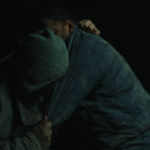
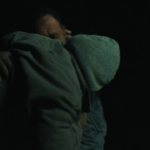
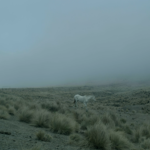
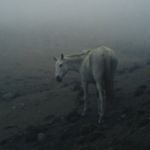
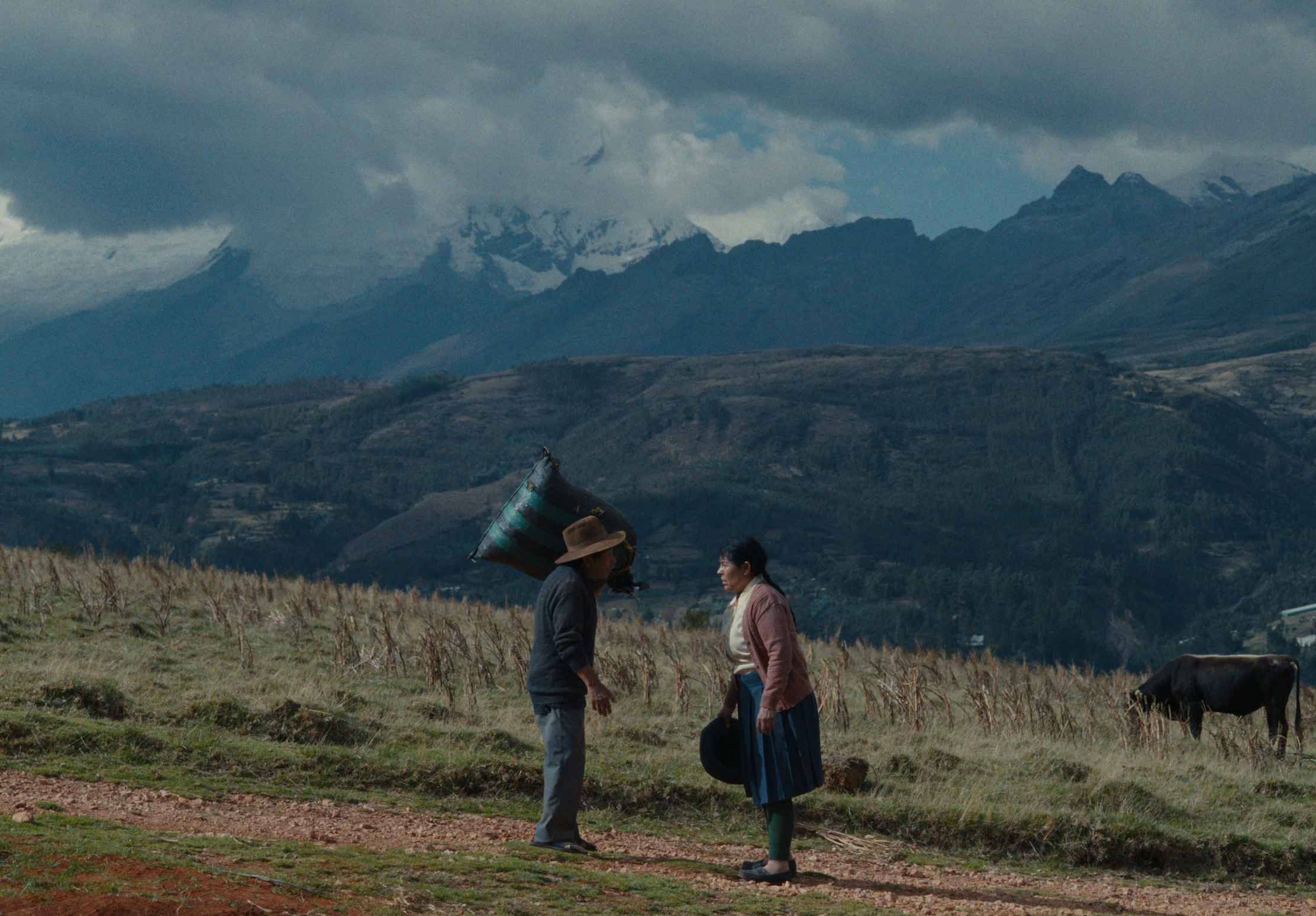
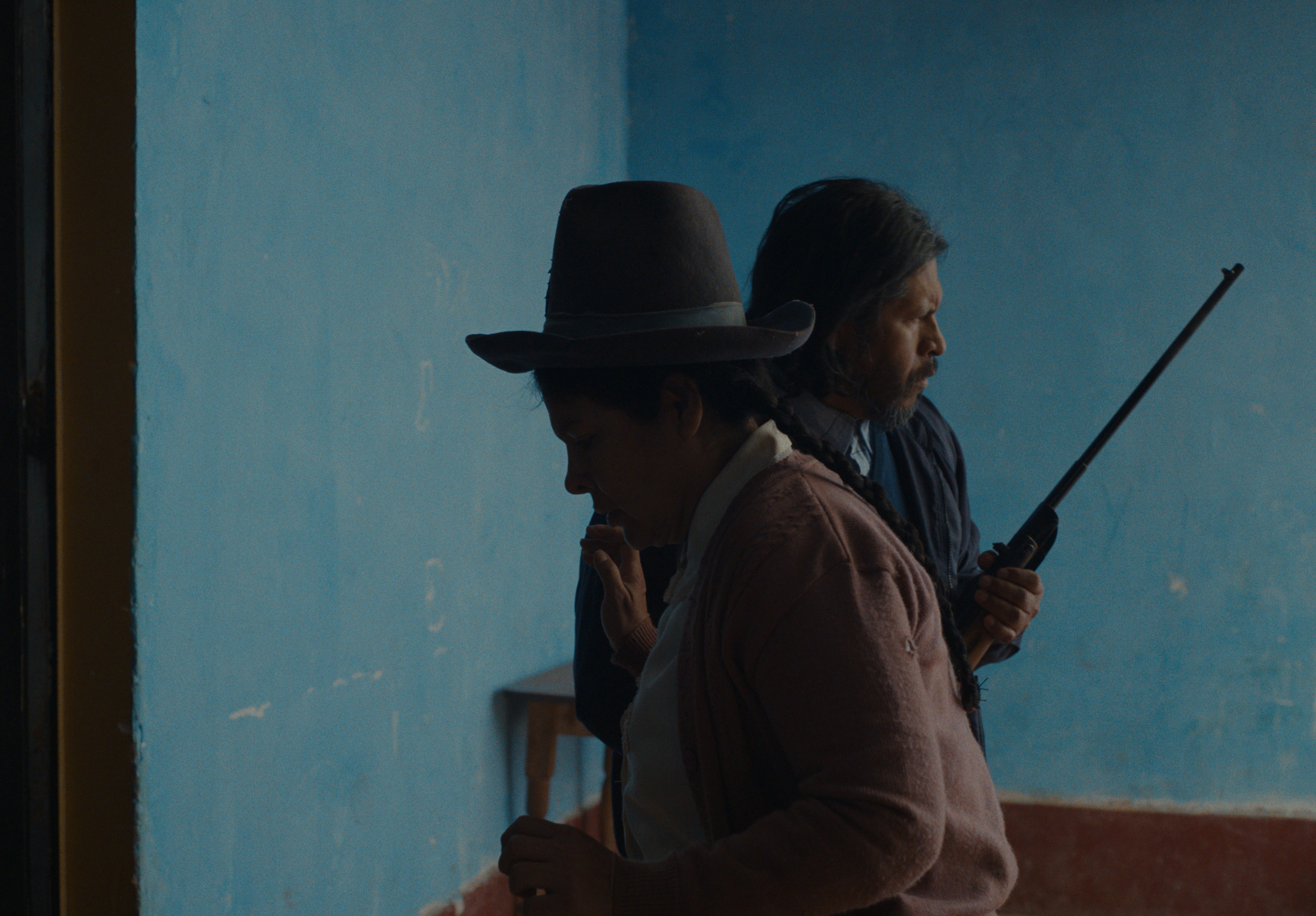
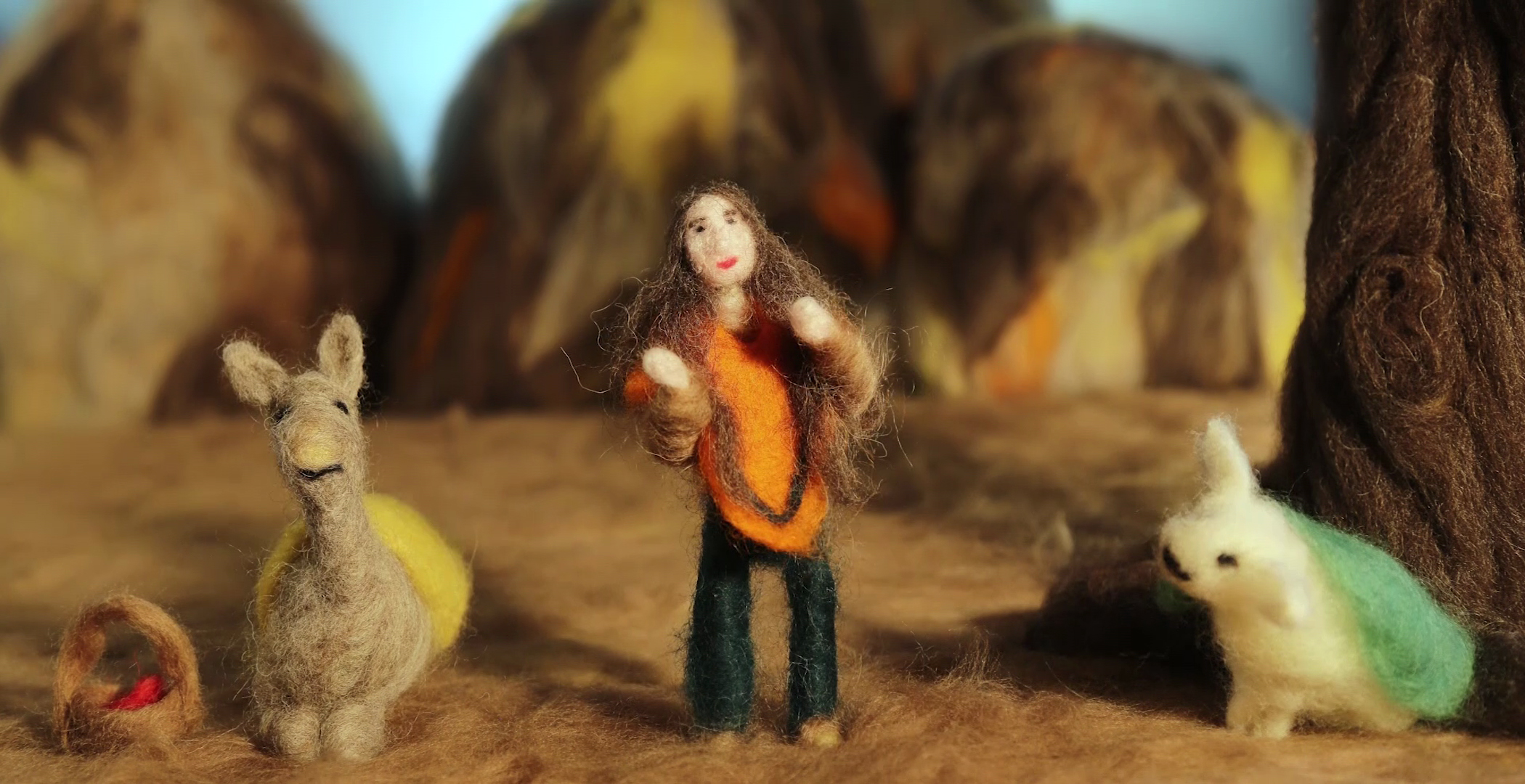
Hybrid Short Film: Non-fiction Drama: Portrait, Domination, Masculinity, Machismo
1.85:1 flat / COLOR / 5.1 / 4K / 24 FPS / NTSC / Red Scarlett
Logline:
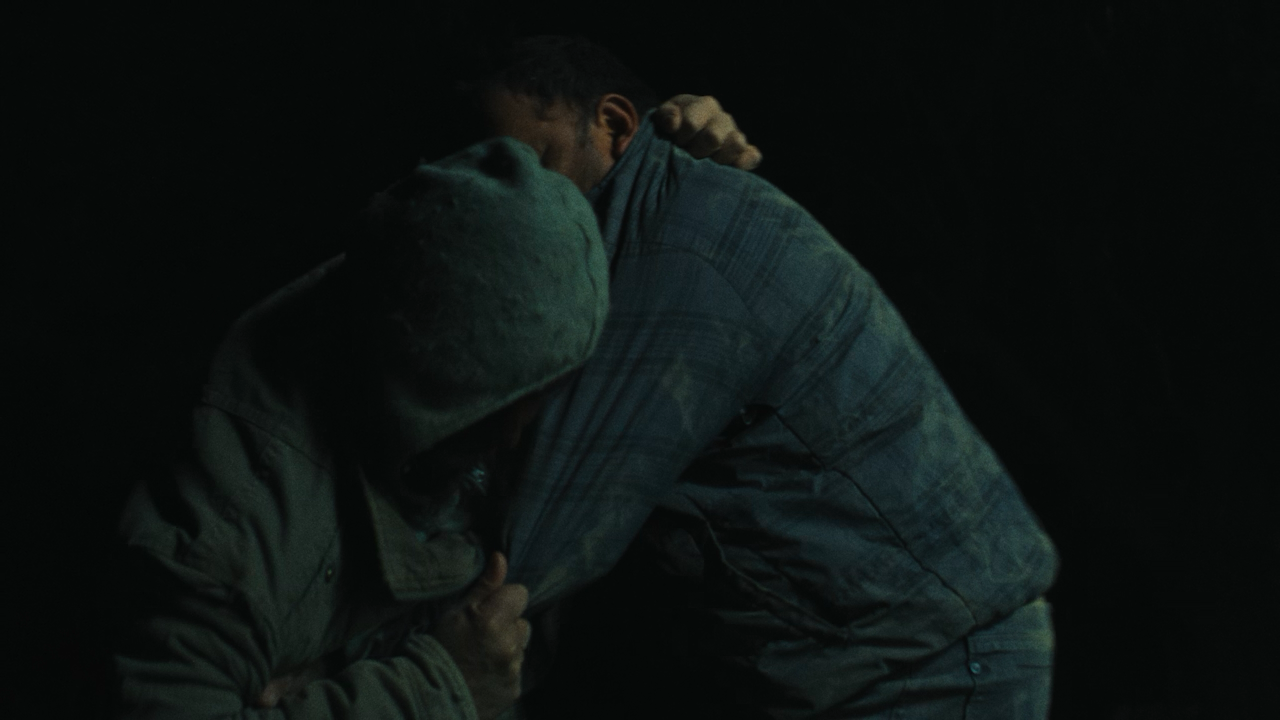
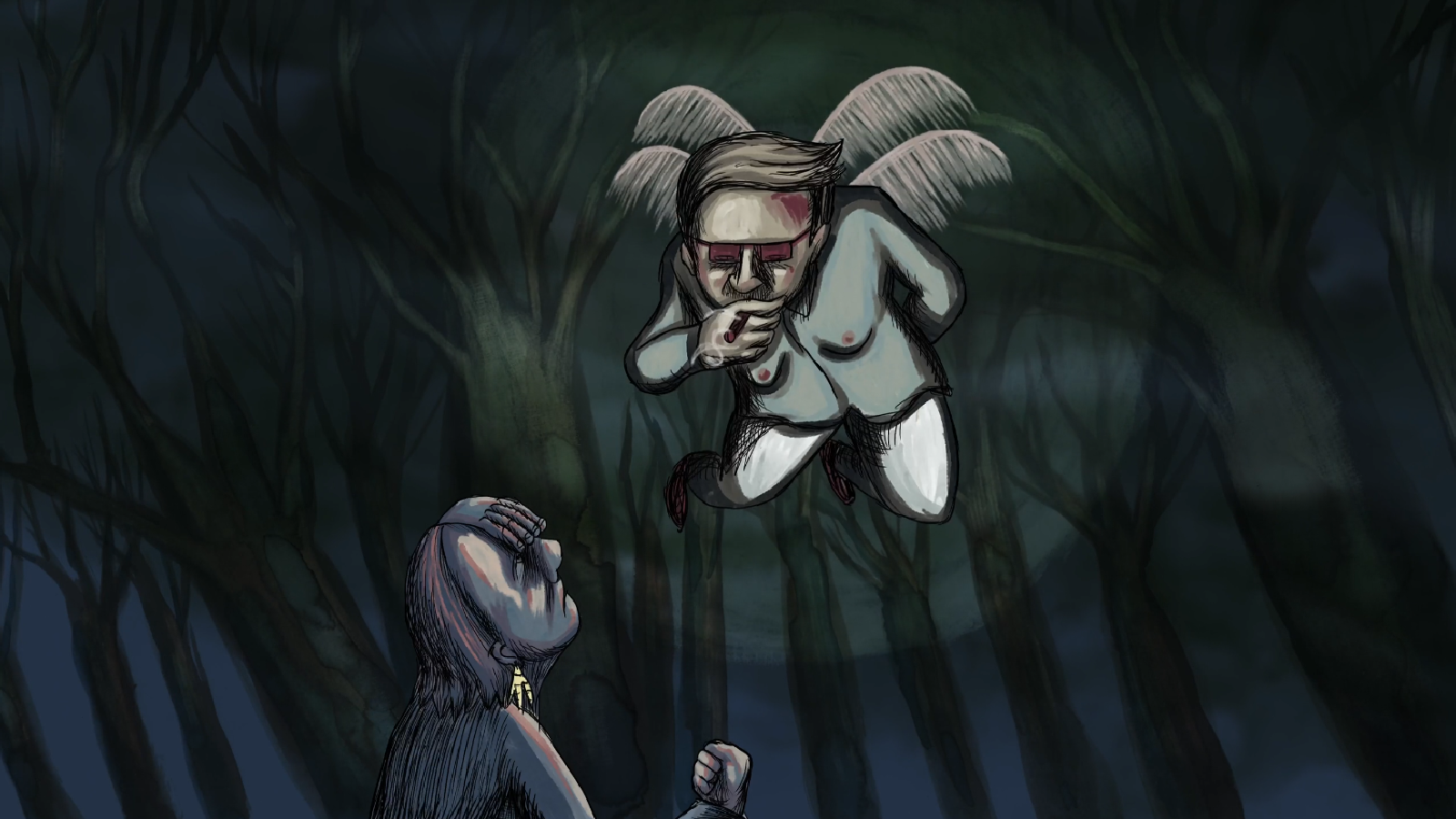
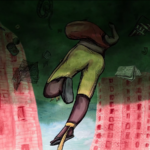
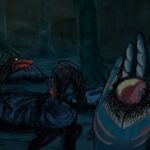
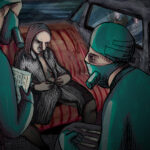
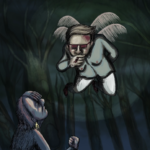
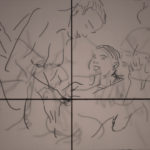
A drunk, a fight, and a mare. None of them finds any relief.
Un borracho, una pelea y una yegua. Ninguno encuentra alivio.
Director’s Biography / Biografía del Director:
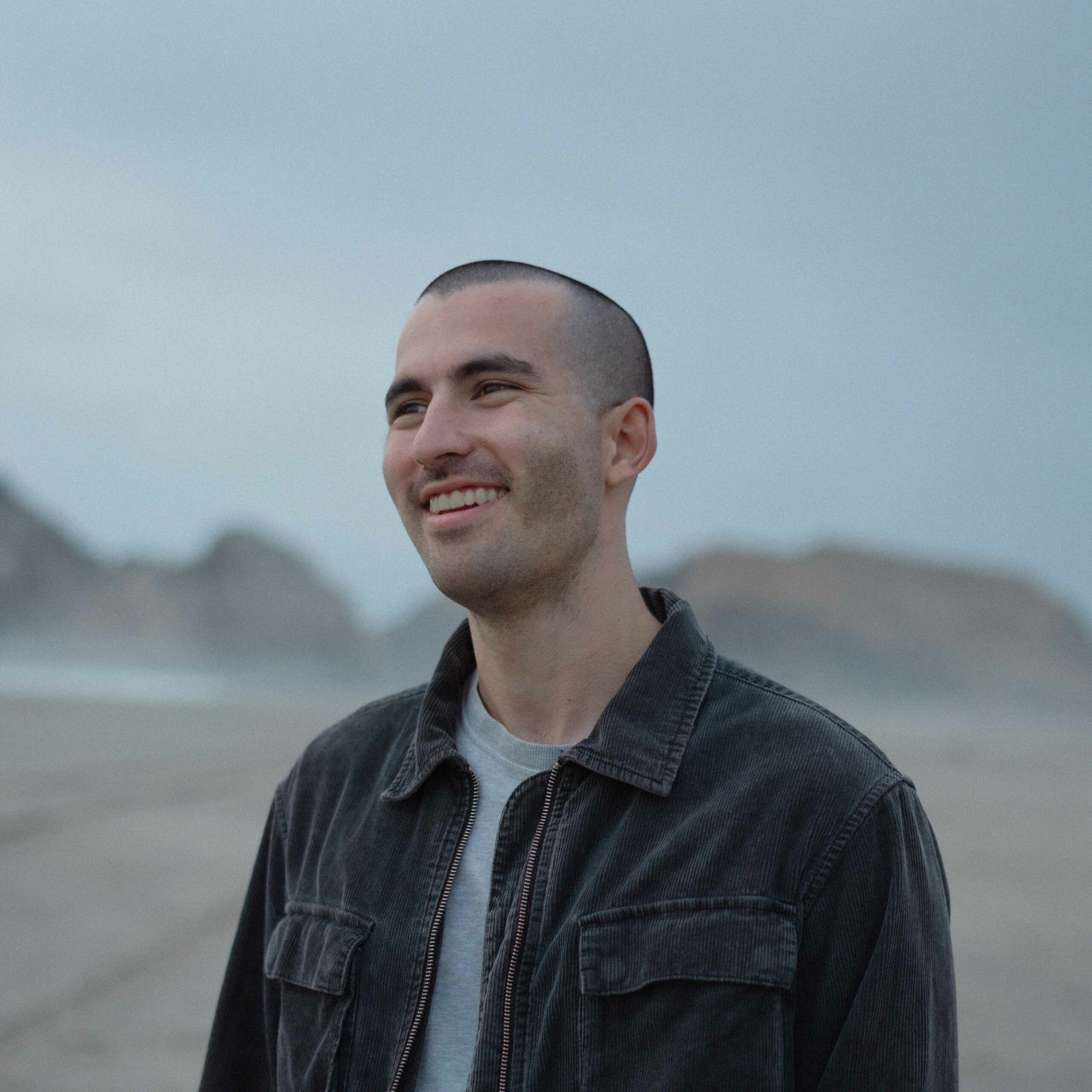
VIRGINIA SCARO
Argentina
Virginia Scaro (Tucumán, 1985) is a director and sound designer. She began her career as a sound designer for film and multimedia arts. Her debut short film, TODO SE CALMA (2018), had its world premiere at TIFF (Canada). YEGUA is her most recent work, which had its world premiere at BAFICI 2026, where it won the award for best Argentine short film. She is currently developing her first feature film, EL DORADO. In 2025, she founded the CINA CINE screenwriting residency in Uruguay.
Virginia Scaro (Tucumán, 1985) es directora y diseñadora de sonido. Inició su carrera como diseñadora de sonido para cine y artes multimediales. Su cortometraje debut, TODO SE CALMA (2018),tuvo su estreno mundial en TIFF (Canadá). YEGUA es su obra más reciente, con estreno mundial en BAFICI 2026, donde obtuvo el premio al mejor cortometraje argentino. Actualmente desarrolla su primer largometraje, EL DORADO. En 2025 fundó la residencia de guion CINA CINE en Uruguay..
Director’s Statement / Declaraciones del Director:
Destined to be confined within bodies
[Damn drunkenness]
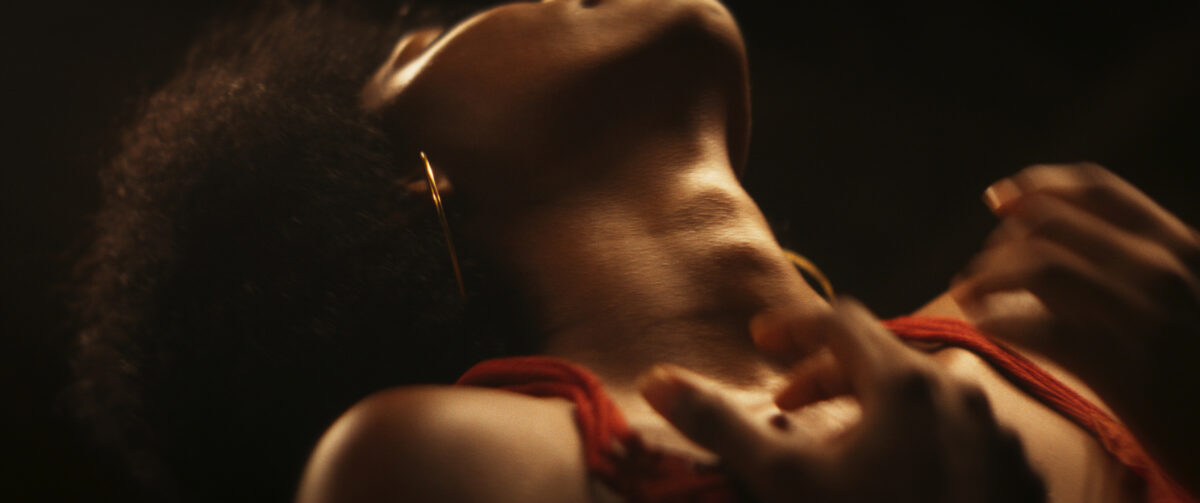
I needed to exorcise certain masculine behaviors that ultimately result in gazes directed at the female body. Which, as if it were nothing, is taken for granted. Whether due to geography, history, alcohol, tradition, or religion, these currents are cornered, trapped between the mountains, forming an idiosyncrasy that is difficult to dissolve. “We are alone, we die alone,” says Moreno. That degree of fragility against the immensity of nature, the mountain so close to the heavens, an existentialism where materiality somehow loses its weight and disintegrates in the wind. And the horse appeared as a body from the realm of the half-dream, but it also came to restore to that man the nobility he had lost. When filming wrapped up, I discovered that all the horses I had filmed were females: mares.
Destinada a encerrarse en los cuerpos
[Maldita borrachera]
Necesitaba exorcizar ciertas conductas masculinas que finalmente recaen sobre miradas hacia el cuerpo femenino. Que, como si nada, se da por costumbre. Sea por la geografía, la historia, el alcohol, la tradición o la religión, estas corrientes se arrinconan, quedando atrapadas entre las montañas, formando una idiosincrasia difícil de disolver. “Estamos solos, morimos solos”, dice Moreno. Ese grado de fragilidad sobre la inmensidad de la naturaleza, la montaña tan cercana a los cielos, un existencialismo donde la materialidad de alguna manera pierde peso y se desintegra en el viento. Y el caballo se presentó como un cuerpo del orden del entresueño, pero también vino a devolverle a ese hombre la nobleza que había perdido. Al finalizar el rodaje descubrí que todos los caballos que había grabado eran hembras: yeguas.
Overview / Ficha técnica:
Scriptwriter & Director / Guionista y Director: Virginia Scaro
Director Assistant / Asistente de Dirección: Eric Bier
Producer / Productor: Virginia Scaro
Associate Producer / Productor Asociado: Roman Kasseroller, Gale Cine
Cinematography Dir. de Fotografía: Roman Kasseroller
Sound / Sonido Directo: Lucía Palenzuela
Film Editor / Montaje: Javier Favot
Sound design / Diseño de sonido:Mercedes Tennina, Virginia Scaro
Original Music / Música Original: Diego Alberti
Cast / Elenco:Rodolfo Moreno, Agustín Dioli
Distribution / Distribución: Gisela Chicolino – FilmsToFestivals
Festivals and Awards / Festivales, Premios y Nominaciones:
– 27° BAFICI, Buenos Aires Int’l Independent Film Festival (Best Short Film); 04/2026; Argentina
– 36° Kinoforum, Sao Paulo ISFF; 08/2026; Brazil
– 28° FestCuasBH, Belo Horizonte International Short Film Festival; 10/2026; Brazil
– 30° Internationale Kurzfilmtage Winterthur; 11/2026; Switzerland
Fiction Short Film: Coming Of Age, Youth & Teen, Grow Up, Diversity, LGBTIQ+, Family, Romance
16:9 / Color / 4K / 5.1 / 24 FPS / Red Komodo
Logline:
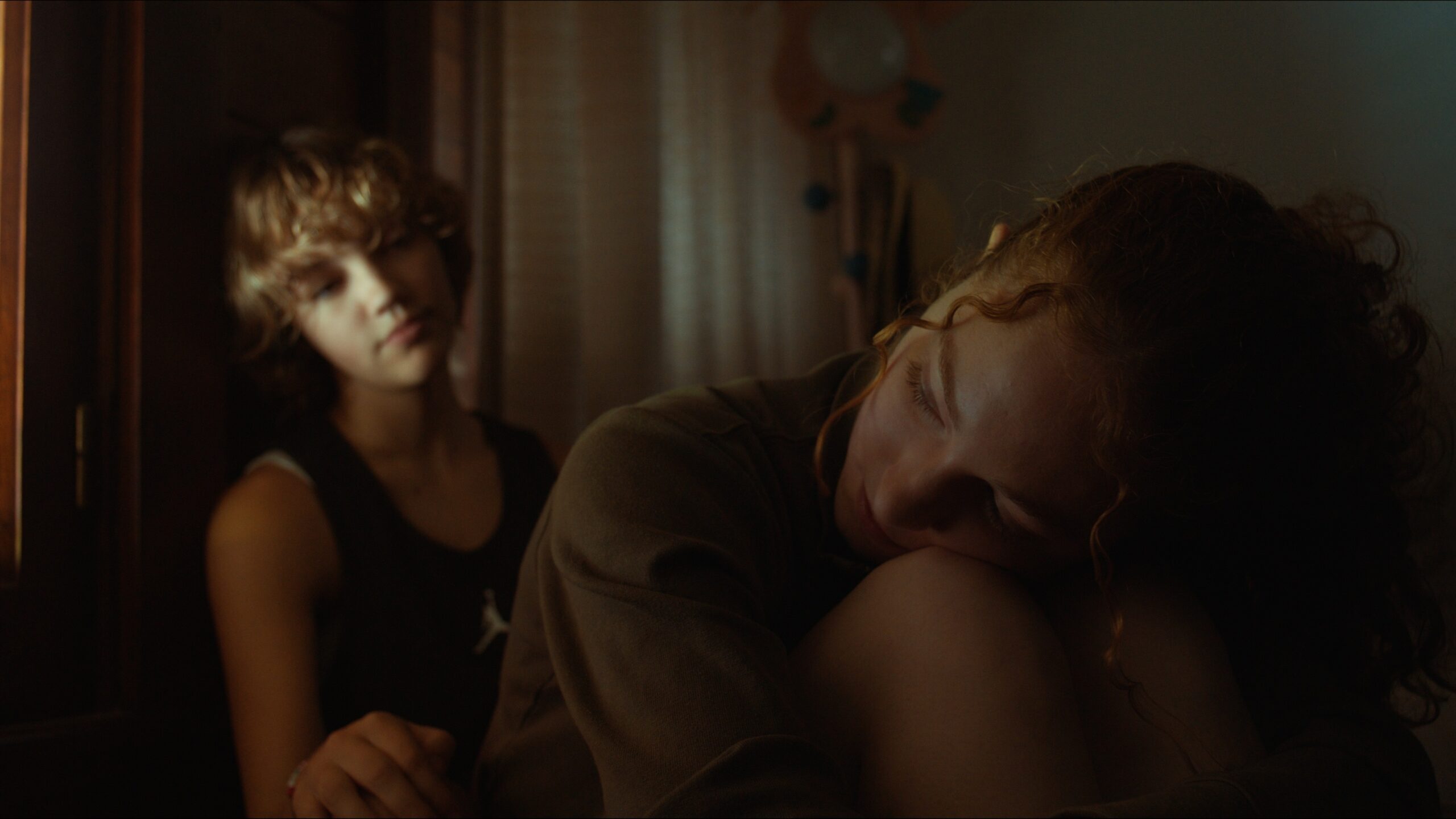
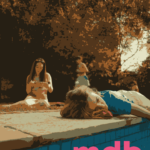
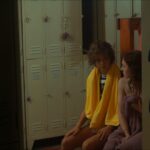
Summer 2005 in Mar del Plata. The Bikini Open and Ladies Night heat up the season. Pilar (14) and Camila (14) live their first love in secret from a society that does not accept them.
Verano del 2005 en Mar del Plata. El Bikini Open y los Ladies Night le dan calor a la temporada. Pilar (14) y Camila (14) viven su primer amor a escondidas frente a una sociedad que no las acepta.
Short Synopsis / Sinopsis Corta:
Summer of 2005 in Mar del Plata. The Bikini Open and Ladies Night heat up the season. Pilar (14) and her family spend their afternoons at an upscale spa, where she meets Camila (14). The two teenage girls experience their first love in secret, navigating a society that does not accept them.
Verano del 2005 en Mar del Plata. El Bikini Open y los Ladies Night le dan calor a la temporada. Pilar (14) y su familia pasan las tardes en un balneario de clase alta. Allí conoce a Camila (14). Las adolescentes viven su primer amor a escondidas frente a una sociedad que no las acepta.
Synopsis / Sinopsis:
Summer of 2005 in Mar del Plata. The ‘Bikini Open’ and the ‘Ladies Night’ heat up the season. Pilar (14) and her family spend their afternoons at an upscale health resort in the city. There, she meets Camila (14). They fall in love amid photologs, ringtones, love letters, and plenty of ‘punchy, punchy’ noise. The spa starts to spread rumors that they are girlfriends. The teenage girls experience their first love secretly from a society that doesn’t accept them.
Verano del 2005 en Mar del Plata. El Bikini Open y los Ladies Night le dan calor a la temporada. Pilar (14) y su familia pasan las tardes en un balneario de clase alta de la ciudad. Allí conoce a Camila (14), entre fotolog, ringtones, cartas de amor y mucho “punchi, punchi» se enamoran. El balneario comienza a dispersar el rumor de que son novias. Las adolescentes viven su primer amor a escondidas frente a una sociedad que no las acepta.
Director’s Biography / Biografía del Director:
MILA AQUILIA
Argentina
She is an audiovisual director from UNICEN (Argentina) and serves as Director of Photography for CONGO Films (Colombia). She directed the short film “Something That Is Not Me”. Currently, she is developing her debut feature “Mar del Beach”, which has been selected for Marplalab 2023 and Ventana Sur’s Punto Género Pitching Sessions.
Es Realizadora Audiovisual por la UNICEN (Argentina) y Directora de Fotografía por CONGO films (Colombia). Dirigió el cortometraje “Algo que no soy yo”. Actualmente desarrolla su ópera prima “Mar del Beach” seleccionada por Marplalab 2023 y por Punto Género Pitching Sessions de Ventana Sur.
Director’s Statement / Declaraciones del Director:
This short film, like much of my questioning, stems from uncomfortable moments in my life—moments that should never have unfolded that way. It’s disheartening to have grown up in a society that only recognized one way to exist: to conform. As a director, I feel it’s essential to capture the essence of growing up in the 2000s along the Argentine Atlantic coast, to confront who we were. I aim to reflect on what our parents instilled in us: What matters more—being well or appearing well? Our generation must expose the society we grew up in, creating our own audiovisual heritage. There was one summer when these thoughts and discomforts faded away, and I fell in love—not just with anyone, but with a girl. Undertaking this project is, in part, a way to shout something I couldn’t voice before: it’s about accepting myself. Mar del Beach is a short film that evokes the scent of sunscreen and the taste of sea salt clinging to your hair. It tells a teenage love story set in our country’s most iconic spa, Mar del Plata. With its photologs, polyphonic tones, MSN chats, and the rhythmic “punchi, punchi”. I offer a glimpse into my own adolescence. The film paints a portrait of those years on the Argentine coast, where men applaud at the “Bikini Open,” moral and physical judgments are the beach’s favorite pastime, and prejudices are passed around like snacks.
Este cortometraje y casi todo lo que me cuestiono nace de momentos incómodos en mi vida, momentos que no tendrían que haber sido así. Es una pena haber crecido en una sociedad en la cual sólo había una forma de ser, y esa forma era ser igual a los demás. Desde mi rol como directora, creo necesario poner en imágenes y en sonidos un registro de la crianza de los años dos mil en la costa atlántica argentina, para de algún modo, hacernos cargo de lo que fuimos. Parte de mi intención es reflexionar sobre lo que nos inculcan nuestros padres. ¿Cuál es la prioridad? ¿Estar bien o que te vean bien? Es nuestra generación la que tiene que exponer la sociedad en la que crecimos generando nuestro propio patrimonio audiovisual. Hubo un verano en el que todos estos pensamientos y malestares dejaron de invadir mi cabeza y fue cuando me enamoré, y no sólo me enamoré, me enamoré de una chica. Llevar adelante este proyecto, es en parte, gritar a los cuatro vientos algo que antes no podía ni decir. Es aceptarme. Mar del Beach es un cortometraje que nos deja olor a protector solar y sabor a sal de mar cuando te chupas el pelo. Una historia de amor adolescente que sucede en el balneario más emblemático de nuestro país. Una Mar del Plata dosmilera, de fotolog, ringtones polifónicos, MSN y mucho “punchi, punchi”. Hago un recorte de mi propia adolescencia marplatense construyendo un pequeño retrato de época que reflexiona sobre la crianza de esos años en la costa atlántica argentina, mientras los hombres aplauden culos en el “Bikini Open”, el juicio moral y corporal es el deporte favorito de la playa y los prejuicios se comparten como sandwiches.
Overview / Ficha técnica:
Script / Guión: Aldana D ́Urso, Micaela Ibarguren, Mila Aquilia
Producer / Producción: Aldana D ́Urso, Micaela Ibarguren, Mila Aquilia
A young girl who’s given up her childhood to survive crossing the treacherous Darien Gap discovers a portal to a magical world where she learns to be a kid again.
Una pequeña, que ha renunciado a su infancia para sobrevivir el cruce por la selva del Darién, descubre un portal a un mundo mágico en donde aprende a ser una niña de nuevo.
Short Synopsis / Sinopsis Corta:
In this coming-of-innocence tale, a Venezuelan migrant girl who’s been forced to abandon her childhood to survive crossing the jungle between Colombia and Panama discovers a portal to a magical land where she’s able to reconnect with her imagination, ultimately learning how to be a kid again.
Zuli, una pequeña migrante venezolana, quien ha abandonado su infancia para sobrevivir el cruce entre Colombia y Panamá, descubre un portal que la transporta a una tierra mágica donde reconecta con su imaginación y aprende a ser una niña otra vez.
Synopsis / Sinopsis:
After being separated from her mother while crossing the treacherous jungle between Colombia and Panama, Zuli, a young Venezuelan migrant, is forced to abandon her childhood to survive in this dangerous place. While working for a coyote to help guide other migrants through the jungle, Zuli discovers a portal to a magical land, where she must turn to her imagination to reconnect with her innocence and, ultimately, learn how to be a kid again.
Después de haber sido separada de su madre mientras intentaban cruzar la selva entre Colombia y Panamá, una pequeña migrante venezolana se ve obligada a abandonar su infancia para sobrevivir. Zuli empieza a trabajar para un coyote que guía a migrantes dentro de la selva. En uno de sus viajes ella tropieza con un portal que la transporta a una tierra mágica donde se ve impulsada a reconectar con su inocencia y su imaginación, aprendiendo a ser una niña otra vez.
Director´s Biography / Biografía del Director:
BETTINA LÓPEZ MENDOZA
Venezuela
Bettina is a Venezuelan screenwriter and filmmaker. Having spent her childhood moving across borders, first to Mexico and then to the U.S., Bettina has always been fascinated by reality as a subjective construct. Her work often centers overlooked characters who challenge the limits the world imposes on them. Most recently, Bettina co-wrote Netflix’s animated feature film “Miraculous: Ladybug & Cat Noir, The Movie” (2023) and showran Audible’s Ambie Award-winning fiction podcast “PREVIA: A Tech Heist,” which she also directed.
Bettina López Mendoza is a Venezuelan screenwriter and filmmaker. Having spent her childhood moving across borders, her work often centers misunderstood characters who challenge the limits the world imposes on them. After graduating from USC, Bettina got her start working with director Michael Gracey on the musical hit «The Greatest Showman.» She went on to co-write Netflix’s animated film «Miraculous: Ladybug & Cat Noir,» and showrun Audible’s Ambie Award-winning fiction podcast «PREVIA: A Tech Heist.» Bettina makes her screen directorial debut with Más Allá (“Beyond.”)
Director’s Statement / Declaraciones del Director:
In my home country of Venezuela, it’s not rare to see children fending for themselves. This film was inspired by their capacity to find joy in the most ordinary, sometimes devastating places. With pure imagination, they can escape their realities, finding delight in landfills, cemeteries, highway drains… As adults, this escape from reality becomes more extreme. The mass exodus of people from my country through the Darien Gap cemented the message I had to tell: that migration is the bravest act of imagination. This source of creativity fueled the story of Zuli – a girl who has lost her innocence and who must regain her sense of imagination to find the hope to go on. Fueled by this idea of a coming-of-innocence, I set out to test the bounds of the audience’s imagination. Could I get them to suspend disbelief and imagine elements of the story beyond what I put on screen? Employing magical realism and practical effects, I set out to create a film that is as grounded as it is whimsical. The handheld, documentary-style cinematography puts us directly into Zuli’s muddy boots. She is a vehicle for our exploration. The more Zuli sheds her adult-like limitations, the more fantastical the elements around her become. Only when she is ready to let her imagination soar do we experience a full separation from the cinematic reality, allowing the cinematography and musical score to take flight. Making this film was practice in reconnecting with my inner child. The result is a love letter to that childlike abandon that fuels our biggest hopes and dreams and an ode to anyone who’s ever been brave enough to imagine a better life.
En mi país de origen, Venezuela, no es raro ver a niños resolviendo por sí mismos. Esta película se inspiró en su capacidad de encontrar alegría en los lugares más ordinarios y, a veces, devastadores. Con pura imaginación pueden escapar de sus realidades, encontrando encanto en vertederos, cementerios, desagües… De adultos, este escape de la realidad se vuelve más extremo. El éxodo masivo de mi país a través del Tapón del Darién consolidó el mensaje que tenía que transmitir: que la migración es el acto de imaginación más valiente. Esta fuente de creatividad alimentó la historia de Zuli, una niña que ha perdido su inocencia y que debe recuperar su sentido de la imaginación para encontrar la esperanza de seguir adelante. Impulsada por esta idea del “encuentro de la inocencia», me propuse poner a prueba los límites de la propia imaginación del público. ¿Podría lograr que suspendieran su incredulidad e imaginaran elementos de la historia más allá de lo que puse en pantalla? Empleando el realismo mágico y efectos prácticos, me propuse crear una película tan realista como fantasiosa. La cinematografía de estilo documental nos pone directamente en las botas enlodadas de Zuli. Ella es el vehículo para nuestra propia exploración. Cuanto más se deshace Zuli de sus limitaciones adultas, más fantásticos se vuelven los elementos que la rodean. Sólo cuando está lista para dejar volar su imaginación experimentamos una separación total de la realidad cinematográfica, permitiendo que la cinematografía y la partitura musical tomen vuelo. Hacer esta película fue una práctica para reconectarme con mi niña interior. El resultado es una carta de amor a ese abandono infantil que alimenta nuestros sueños y esperanza, y una oda a cualquiera que alguna vez haya sido lo suficientemente valiente como para imaginar una vida mejor.
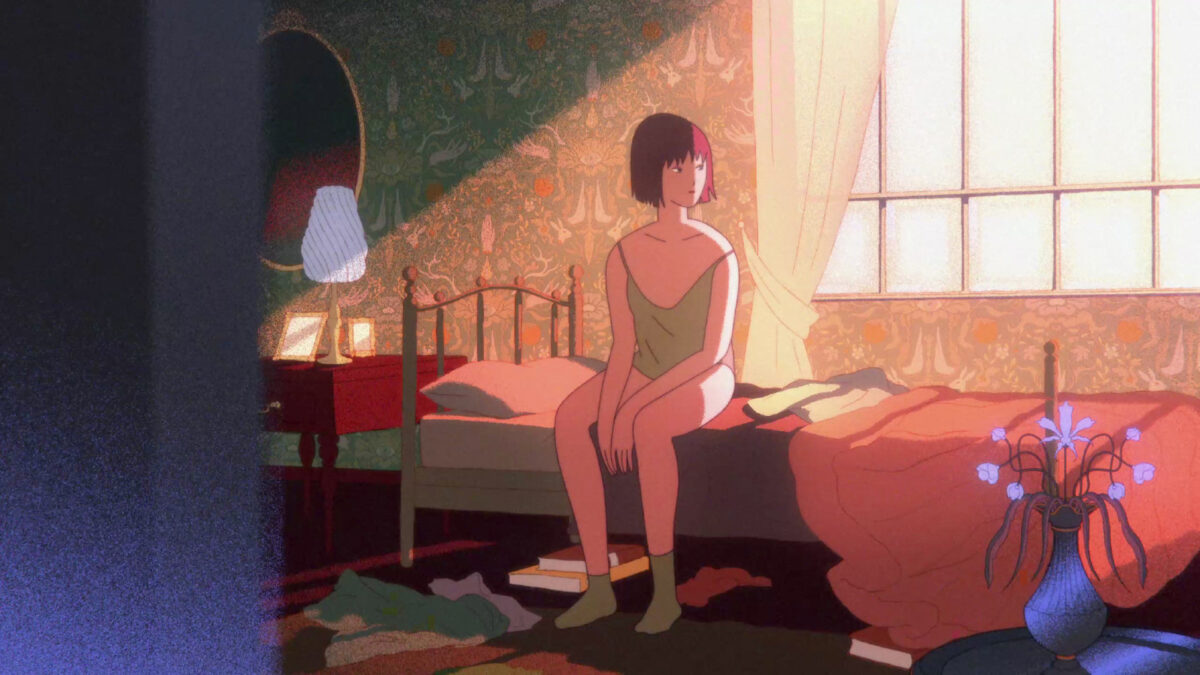
Inés is taken on a journey of independent women and dreams without borders when her grandmother sings a song from the past.
Inés se embarca en un viaje de mujeres independientes y sueños sin fronteras cuando su abuela canta una canción del pasado.
Short Synopsis / Sinopsis Corta:
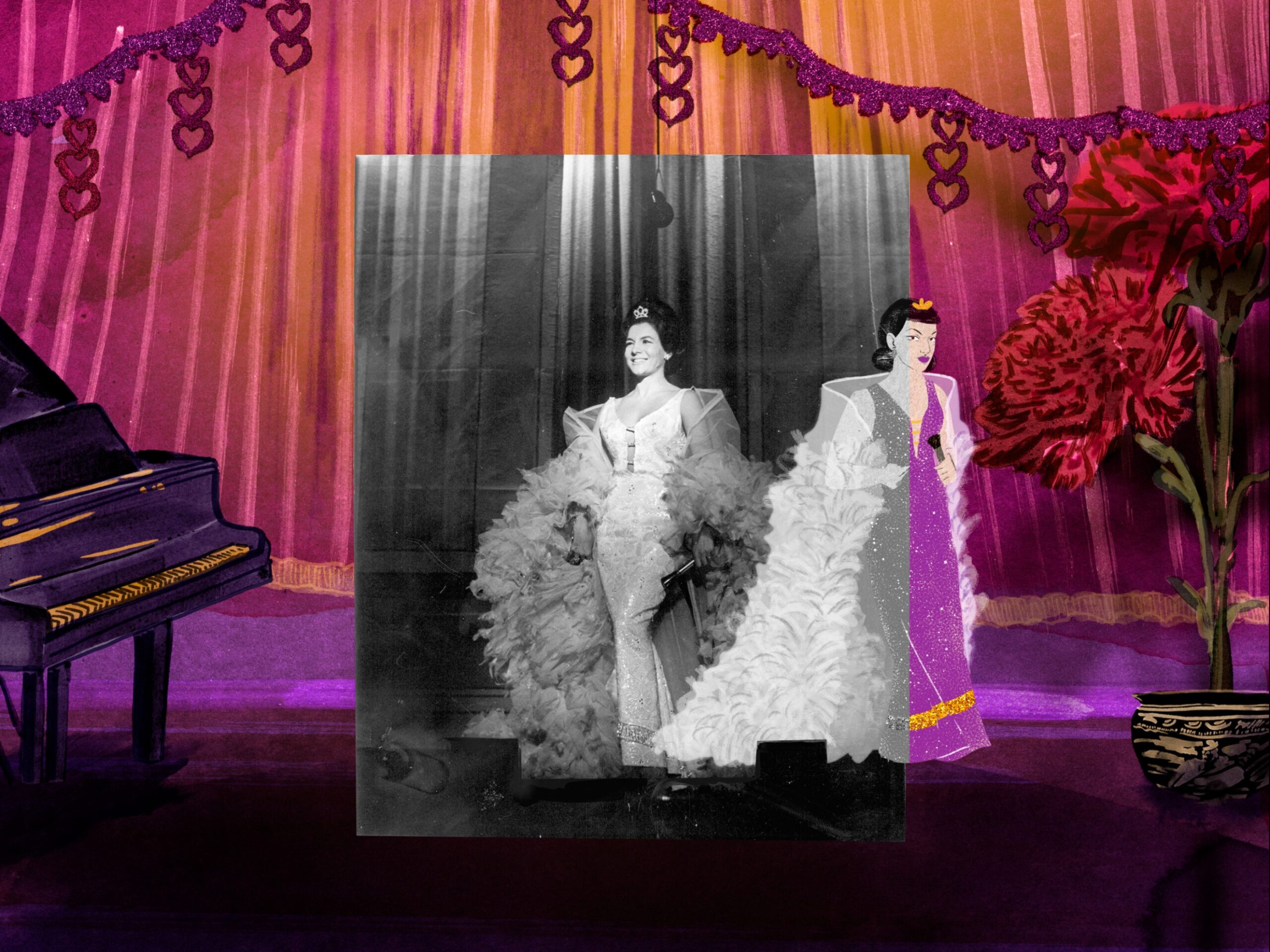
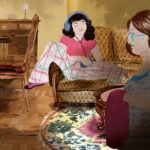
One afternoon, while laughing, Esperanza hums “Batallón de Modistillas” to her granddaughter Inés. This cuplé revives her memories and the granddaughter’s imagination. A journey through time in which wonderful characters, free women, dreams without borders, and unforgettable melodies appear.
Una tarde cualquiera, entre risas, Esperanza tararea “Batallón de Modistillas” a su nieta Inés. Este cuplé reaviva sus recuerdos y la imaginación de la nieta. Un viaje en el tiempo en el que aparecen personajes maravillosos, mujeres libres, sueños sin fronteras y melodías inolvidables.
‘It says that very soon, if God does not intervene, we women will have to go to war’ is the first verse of an old song that haunts Inés when she hears it in the voice of her grandmother, Esperanza. A search full of women in whom Inés recognises her present.
“Se dice que muy pronto, si Dios no media, tendremos las mujeres que ir a la guerra” es la primera estrofa de una antiquísima canción que obsesiona a Inés tras escucharla en la voz de su abuela Esperanza. Una búsqueda llena de mujeres en las que Inés reconoce su presente.
Synopsis / Sinopsis:
Inés and her grandmother, Esperanza, have always had a special relationship. While they talk, the grandmother hums songs from her youth, and with one of them, “Batallón de Modistillas”, she opens the box of her memories and her granddaughter’s imagination. The music becomes the perfect pretext for a journey through time full of wonderful characters, free women, dreams without limits, and unforgettable melodies.
Inés y su abuela Esperanza siempre han tenido una relación especial. La abuela tararea canciones de su juventud durante sus encuentros y con una de ellas, “Batallón de Modistillas”, abre la caja de sus recuerdos y la imaginación de la nieta. La música se torna el pretexto perfecto para un viaje en el tiempo en el que aparecen personajes maravillosos, mujeres libres, sueños sin fronteras y melodías inolvidables.
Director´s Biography / Biografía del Director:
INÉS G. APARICIO
Inés G. Aparicio (Asturias, 1990) interweaves memory, anthropology, and human rights in her work. She has a special bond with the Saharawi population; her first feature film was “Leyuad, a journey to the well of dreams”. Later, she taught at the Abidin Kaid Saleh Film School, which led her to participate in numerous film shootings. In 2021, she awakened her interest in animation and started her first solo direction with the short film “The diva, my grandma and I”.
Inés G. Aparicio (Asturias, 1990) entrelaza memoria, antropología y derechos humanos en sus trabajos. Tiene un vínculo especial con la población saharaui; su primer largometraje fue “Leyuad. Un viaje al pozo de los sueños”, posteriormente fue docente en la Escuela de cine Abidin Kaid Saleh, lo que la llevó a participar en numerosos rodajes. En 2021 despierta su interés por la animación y arranca su primera dirección en solitario con el cortometraje “La diva, mi abuela y yo”.
Filmography / Filmografía:
2016 – Leyuad. Un viaje al pozo de los versos – 74’ – Documental
Director’s Statement / Declaraciones del Director:
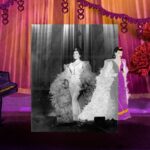
Sadness and loneliness are among the factors that most affect memory loss, and this is something that has always concerned me. How much of our collective memory is being lost because we don’t document our elders? How much wisdom is being lost in our own struggles? A few summers ago, I had the opportunity to have my grandmother, Esperanza, stay with me. At 94, she feared never seeing us again more than she feared COVID. It was the perfect time to take advantage of her enviable memory, spend time with her, and record her memories before they were lost forever. Songs have always accompanied my grandmother’s happiness, so they soon became the focus of our conversations. “Batallón de modistillas” quickly caught my attention, and I decided to trust my intuition. The first surprise arrived soon after, as the person who popularized this song in the second era of cuplé was Lilian de Celis, a great artist who lived just a few miles from my home in Arriondas, where we were recording. I have known Lilian since I was a child and have always been fascinated by this diva who inevitably stood out walking through the streets of the town. She had very long nails, an imposing figure, and she sparkled; she was dazzling to my child’s eyes. It’s not every day that divas like Lilian come along who are still willing to get up on stage and stand in front of a microphone to share their experiences. She was also the one who introduced me to the short film’s final co-star, Álvaro Retana. A creative and free man, he remains a relatively unknown figure despite having been tremendously influential in his day. He remained true to his ideals – and to himself – despite the many repressions he suffered throughout his life. This film aims to pay tribute to the three protagonists, and not only to them, but also to the many people whose stories have been unjustly buried in the dustbin of history. In both its aesthetics and narrative, this short film attempts to imitate the cuplé, which is to say, it suggests, insinuates, and seduces. The goal is to let the characters interact with the audience and enjoy this audiovisual serendipity.
La tristeza y la distancia son dos de los factores que más afectan a la pérdida de memoria y este ha sido un tema que siempre me ha preocupado. ¿Cuánta memoria colectiva se está perdiendo por no registrar a nuestras mayores? ¿Cuánta sabiduría se pierde para nuestras luchas? Hace unos veranos, tuve la oportunidad de tener en casa a mi abuela Esperanza, que, con 94 años, temía más no vernos que al COVID. Fue el momento perfecto para aprovechar su memoria envidiable, compartir tiempo con ella y grabar sus recuerdos en peligro de extinción. Las canciones siempre han acompañado la alegría de mi abuela, así que pronto se convirtieron en las protagonistas de nuestras conversaciones. Batallón de modistillas llamó rápidamente mi atención y decidí fiarme de mi intuición. Pronto llegó la primera sorpresa, pues quien popularizó esta canción en la segunda época del cuplé fue Lilian de Celis, gran artista que se encontraba a pocos kilómetros de mi casa de Arriondas, donde estábamos grabando. Conozco la figura de Lilian desde mi infancia y siempre he sentido fascinación por la diva que destacaba —inevitablemente— paseando por las calles del pueblo. Tenía las uñas larguísimas, una figura imponente y brillaba; todo un deslumbramiento a mis ojos de niña. No todos los días aparecen divas como Lilian que aún se suban a los escenarios y estén dispuestas a ponerse frente al micrófono para compartir sus vivencias. También fue ella quien me hizo descubrir al último coprotagonista del cortometraje, Álvaro Retana. Un hombre creativo y libre; un personaje poco conocido a pesar de haber sido tremendamente influyente en su época. Fue fiel a sus ideales —y a él mismo— a pesar de las múltiples represiones que sufrió a lo largo de su vida. Esta película pretende hacer un homenaje a sus tres protagonistas, pero no sólo a ellos, sino también a todas aquellas personas cuya historia ha sido enterrada injustamente en el olvido. Tanto en la estética como en la narración este cortometraje intenta imitar al cuplé, es decir, sugerir, insinuar, y seducir. El objetivo es dejar que los personajes interactúen con los espectadores y puedan disfrutar de esta serendipia audiovisual.
Overview / Ficha técnica:
Script / Guión: Inés G. Aparicio
Producer / Producción: Diego Herguera Acosta
Executive Productor / Productor Ejecutivo: Diego Herguera Acosta
Director / Directora: Inés G. Aparicio
Animation Direction / Dirección de Animación: María Abal del Blanco
Animation / Animación: Mario M. Martínez, María Abal del Blanco, Ranjitha Rajeevan
Backgrounds / Fondos: Ángel Peris Cuesta
DoP / DF: Eduardo Elosegi
Art Director / Dirección de Arte: Inés G. Aparicio
Character design: Inés G. Aparicio, María Abal del Blanco, Ranjitha Rajeevan
Editing / Montaje: Inés G. Aparicio
Sound Design / Diseño de Sonido: Javier Ucar
Original Music / Música Original: Rodrigo Cuevas
Voices / Voces: Esperanza González, Lilian de Celis, Laura Ubach
Distribution: FilmsToFestivals
Festivals and Awards / Festivales, Premios y Nominaciones:
– 70 SEMINCI, Valladolid International Film Festival; 10/2025; Spain
– 63 FICX, Gijon International Film Festival (Special Mention); 11/2025; Spain
– 67 ZINEBI, Bilbao Int’l Short Film Festival; 11/2025; Spain
– 37 Aguilar Short Film Festival (Best Short Film); 11/2025; Spain
– 30 FCZ, Zaragoza Film Festival; 11/2025; Spain
– 20 Memorimage, Int’l Film Festival (Best Film); 11/2025; Spain
– 22 TINDIRINDIS, Int’l Animation Film Festival (Special Mention); 11/2025; Lithuania
– 23 BOGOSHORTS, Bogota Int’l Short Film Festival; 12/2025; Colombia
– 14 MUSOC, Asturias HHRR Film Festival; 01/2026; Spain
– 30 ANIMAC, International Animation Festival; 02/2026; Spain
– 29 Málaga Film Festival; 03/2026; Spain
– 40 FILMFEST DC. Washington DC International Film Festival; 04/2026; US
– 45 ITFS, Stuttgart Festival of Animated Film; 05/2026; Germany
– 17° Human Fest, Valencia Int’l HHRR Film Festival; 05/2026; Spain
– 54° Huesca International Film Festival; 06/2026; Spain
– 8° International Film Festival for Older People (Best Short Film); 06/2026; Spain
– 5° Animadeba, International Animation Festival; 09/2026; Spain
We have created Sultana Films with a precise vocation: to produce films d’auteur in international co-productions. Our goal is to combine different perspectives and enrich production by collaborating with teams from all over the world, creating partnerships, exchanges, and long-lasting collaborations. We specialize in digital craftsmanship, which incorporates new digital technologies, including artificial intelligence, in an artisanal way into the creative process, to create our art. In a world full of borders, Sultana Films wishes to emphasize the universal dimension of the arts and cinema, especially.
Fiction Short Film: Drama: LGBTQIA+, Women, Dance, Music, Romance, Disability, Latin American, Social Issues
4K /Color/2.39:1 / 5.1 / Camera / FPS / Spanish, ASL
Shooting: Playa Mendoza, Tubará, Colombia
Logline:
Margarita seeks freedom in a place that judges those outside the norm when her path crosses with Liana’s, a deaf tourist, between the vibrations of congas and bongos.
Margarita busca liberarse de un lugar que juzga a quienes están fuera de la norma cuando se cruza con Liana, una turista sorda, en medio de las vibraciones de congas y bongos.
Short Synopsis / Sinopsis Corta:
In between prejudiced gazes, Margarita, a free-spirited woman and salsa music lover, walks away from her marriage searching for her own identity. Her path crosses with Liana’s, a deaf tourist. Seeing in Liana a world foreign to her own, Margarita finds the perfect company to explore her true being and decides to teach Liana how to dance, understanding her deafness as an opportunity for a different type of communication, tactile and corporeal.
Margarita, una mujer libre y apasionada por la salsa, se aleja de su matrimonio en busca de su propia identidad. Su camino se cruza con el de Liana, una turista sorda. Al ver en Liana un mundo ajeno al suyo, Margarita encuentra la compañía perfecta para explorar su verdadero ser y decide enseñarle a Liana a bailar, entendiendo su sordera como una oportunidad para un tipo de comunicación diferente, táctil y corporal.
Synopsis / Sinopsis:
In between prejudiced gazes, Margarita, a free-spirited woman and salsa music lover, walks away from her marriage searching for her own identity. At night, Margarita finds refuge in a seashore kiosk, where improvised salsa parties take place. Her path crosses with Liana’s, a deaf tourist who arrives at the party’s peak. Seeing in Liana a world foreign to her own, Margarita finds the perfect company to explore her true being and decides to teach Liana how to dance, understanding her deafness as an opportunity for a different type of communication, tactile and corporeal. Liana and Margarita see each other as the ideal complement to find the freedom they are looking for.
Margarita, una mujer libre y apasionada por la salsa, se aleja de su matrimonio en busca de su propia identidad. En la noche, se refugia en un kiosco en la orilla del mar. Su camino se cruza con el de Liana, una turista sorda que llega en el punto más álgido de la fiesta. Al ver en Liana un mundo ajeno al suyo, Margarita encuentra la compañía perfecta para explorar su verdadero ser y decide enseñarle a Liana a bailar, entendiendo su sordera como una oportunidad para un tipo de comunicación diferente, táctil y corporal. Liana y Margarita ven en la otra el complemento ideal para encontrar la libertad que están buscando.
Long Synopsis / Sinopsis Larga:
In between prejudiced gazes, Margarita, a free-spirited woman and salsa music lover, walks away from her marriage searching for her own identity. At night, Margarita finds refuge in a seashore kiosk, where improvised salsa parties connect her body with sand and music. During the day, this same salsa temple turns into the town’s church, and for Margarita, freedom turns into oppression. Simultaneously, Margarita’s search for freedom merges with Liana’s, a deaf tourist who arrives in the Colombian coastal town and finds the kiosk at the party’s peak. Seeing in Liana a world completely foreign to her own, Margarita finds the perfect company to explore her true being. Margarita decides to teach Liana how to salsa dance, understanding her deafness as an opportunity for a different type of communication, tactile and corporeal. Liana, fascinated with the vibrations of a music that had never been a part of her life, finds in Margarita the ideal complement to explore the unknown. ¡salsa! tells the story of two women whose paths converge, finding together the courage and freedom to be truly themselves.
Entre miradas prejuiciosas, Margarita, una mujer de espíritu libre y amante de la salsa, se despide de su matrimonio en búsqueda de su propia identidad. En las noches, Margarita encuentra refugio en un kiosco a la orilla del mar, en donde fiestas de salsa improvisadas conectan su cuerpo con la música y la arena. En el día, este mismo templo salsero se transforma en iglesia para el pueblo, y para Margarita, el libertinaje se convierte en opresión. Simultáneamente, la búsqueda de libertad de Margarita se funde con la de Liana, una turista sorda que llega a este pueblo costero y encuentra el kiosco en su hora de máximo furor. Viendo en Liana un mundo completamente ajeno al de ella, Margarita encuentra la compañía perfecta para explorar su verdadero ser. Margarita se empeña en enseñarle a Liana a bailar salsa, entendiendo su sordera como una oportunidad de comunicación diferente, táctil y corpórea. Liana, fascinada con las vibraciones de una música que nunca antes había estado presente en su vida, encuentra en Margarita el complemento ideal para explorar lo desconocido. ¡salsa! cuenta la historia de dos mujeres que convergen en un momento en el que ambas le pierden el miedo a ser.
Director’s Biography / Biografía del Director:
ANTONINA KERGUELÉN ROMÁN
Antonina is a queer Colombian writer/director, SCAD alumna, and a Creative Producer at AG Studios, where she works making original narrative content. Her work has premiered at the Beverly Hills Film Festival, Bogoshorts, Manifiesta Media, and Prime Video, for which she directed the bonus content for the series «Los Billis».
Antonina Kerguelen Roman, guionista/directora colombiana queer, exalumna de Savannah College of Art and Design SCAD, y productora creativa en AG Studios, donde trabaja creando contenido narrativo original. Antonina fue ganadora de la convocatoria In Vitro del BOGOSHORTS Film Market en 2015. Sus trabajos previos han sido estrenados en el Beverly Hills Film Festival, Manifiesta Media y Prime Video, para el cual dirigió el contenido adicional de la serie «Los Billis».
Director’s Statement / Declaraciones del Director:
The process of accepting my sexual orientation was strongly marked by the search for a character that positively represented me on screen. I came across a lot of content that represented Colombians in violent and hurtful ways, with few stories of lesbians, and almost none that even attempted to portray, without martyrizing the character, the homosexual awakening of a Latina woman. Audiences are progressively more conscious of this thematic hole in audiovisual narratives, the same hole that still affects me deeply. Connecting with and embracing my sexuality was progressive and came naturally as I traveled to different countries, studied abroad, and realized underdogs existed everywhere. At its core, ¡salsa! is a story about two underdogs, two women who live outside of the “norm” that society has imposed upon us. With these two characters, I wanted to merge two aspects of my personality that at one point needed to coexist within me so I could free myself from the pressure of my culture’s “rules”. Margarita, the protagonist, is on a journey of breaking up with what’s accepted by her culture. She’s leaving behind religion and the imposed institution of marriage, and trying to make peace with always being looked at and frowned upon. I grew up with a big family from the coast of Colombia, which is one of the territories most notoriously traditional and also most judgemental. This was always hard for me to accept because the other side of the culture is playful, full of colors, sounds, and non-stop music. I had to break up from those aspects that hurt me about my upbringing, so I could truly enjoy the others. My companion throughout this process was always salsa music, due to its rebelliousness and frenetic sounds. Salsa parties are famous for their impressive variety in their crowds. All kinds of races and economic backgrounds merge without judgment with the sole purpose of enjoying the music, the dancing, and the sweating. The irony of my love for salsa parties is that I cannot, no matter how hard I’ve tried, dance to the beat of the music. For a long time, this also mortified me, until I accepted that the only way I could enjoy these spaces and my favorite music was to just let myself and my body be, to connect to salsa music in my way, to not run away from these parties just because I wasn’t able to dance. This idea was part of the creation of the character of Liana, the deaf tourist, someone who might not be able to hear the music but can feel it, and the heart of the party. This was the genesis of my film. This film, overall, intends to showcase a fraction of what it means to be a lesbian woman in the atypical and complex world of Colombia.
Aceptar mi orientación sexual fue un proceso complejo, acompañado por la búsqueda de un personaje de ficción que me representara positivamente en la pantalla. Durante esta búsqueda, me encontré con muchos contenidos que mostraban a los colombianos de maneras violentas y dolorosas, y pocas historias de lesbianas, sin contar casi ninguna que intentara narrar, sin victimización, el despertar homosexual de una mujer latina. Las audiencias son cada vez más conscientes de este vacío en las narrativas audiovisuales, un vacío que también me afecta profundamente. Conectarme con mi sexualidad fue un proceso gradual, que se dio naturalmente mientras viajaba, estudiaba en el extranjero y me daba cuenta de que en todas partes existían personas marginadas. En esencia, ¡Salsa! es una historia de dos marginadas, dos mujeres que viven fuera de la “norma” impuesta por la sociedad. Con estos personajes, quería reunir dos aspectos de mi personalidad que necesitaban coexistir para liberarme de las “reglas” culturales que me oprimían. Margarita, la protagonista, lucha por romper con lo que es culturalmente aceptable. Está dejando atrás la religión, la institución del matrimonio y tratando de aceptar que siempre será observada y juzgada. Yo crecí en una familia grande en la costa de Colombia, un lugar notoriamente tradicional y prejuicioso. Esta realidad fue difícil de aceptar para mí, pues la otra cara de la cultura es divertida, colorida y llena de música constante. Tuve que distanciarme de los aspectos dañinos de mi crianza para poder disfrutar de los positivos. Mi compañera en este proceso fue la salsa, con su actitud rebelde y sonidos frenéticos. Las fiestas salseras son famosas por la impresionante variedad de personas que reúnen: todas las razas y estratos sociales se encuentran en un solo lugar sin prejuicios, con el único propósito de disfrutar la música, el baile, el sudor. Este fue desde el comienzo el universo perfecto para explorar esta historia. La ironía de mi amor por las fiestas de salsa es que, a pesar de mis intentos, no logro bailar al ritmo de la música. Durante mucho tiempo esto me mortificó, hasta que acepté que la única manera de disfrutar estos espacios y mi música favorita era dejar que mi cuerpo se conectara con la salsa a su propia manera, sin escapar de la fiesta solo porque no podía bailar. Esta idea inspiró la creación de Liana, la turista sorda, alguien que tal vez no puede escuchar la música pero que definitivamente puede sentirla, como el corazón de la fiesta. Esta fue la génesis de mi película. La intención detrás de esta película es mostrar una pequeña fracción de lo que significa ser una mujer lesbiana en el mundo atípico y complejo de la costa colombiana.
Overview / Ficha técnica:
Script / Guión: Antonina Kerguelén Román
Producer / Producción: Carlos Ruiz Rua, Natalia Agudelo Campillo, Carlos Micán
Executive Producer / Productor Ejecutivo:
Director / Director: Antonina Kerguelén Román
DoP & Camera / Dirección de Fotografía y Cámara: Mateo López Quiñones
Art Director/ Dirección de Arte: Alejandra Bolívar Sánchez
Film Editor / Edición: Goz
Sound design / Diseño de sonido: Camilo «Max» Otero, Tadeo Alfonso Díaz, Luis Ernesto Ortíz
Cast / Elenco: Margarita: Saray Nohemí, Liana: Isabelle Jessie Troup
Festivals and Awards / Festivales, Premios y Nominaciones:
– 22 Tribeca Film Festival; 06/2024; USA
– 48 Frameline; San Francisco International LGBTQ+ Film Festival; 06/2024; USA
– 27 SCAD Savannah Film Festival (Best Short Film); 10/2024; USA
– 38 Leeds International Film Festival (Special Mention); 11/2024; England
– 22 BogoShorts, Bogota Int’l Short Film Festival; 12/2024; Colombia
– 32 Mardi Gras Queer Film Festival; 02/2025; Australia
– 39 BFI Flare: London LGBTQIA+ Film Festival; 03/2025; England
– 28 Roze Filmdagen, Amsterdam LGBTQ+ Film Festival; 03/2025; The Netherlands
– 18 Glasgow Short Film Festival; 03/2025; Scotland
– 41 Wicked Queer: Boston’s LGBTQ+ Film Festival (Audience Award); 04/2025; USA
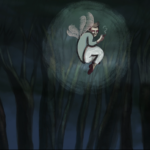
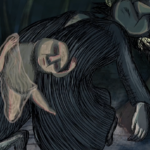
A small community has entered a state of collapse due to an environmental crisis and is adapting as best it can to the new reality. The privileged residents live a hedonistic life based on carpe diem, while the others struggle to survive without any other alternative. What is yet to come? If there is nothing left, can anything save us?
Una pequeña comunidad que ha entrado en estado de colapso a causa de una crisis ambiental se adapta como puede a la nueva realidad. Los habitantes privilegiados viven una vida hedonista basada en el carpe diem; los otros sin ninguna otra alternativa tratan de sobrevivir. ¿Qué es lo que está por llegar? Si no hay nada más, ¿hay algo que nos pueda salvar?
Director’s Biography / Biografía del Director:
IZIBENE OÑEDERRA
Animated film director with a degree in Fine Arts from the University of the Basque Country. She holds an honorary doctorate from the same university and is currently an assistant professor in the painting department of the UPV-EHU. Her first animation is Hezulbeltzak, una fosa común (2007), multi-awarded in international festivals and with a very extensive tour of several years in different international festivals, theaters, film libraries, and museums worldwide. His latest animation is Lursaguak (2019) which premiered at the Donostia-San Sebastian Festival in the Zabaltegi section.
Directora de cine de animación licenciada en Bellas Artes por la Universidad del País Vasco. Doctora honoris causa por la misma universidad y actualmente profesora adjunta del departamento de pintura de la UPV-EHU. Su primera animación es Hezulbeltzak, una fosa común (2007), multi-premiada en festivales internacionales y con un amplísimo recorrido de varios años en diferentes festivales internacionales, teatros, filmotecas y museos a nivel mundial. Su última animación es Lursaguak (2019) que fue estrenada en el Festival de Donostia-San Sebastián en la sección Zabaltegi.
Filmography / Filmografía:
Hezurbeltzak, a common grave (2007 – 4`30«)
Berbaoc (Varios autores, 2008 – 5`22«)
Hotzanak. For your own safety (2013 – 5`11«)
Beti bezperako koplak / Couplets for an Everlasting eve (Varios autores, 2015 – 5`22«)
Director’s Statement / Declaraciones del Director:
The contradictions that arise during the long days of confinement and the consequent need to maintain the complexity of the uncertain «reality» that we live in lead us to create a fantasy world with dystopian overtones. The narrative form is characterized by gradually showing the deteriorating reality through the worker, the character who plays the most active role. In the journey towards the abyss of the tragic character, I looked for the moments in which he crossed paths with the other characters. This crossing of characters allowed me to play with comparisons and thus build a more complex world. Thus, the characters, rather than being portrayed in isolation, acquire depth as they interact. The white characters on the rooftop are hedonistic, and their behavior shows superiority to those who come to work. In creating this group of characters as cretins, I had in mind the decadent well-to-do in Lucrecia Martel’s La ciénaga. The journey of the worker may suggest that the world we are discovering is shown through temporal ellipses, so much so, that in the last scene, we discover that the worker is identical to the many like him who live crowded together in the intoxicated room and live to work by relieving themselves, in an uninterrupted spiral. This idea is supported by both the information of the graphic elements that appear in the backgrounds of some shots and by the indications coming from television screens that are turned on in different scenes. The mass of fog becomes increasingly solid and tinges the film with green as it advances, surely influenced by the color design in Alfred Hitchcock’s Vertigo. I would also like to discuss how religious motifs have been unintentionally inserted into the film. In this sense, I would consider the presence of «the angel lady» who enables the birth of a being in a rather miraculous way. Thus, one could consider the messianic tale as a background to the story. However, this is no more than a suggestion that is not developed in an obvious way in the animation. Another adaptation of a religious element could be found in the tragic man who carries the flagpole on his back before the gaze of idlers who trivialize his effort, creating a parallelism with Christ carrying the cross. It should also be noted that although this is a dystopian story, some elements shown at the end of the animation project have a certain margin of hope. Although these elements are somewhat hidden and depending on the feeling of the viewer’s gaze will be visible or invisible.
Las contradicciones surgidas durante los largos días de encierro y la consiguiente necesidad de mantener la complejidad de la «realidad» incierta que nos ha tocado vivir nos llevan a crear un mundo de fantasía con tintes distópicos. La forma narrativa se caracteriza por ir mostrando poco a poco la realidad que se va deteriorando a través del trabajador, el personaje que juega el papel más activo. En el viaje hacia el abismo del personaje trágico, buscaba los momentos en los que se cruzaba con los demás personajes. Ese cruce de personajes me permitía jugar con las comparaciones y conseguir así construir un mundo más complejo. Así los personajes, más que retratados de forma aislada, adquieren profundidad al interactuar entre ellos. Los personajes de raza blanca que están en la azotea son hedonistas y su comportamiento demuestra superioridad frente al que viene a trabajar. Al crear a ese grupo de personajes como unos cretinos, he tenido en mente a los pudientes decadentes de La ciénaga, de Lucrecia Martel. El viaje del trabajador puede sugerir que el mundo que vamos descubriendo se va mostrando a través de elipsis temporales, tanto es así, cuando en la última escena se descubre que el trabajador es idéntico a los muchos como él que conviven hacinados en el cuarto intoxicado y que viven para trabajar relevándose, en un espiral ininterrumpido. Esta idea se apoya tanto por la información de los elementos gráficos que aparecen en los fondos de algunos planos como por los indicios procedentes de pantallas de televisión que están encendidas en diferentes escenarios. La masa de la niebla va siendo cada vez más sólida y tiñe la película de verde, mientras avanza, seguramente influenciada por el diseño de color en Vértigo, de Alfred Hitchcock. Quisiera hablar, además, de cómo de forma involuntaria se han insertado motivos religiosos en la película. En este sentido consideraría la presencia de “la señora Ángel” que posibilita el nacimiento de un ser de forma bastante milagrosa. Así se podría considerar el relato mesiánico como trasfondo del relato. Sin embargo, no es más que una sugerencia que no se desarrolla de forma evidente en la animación. Otra adaptación de un elemento religioso se podría encontrar en el hombre trágico que carga a sus espaldas el mástil de la bandera ante la mirada de ociosos que banalizan su esfuerzo, creando un paralelismo con Cristo cargando la cruz. También se quiere destacar que aunque estemos ante un relato distópico, algunos elementos mostrados al final de la animación proyectan un cierto margen de esperanza. Aunque estos elementos están un poco ocultos y dependiendo del sentir de la mirada del espectador serán visibles o invisibles.
Overview / Ficha técnica:
Script / Guión: Izibene Oñederra
Producer / Producción: Izibene Oñederra, Diego Herguera Acosta
Executive Productor / Productor Ejecutivo: Diego Herguera Acosta
Director / Directora: Izibene Oñederra
Animation Direction / Dirección de Animación: Izibene Oñederra
DoP / DF: Eduardo Elosegi
Art Director / Dirección de Arte: Izibene Oñederra
We have created Sultana Films with a precise vocation: to produce films d’auteur in international co-productions. Our goal is to combine different perspectives and enrich production by collaborating with teams from all over the world, creating partnerships, exchanges, and long-lasting collaborations. We specialize in digital craftsmanship, which incorporates new digital technologies, including artificial intelligence, in an artisanal way to the creative process, to create our art. In a world full of borders, Sultana Films wishes to emphasize the universal dimension of the arts and cinema, especially.
(2024) / 00:17:21 / Peru, Chile / Quechua Languaje
Fiction Short Film: Drama, Historical, Loss, Mother Son, Tragedy, Guerrilla
Graduation Thesis
1.85:1 / Color / 4K / 5.1 / 24 FPS
Logline:
A mother embarks on a search after his son vanishes without a trace.
Una madre emprende una búsqueda después de que su hijo desaparece sin dejar rastro.
Short Synopsis / Sinopsis Corta:
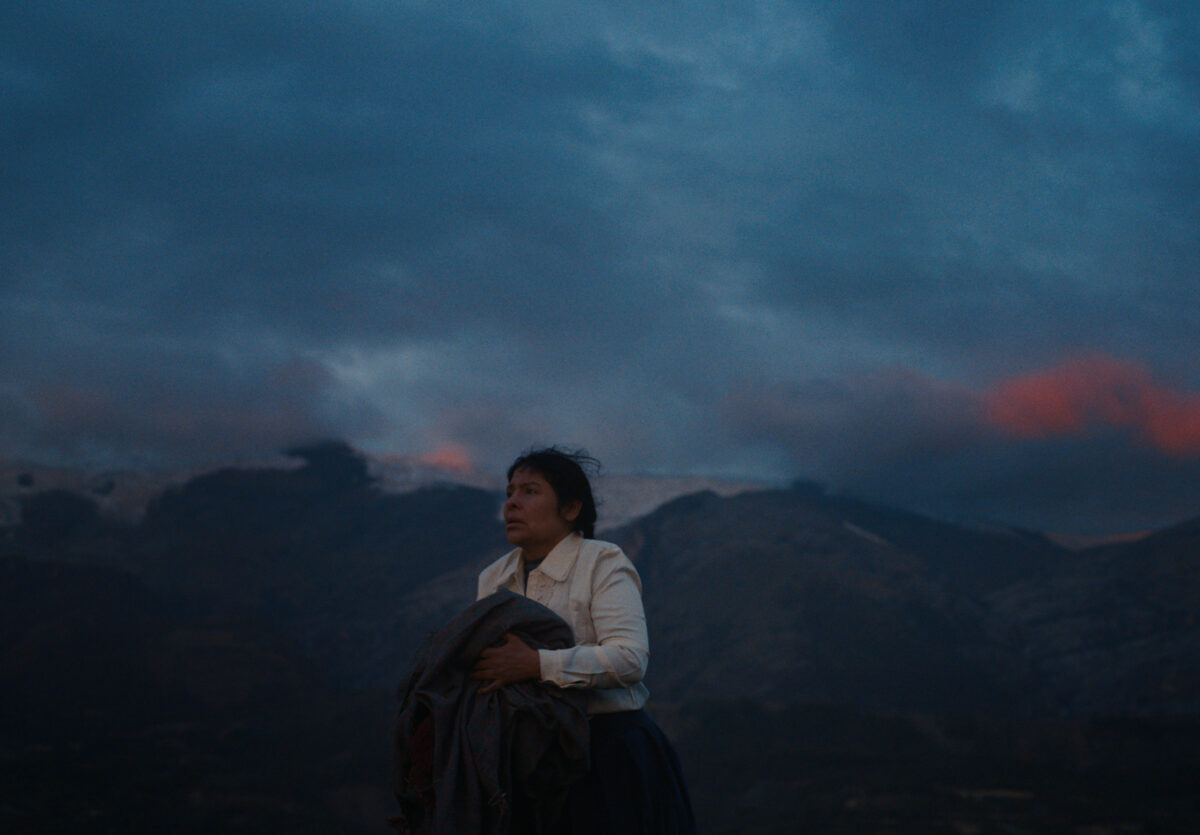
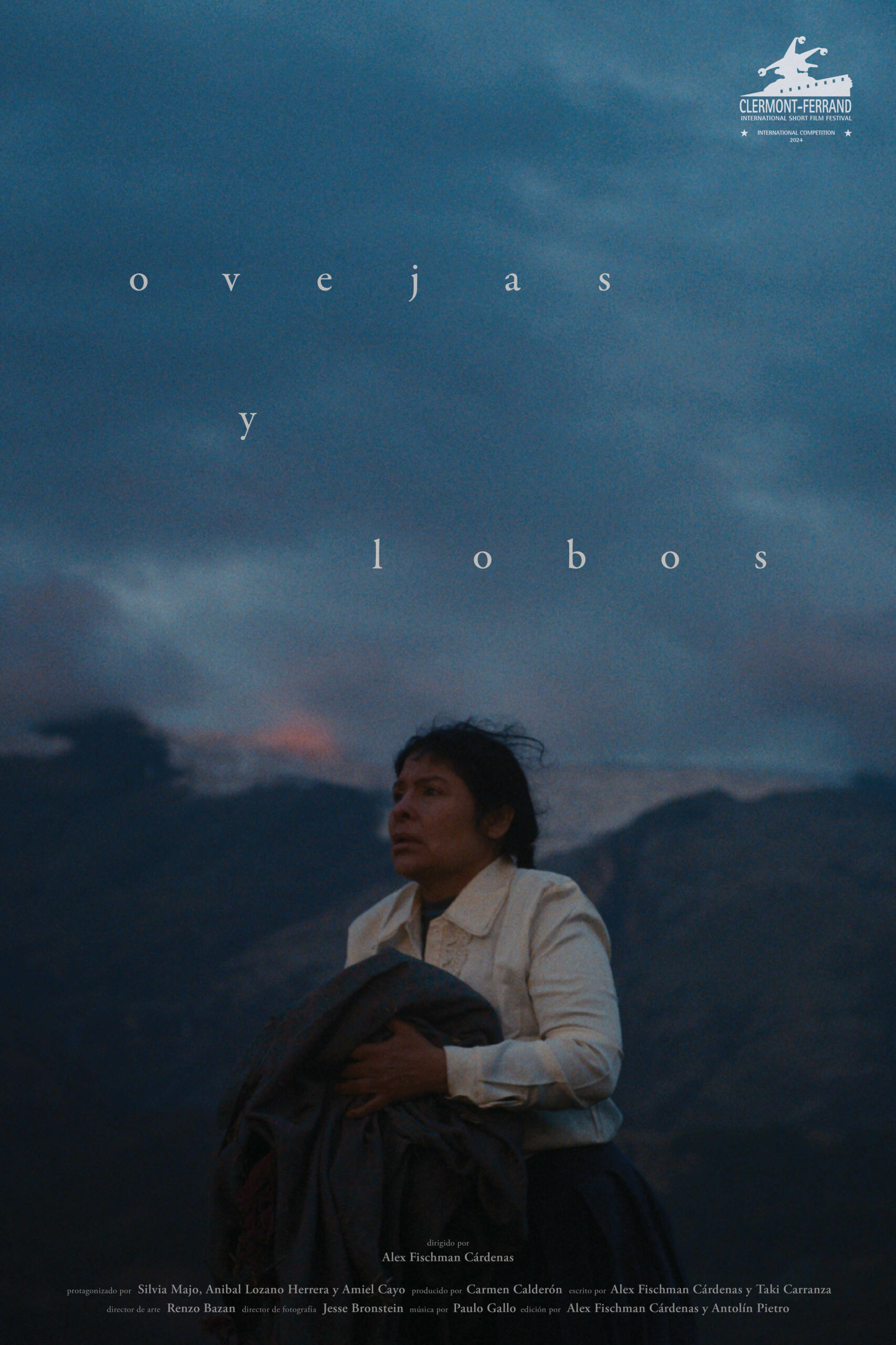
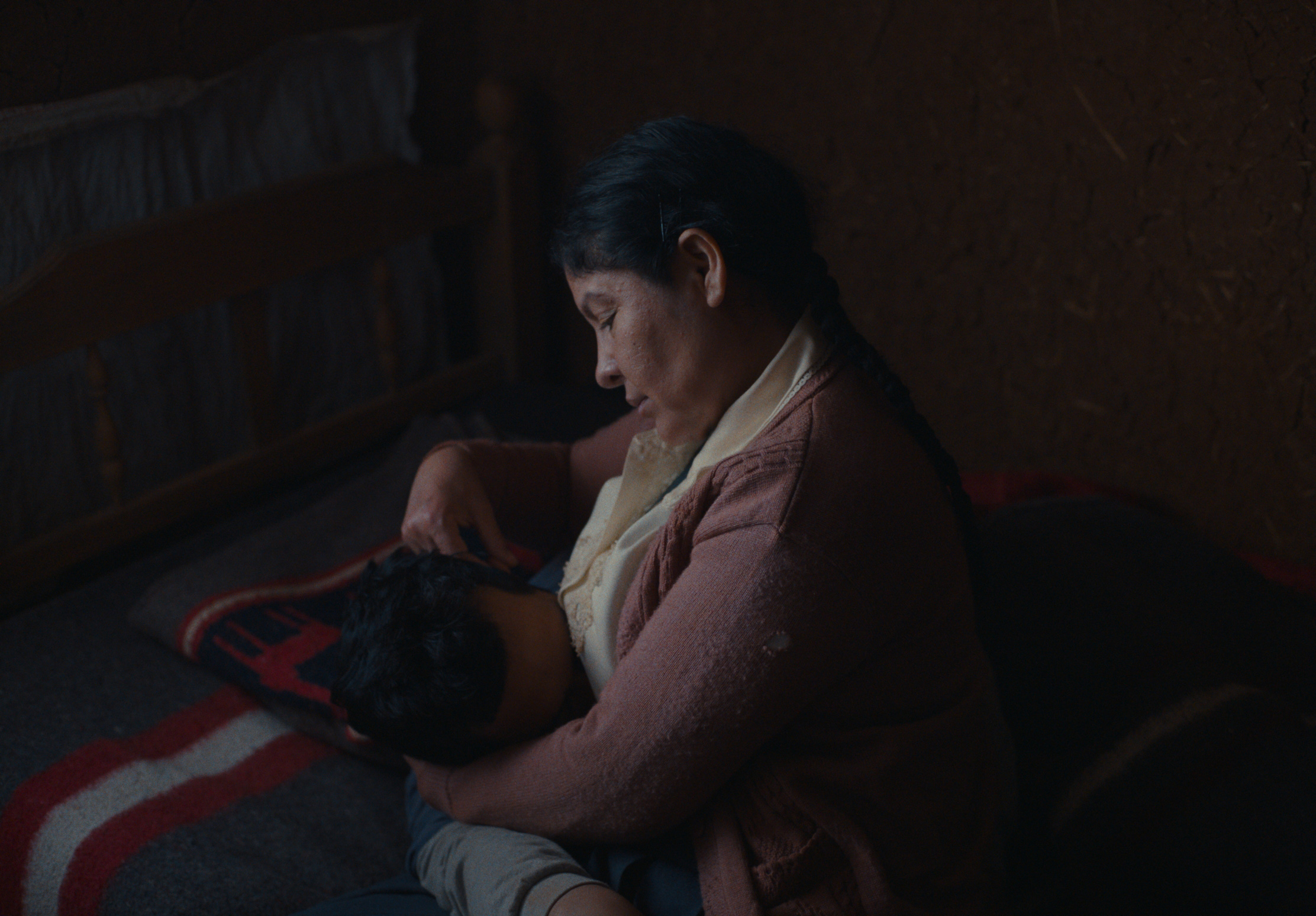
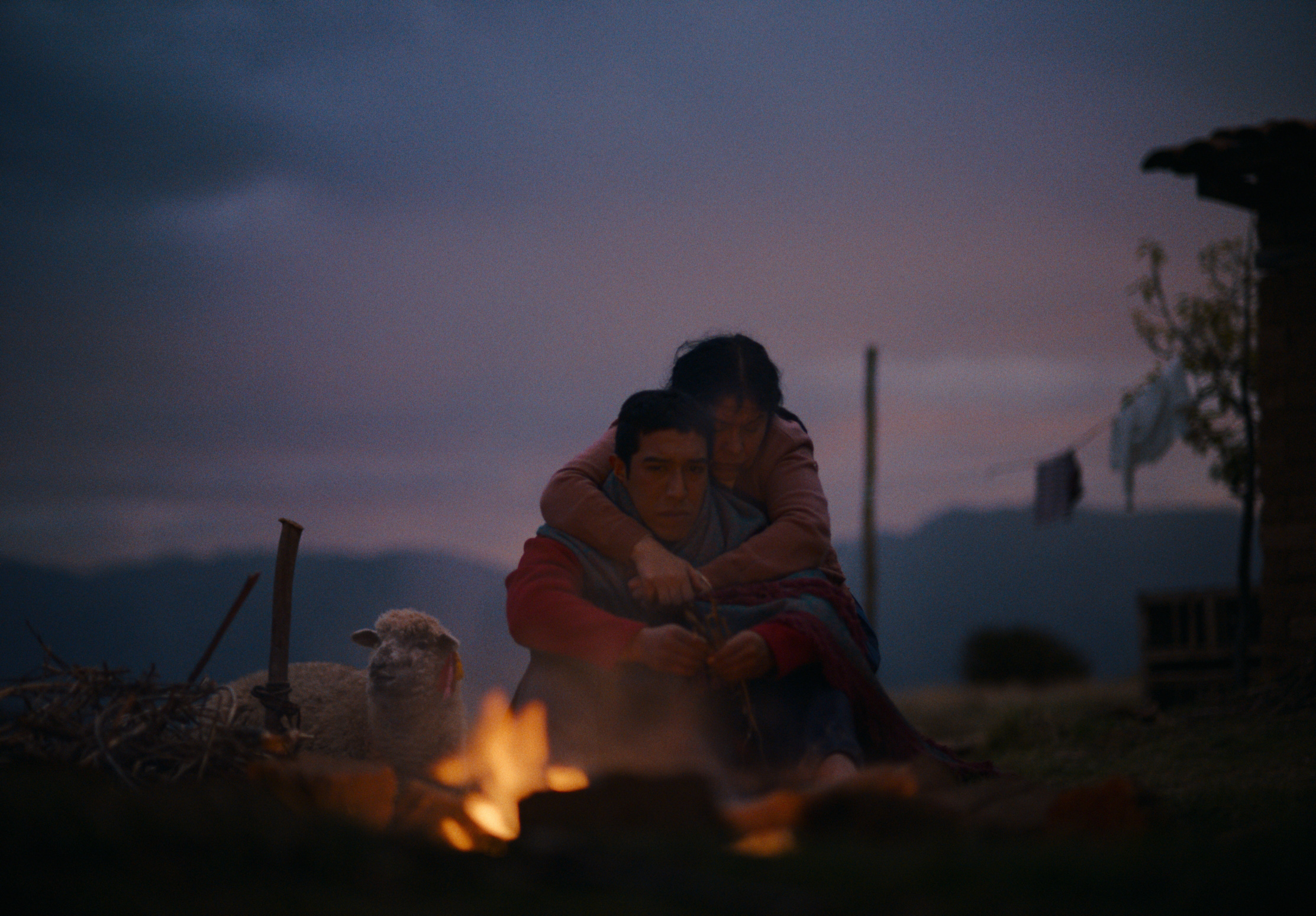
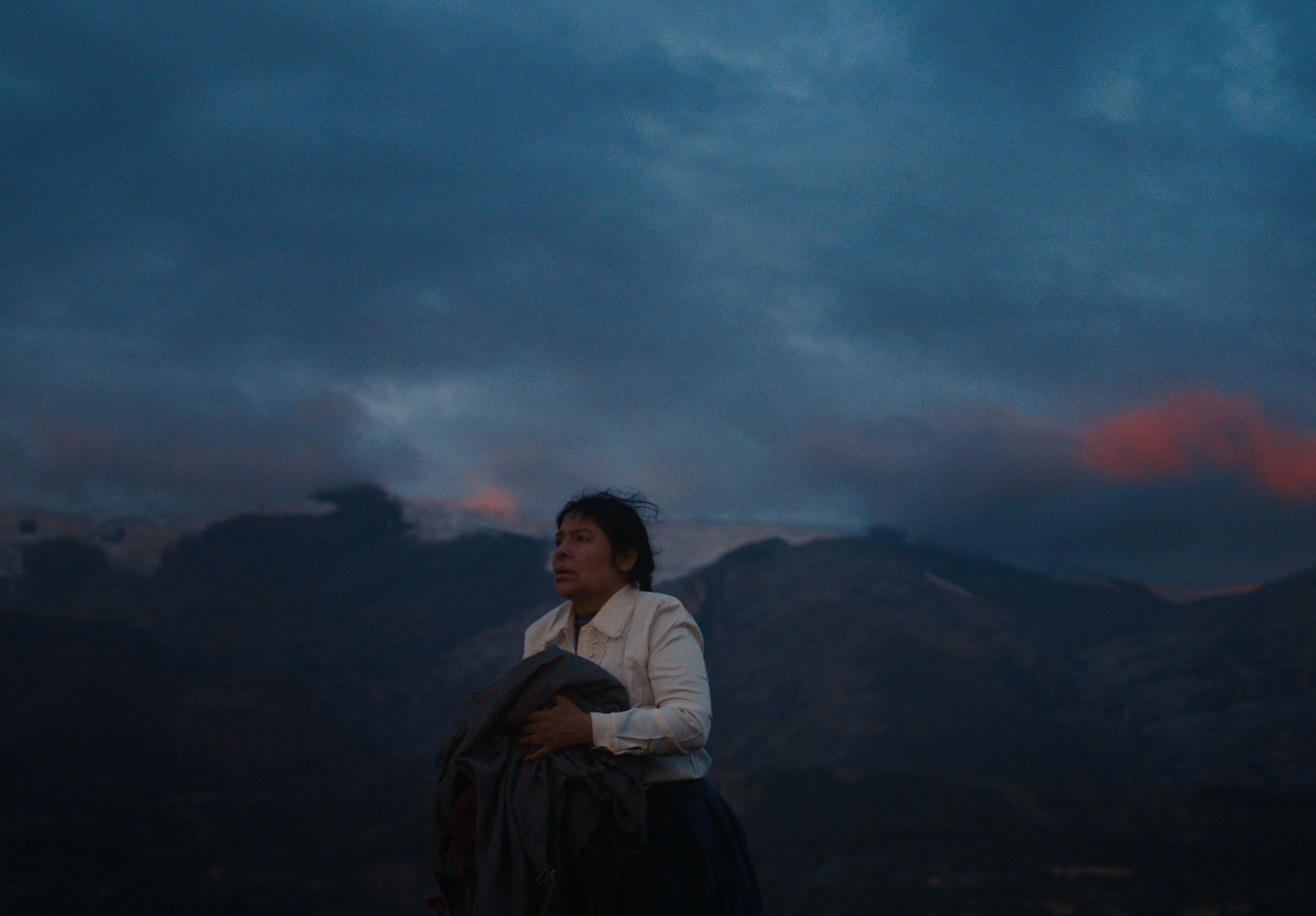
A mother’s world shatters after her son vanishes without a trace. Set in the height of the Peruvian armed conflict, «Ovejas y Lobos» follows a mother’s suspenseful search through the perilous, vast, and unforgiving landscape that mirrors her seemingly insurmountable mission.
El mundo de una madre se desmorona después de que su hijo desaparece sin dejar rastro. Ambientada en el apogeo del conflicto armado peruano, «Ovejas y Lobos» sigue la búsqueda llena de suspenso de una madre a través del peligroso, vasto e implacable paisaje que refleja su misión aparentemente insuperable.
Alex Fischman Cárdenas is a Peruvian filmmaker passionate about telling unheard, honest, and visually striking stories. He was nominated for Shot’s and AICP’s New Director of the Year with his recent commercial work. His recent short film ”Sheep and Wolves” has its world premiere at the 46th edition of Clermont Ferrand ISFF.
Alex Fischman Cárdenas es un cineasta peruano apasionado por contar historias a menudo no escuchadas, honestas y visualmente impactantes. Con su reciente trabajo comercial ha sido nominado a los premios Shot’s y AICP al Nuevo Director del Año. Su reciente cortometraje “Ovejas y Lobos” tuvo su premiere mundial en la 46ª edición de Clermont Ferrand ISFF.
Born and raised in Lima, Perú, Alex Fischman Cárdenas is a filmmaker passionate about telling often unheard, honest, and visually striking stories. His background in narrative and documentary blends to create beautifully authentic portraits of people and communities. Alex began his career by crafting the critically acclaimed narrative shorts, «La Vieja Quinta» and «Alienación». During his time in New York, Alex skillfully directed documentary short films such as «Teeth» and «Starr», both of which received recognition as Vimeo Staff Picks. Alex signed with Greenpoint Pictures for US representation for Commercials and Branded Content. Since then, he has amassed a portfolio of creative and documentary shorts, as well as boundary-pushing commercial work for JP Morgan Chase, T-Mobile, and Google, among others. In 2023, he was shortlisted for Shot’s and AICP’s New Director of the Year.
Alex Fischman Cárdenas es un cineasta peruano apasionado por contar historias a menudo no escuchadas, honestas y visualmente impactantes. Su experiencia en narrativa y documental se mezclan para crear retratos auténticos y hermosos de personas y comunidades. Alex comenzó su carrera creando los aclamados cortometrajes narrativos «La Vieja Quinta» y «Alienación». Durante su tiempo en Nueva York, Alex dirigió cortos documentales «Teeth» y «Starr», ambos reconocidos como selecciones de Vimeo. Alex firmó con Greenpoint Pictures para representación en Estados Unidos para comerciales y contenido de marca. Desde entonces, ha acumulado un portafolio de comerciales creativos para JP Morgan Chase, T-Mobile, Google, entre otros. En 2023, fue preseleccionado para el premio de mejor nuevo director del año para Shots y AICP.
– Filmography:
STARR (2022) 5:00, Documentary
TEETH (2021) 2:00, Documentary
ALIENACIÓN (2019) 13:00, Dama, Comedy
LA VIEJA QUINTA (2015) 15:00, Drama, Comedy
Director’s Statement / Declaraciones del Director:
My connection with this film has evolved so much since the inception of the first draft five years ago. I used to think that this movie was about exploring my relationship with the Peruvian internal armed conflict, or the heart-wrenching decision to leave one’s home. Those themes are still relevant, but as Sheep and Wolves (Ovejas y Lobos) began taking shape in the editing room, something emerged. A relationship between the film and myself that I never noticed but resonates with my very existence. My childhood was filled with warmth and affection from my mother, with abundant hugs, kisses, and praise. Yet there was an absence of something vital – I never truly felt heard. This notion is mirrored in the film as Rosa wakes Felix with a loving embrace, yet she dismisses his feelings about leaving without hesitation. Shortly after, Felix disappears. And like Felix, I too have felt the pain of not being heard and have physically and metaphorically disappeared. Leaving my country behind and being frightened of letting others hear my voice. Like in a Greek tragedy, the mother’s failure to listen to her son is met with a wrathful and relentless punishment, as she’s made to suffer repeatedly. As we see her sacrificing her life, and putting everything on the line as she tries with all her might to bring back her son, I realize that I’m making this movie hoping that my mother would realize her mistakes and save me from becoming invisible. After finding this new relationship I had with my movie, I recognized that the ending had to change. The original conclusion was harsh, featuring a macabre image of a decapitated sheep’s head, signaling her son was forever gone and she’d have to carry that pain for the rest of her existence. It no longer felt appropriate. Because, I, as Felix and the vengeful god of this tragedy finally saw that Rosa was simply doing the best she could. And as she gives Felix that final hug with the fire blazing behind her in life after death, I’m able to forgive my own mother, because she loved me the best way she could.
Mi conexión con esta película ha evolucionado mucho desde la concepción del primer borrador hace cinco años. Antes pensaba que esta película era sobre explorar mi relación con el conflicto armado interno peruano, o la decisión desgarradora de dejar el hogar. Esos temas siguen siendo relevantes, pero a medida que Ovejas y Lobos comenzó a tomar forma en la sala de edición, algo emergió. Una relación entre la película y yo que nunca noté, pero que resuena con mi propia existencia. Mi infancia estuvo llena de calidez y afecto por parte de mi madre, con abrazos, besos y elogios en abundancia. Sin embargo, había una ausencia de algo vital: nunca me sentí verdaderamente escuchado. Esta noción se refleja en la película cuando Rosa despierta a Félix con un abrazo amoroso, pero descarta sus sentimientos sobre la partida sin dudarlo. Poco después, Félix desaparece. Y como Félix, yo también he sentido el dolor de no ser escuchado y he desaparecido física y metafóricamente. Dejando mi país atrás y teniendo miedo de dejar que otros oigan mi voz. Como en una tragedia griega, el fracaso de la madre por escuchar a su hijo se encuentra con un castigo iracundo e implacable, ya que se ve obligada a sufrir una y otra vez. Al verla sacrificando su vida, y poniendo todo en juego mientras intenta con todas sus fuerzas traer de vuelta a su hijo, me doy cuenta de que estoy haciendo esta película con la esperanza de que mi madre se dé cuenta de sus errores y me salve de volverse realmente invisible. Después de encontrar esta nueva relación que tenía con mi película, pude perdonar a Rosa, una versión de mi propia madre, porque me di cuenta de que ella me amaba de la mejor manera que podía.
Overview / Ficha técnica:
Script / Guión: Alex Fischman Cárdenas, Taki Carranza
Producer / Producción: Carmen Calderón
Director / Director: Alex Fischman Cárdenas
DoP / Dirección de Fotografía: Jesse Bronstein
Art Director / Dir. de Arte: Renzo Bazan
Wardrove / Vestuario: Flor Tacilla
Sound / Sonido Directo: Daniel Saavedra
Film Editor / Edición: Alex Fischman Cárdenas, Antolin Pietro
Sound design / Diseño de sonido: Feliciano Quintana
Original Song / Música Original: Perseo Angeles y Karishma Ramírez
2024 / 00:15:00 / Sevilla, Valle del Cauca, Colombia
Fiction Short Film: Drama, Friendship, Youth, Death, Sport, Gravity Bike, Social Issues
4K / Color / 16:9 / Stereo / Red Gemini / 24 FPS
Graduation Thesis: 11/2024; U.A.O. (Universidad Autónoma de Occidente)
Logline:
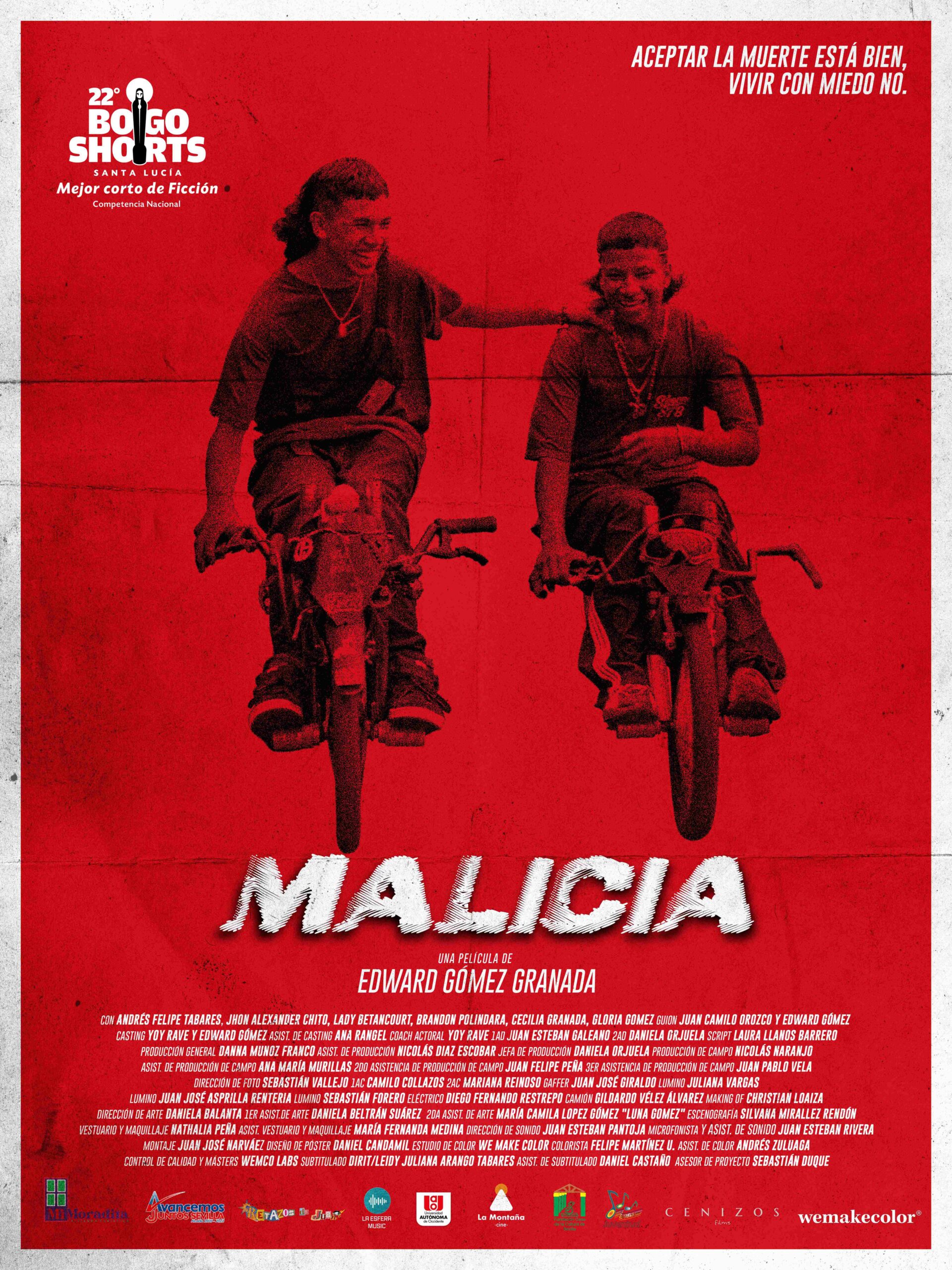
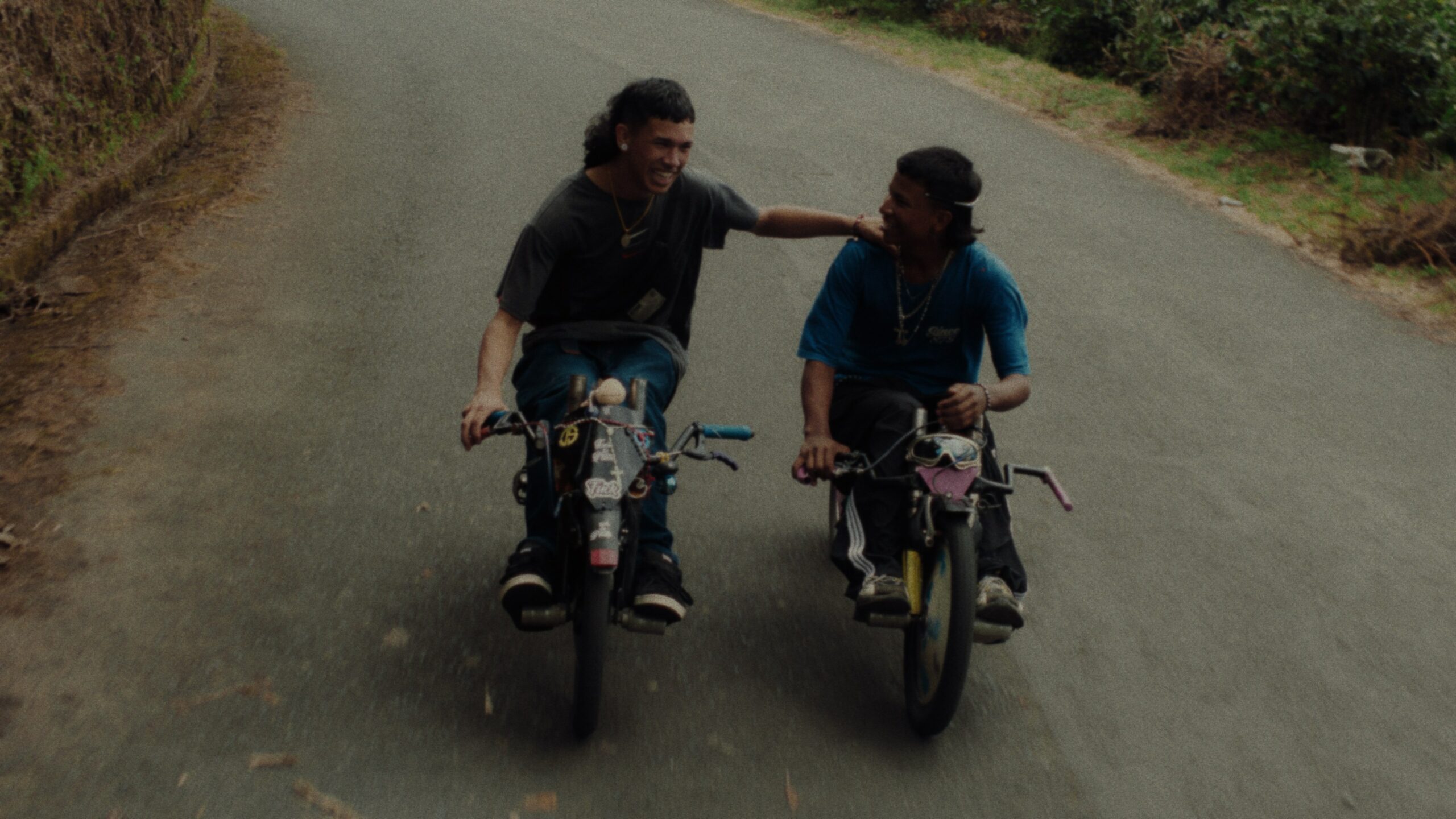
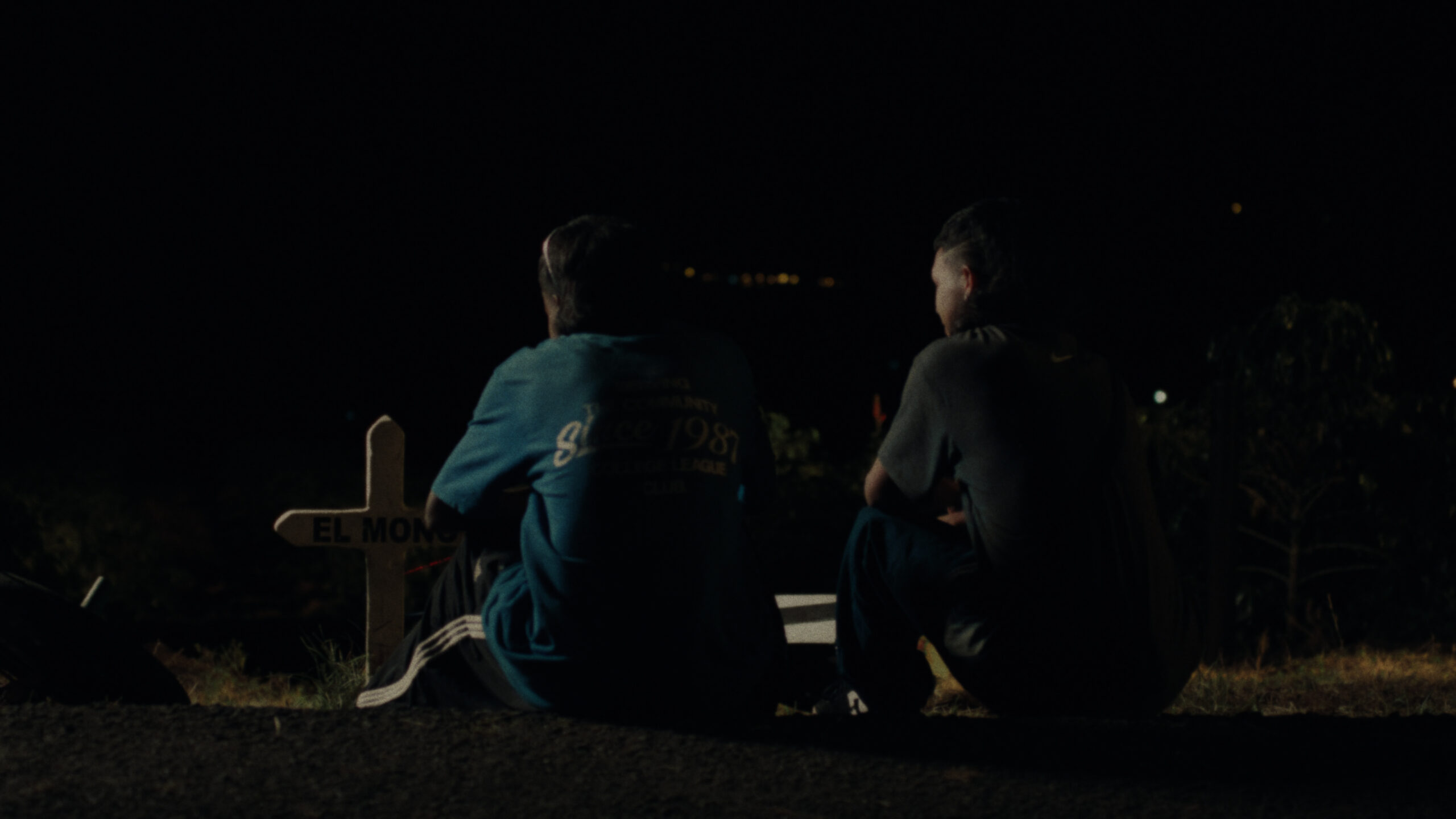
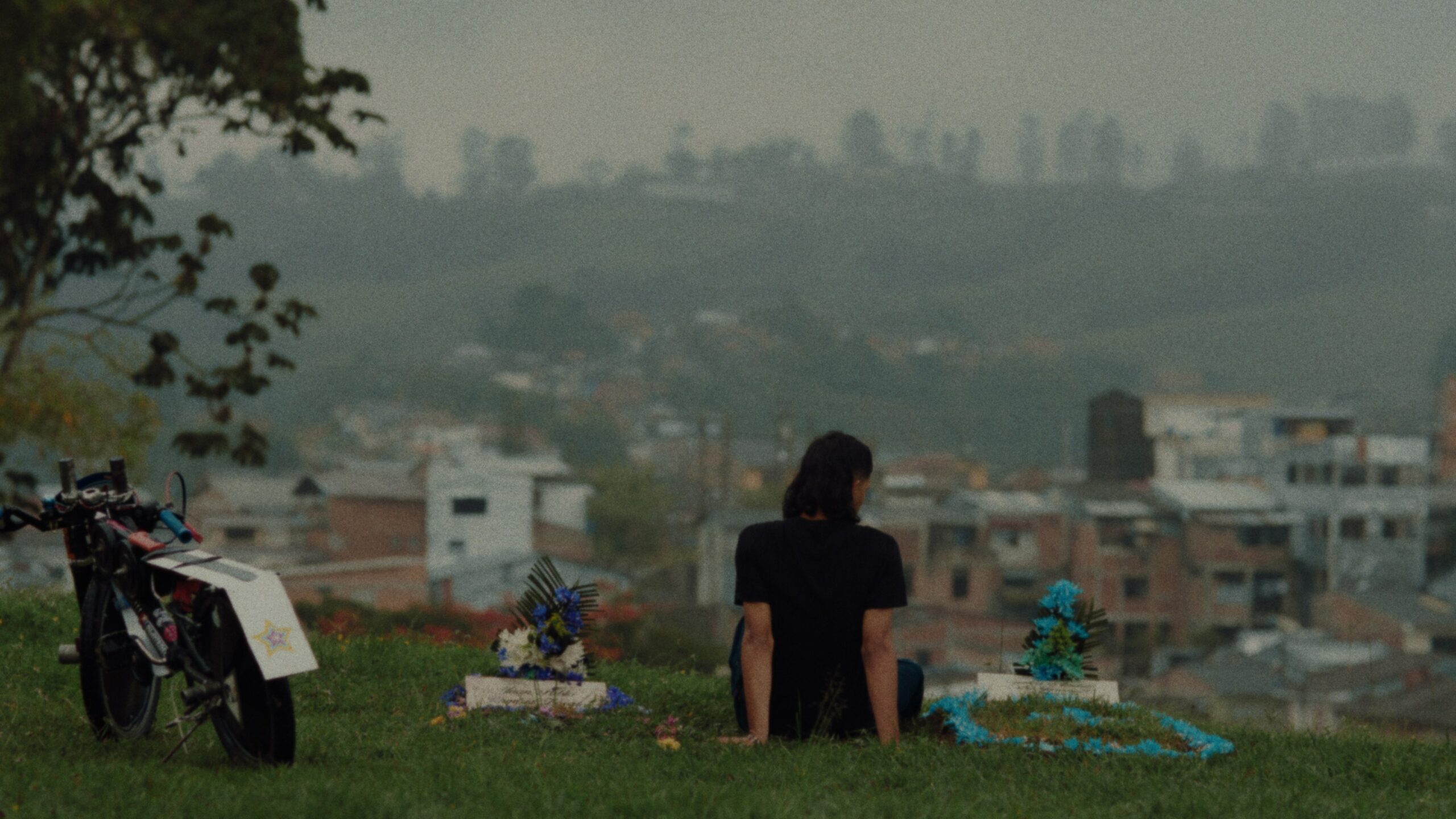
Malicia and Chinga, living surrounded by violence, want to recover their friend El Mono’s bike to honor the anniversary of his passing.
Malicia y Chinga, viven rodeados de violencia y quieren recuperar la bicicleta de su amigo El Mono para honrar el aniversario de su partida.
Short Synopsis / Sinopsis Corta:
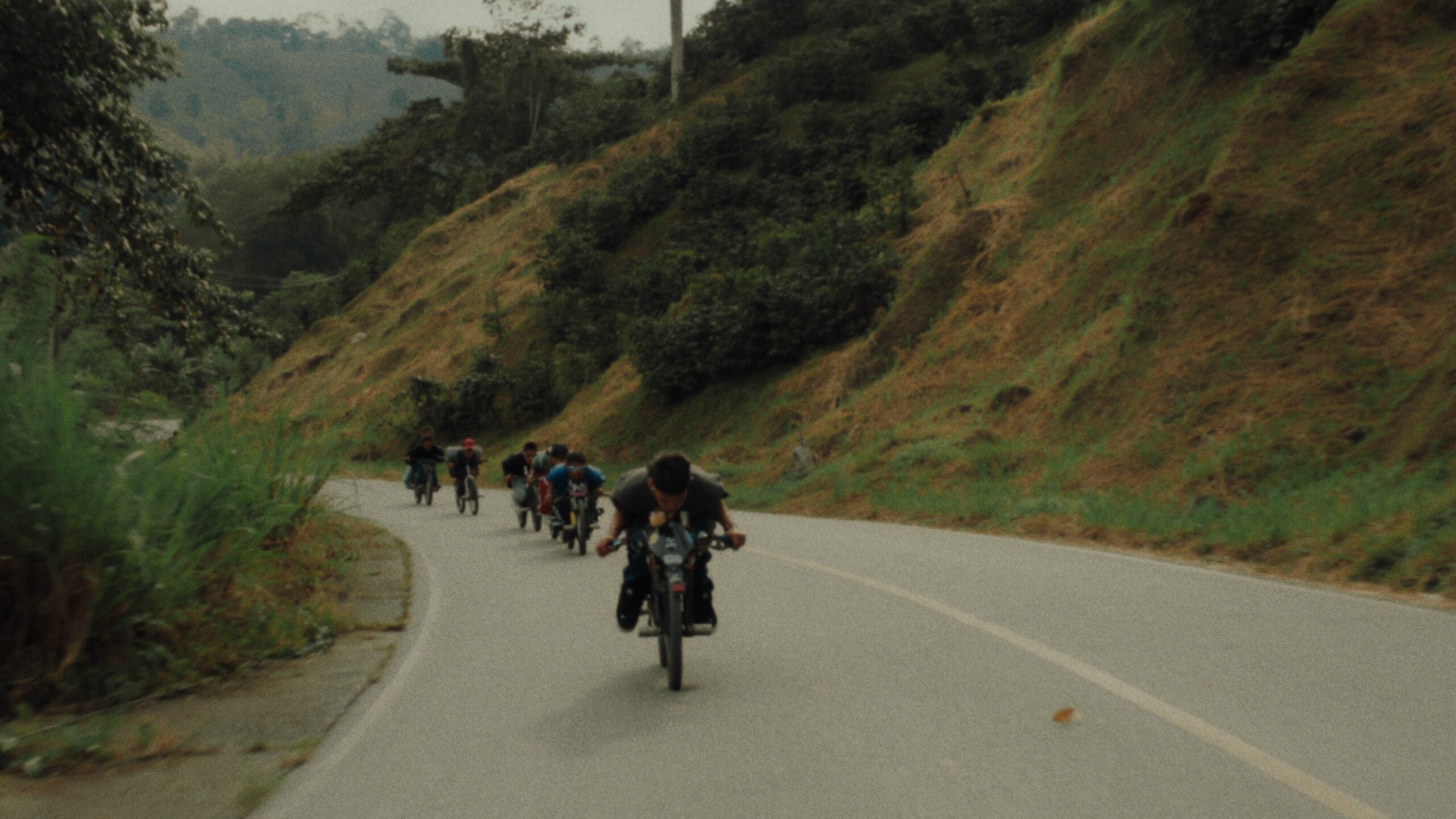
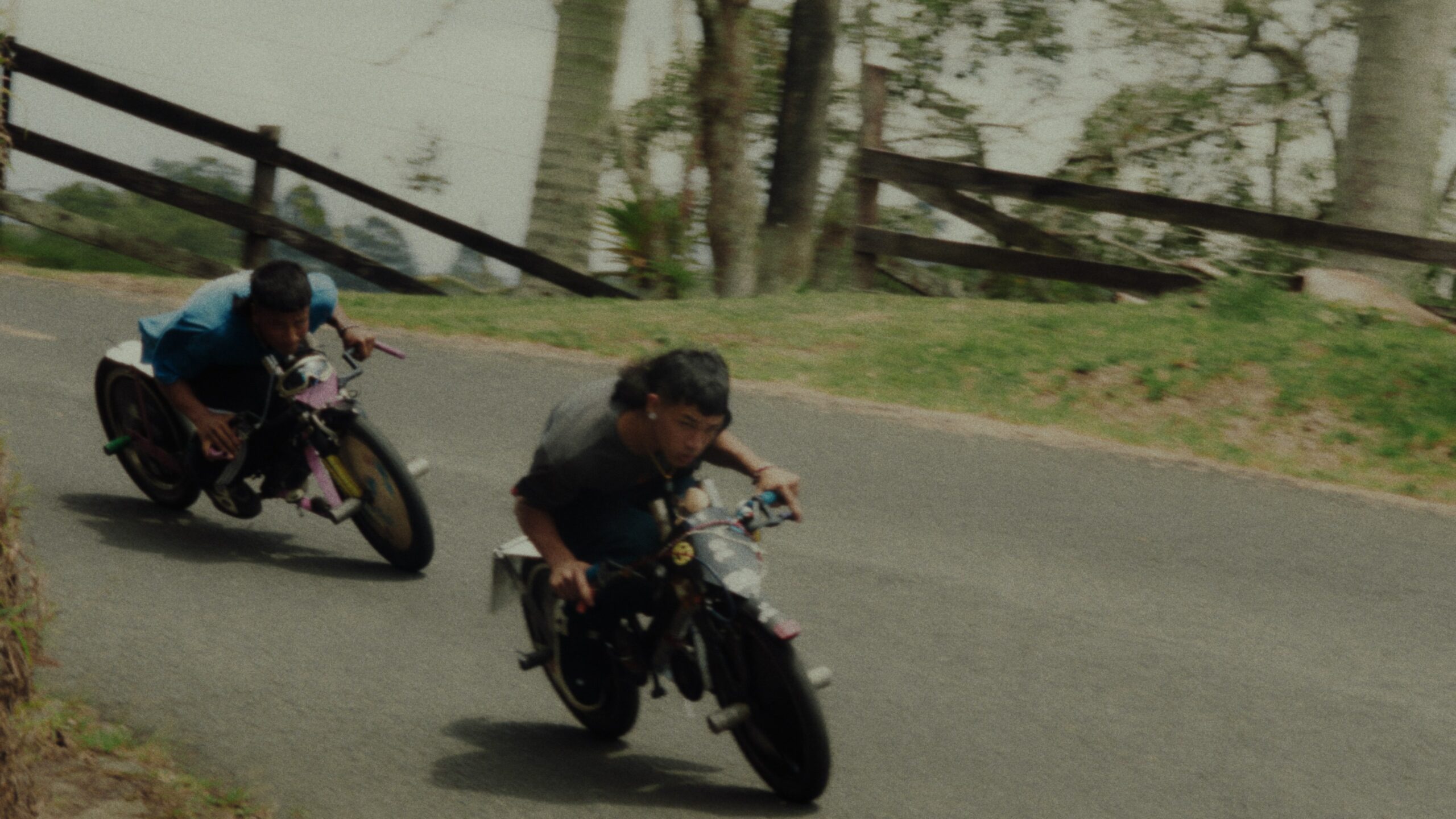
Malicia and Chinga, two gravity biker friends, get together to commemorate one year since the death of El Mono. Chinga is without a bicycle because the police confiscated it and Malicia is willing to do anything to get him one to commemorate his friend. However, they get caught up in the violence never lacking in the town’s streets.
Malicia y Chinga, dos amigos graviteros, se reúnen para conmemorar un año de la muerte del Mono. Sin embargo, uno de ellos pierde su bicicleta y para recuperarla se ven envueltos en la violencia que nunca falta en las calles del barrio.
Synopsis / Sinopsis:
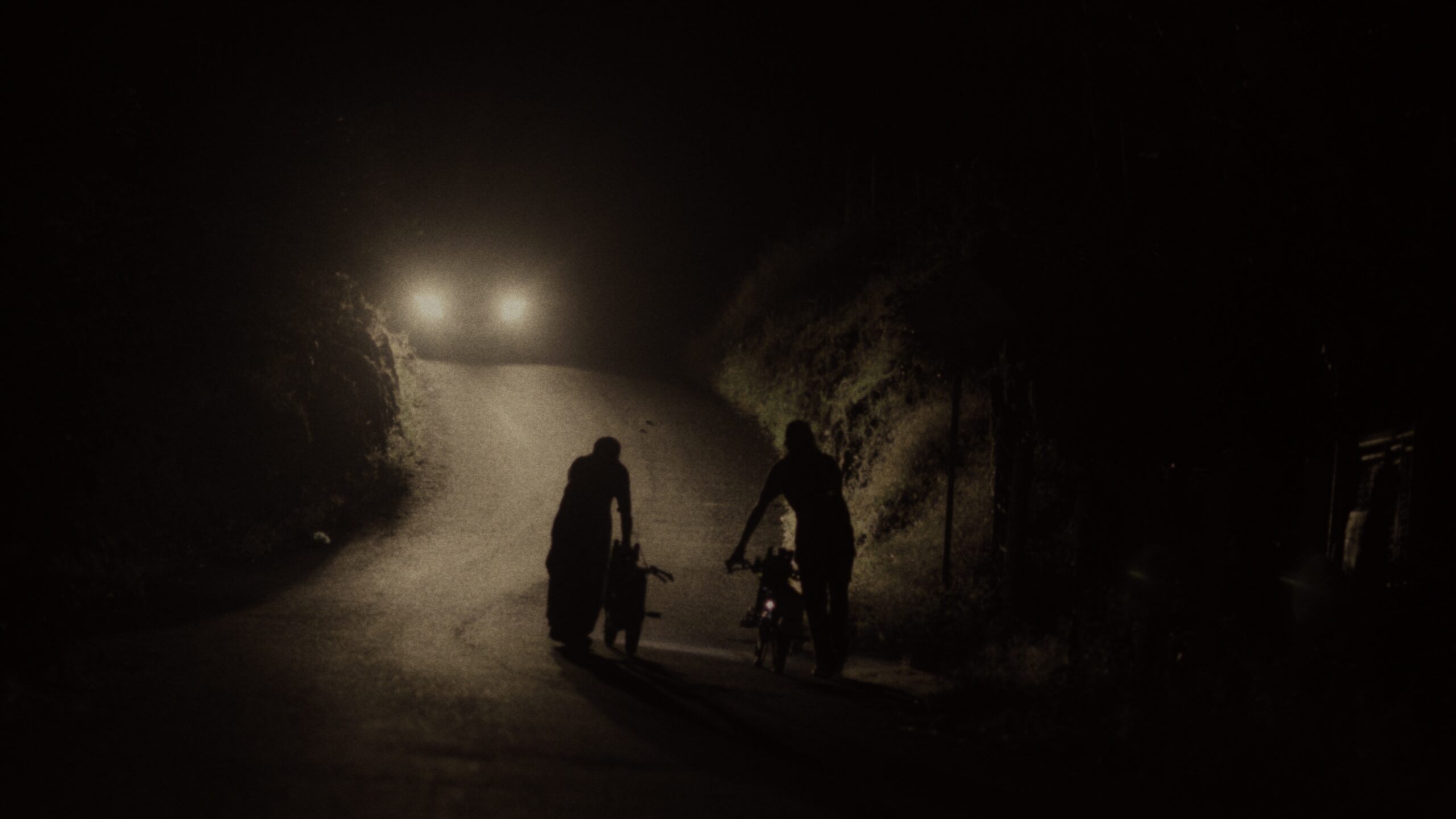
Malicia and Chinga, two downhill bikers, reunite to remember their best friend, El Mono, who passed away a year ago. In a neighborhood where growing up means learning to survive, Chinga has his bike stolen, and Malicia is willing to do anything to get it back. The violence in the streets never stops, and while danger follows them, they are forced to play at being adults before their time.
Malicia y Chinga, dos amigos graviteros (expertos descolgando por lomas empinadas en bicicleta a gran velocidad), se juntan para recordar a su mejor amigo, El Mono, muerto hace un año. En un barrio donde crecer significa aprender a sobrevivir, a Chinga le quitan su bici, y Malicia, está dispuesto a todo para recuperarla. La violencia en las calles no para, y mientras el peligro los persigue, ellos se ven obligados a jugar a ser adultos antes de tiempo.
Director´s Biography / Biografía del Director:
EDWARD GÓMEZ GRANADA
Director, scriptwriter, editor, and founder of the La Montaña Cine production company. Lover of stories, cumbia, pun,k, and self-proclaimed «militant of tenderness». He has written and directed video clips for various bands in Colombia. «Malicia» is his thesis. Lives in Cali (Colombia) but is originally from the small town of Sevilla.
Profesional en cine y comunicación digital, nacido y criado en Sevilla, Valle del Cauca, pero actualmente reside en Cali. Amante de las historias, la cumbia, el punk y auto-declarado «militante de la ternura». Es Director, guionista, montajista y fundador de la productora cinematográfica La Montaña Cine. Ha escrito y dirigido videoclips para diferentes bandas de Colombia. «Malicia» es su tesis de graduación.
Director’s Statement / Declaraciones del Director:
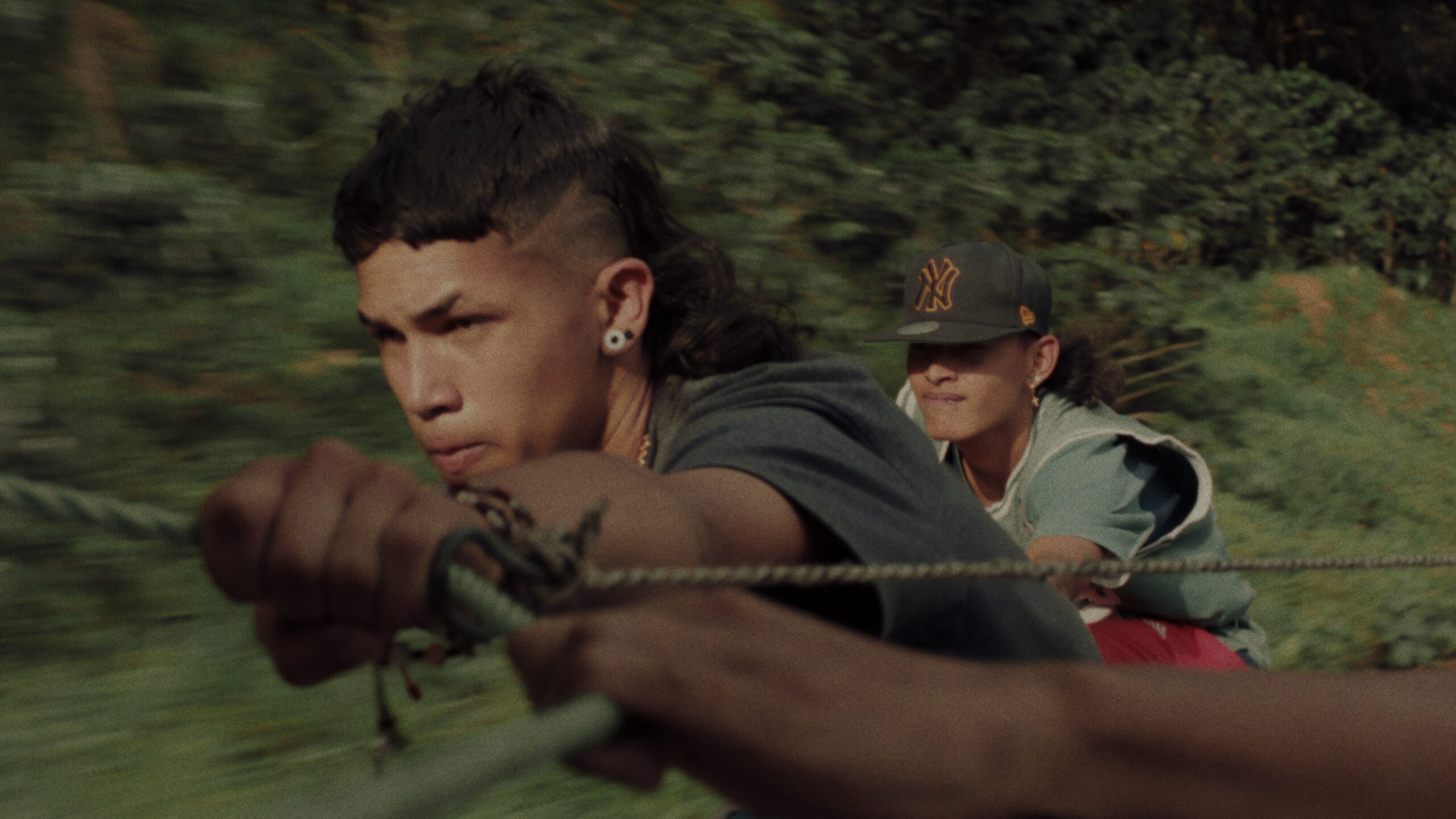
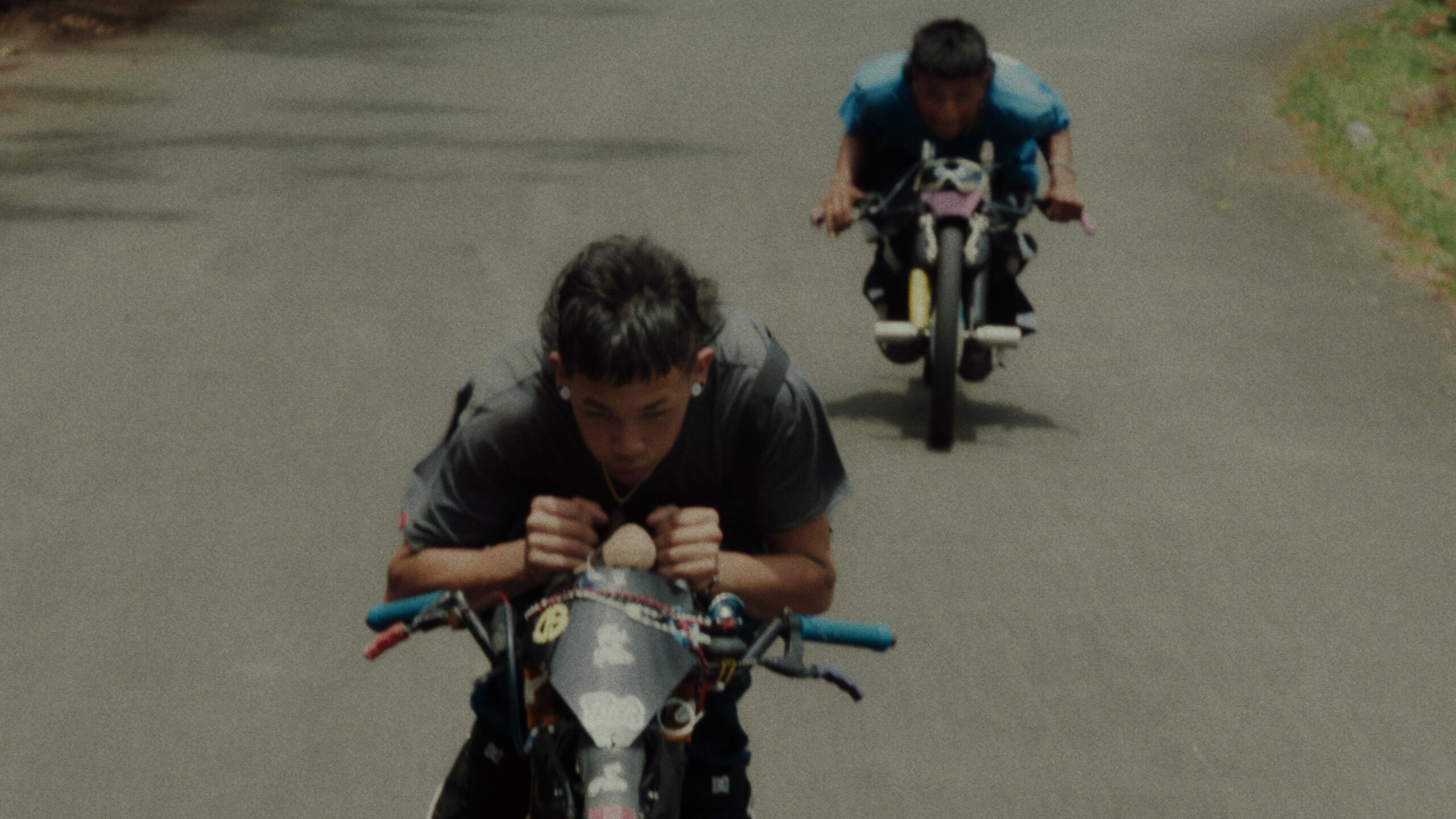
A while ago, my dad and I took a trip in the car. As he drove, I looked out the window. We weren’t going very fast, everything was quiet, and the road was lonely. Suddenly, my father had to make an abrupt maneuver that brought me back to earth. I didn’t understand what was happening. Looking ahead, I saw them for the first time. There they were, fast and agile. Some wore elbow and knee pads, others were shirtless, and most wore hats and goggles. But they all had one thing in common, they looked alive… really alive. The bikes they rode were not normal. They were modified, lower than all the others, with strange directions and even added weights. As I watched in fascination, a comment from my father broke the spell. He said that two people had been killed right over there. Questions began to pop into my head: Who were they? What were they doing? Why did they do it? A short time later, I discovered that what they were doing was called gravity biking, a sport that involves riding modified bicycles down steep slopes at high speeds. From that moment on, I was fascinated by the universe and the people surrounding this practice. Young people from poor neighborhoods face life as they face these streets: at full speed, without stopping for a second. That’s how Malicia, the protagonist of this movie, was born. He is a character who lives so close to death that he has completely normalized it. But Malicia is not alone; his friends are not unlike him. Every afternoon, they meet at the highest mountain to start their descent, not knowing what fate awaits them at the end of their journey. Although this short film has a tragic tone, it is an ode to life. It is a plea to live without fear and a celebration of friendship. Malicia is a good boy, he grew up adapting to the dynamics of the streets, and he knows how to survive amid violence and hardship, like so many Colombians who face adversity every day. But he is willing to do anything for his friends. Together with his partner Chinga, he embarks on a journey to commemorate the anniversary of Mono’s death, unaware that death is also following them. For Malicia, doing gravity means walking on the edge of death, because being on the edge makes him feel alive. It is his way of celebrating friendship, and in that sense, Malicia and I are not so different. I also found what makes me feel alive: making movies.
Hace un tiempo, mi papá y yo íbamos de viaje en el carro. Mientras él conducía, yo miraba por la ventana. No íbamos muy rápido; todo estaba tranquilo, y la carretera estaba sola. De pronto, mi papá tuvo que hacer una maniobra abrupta que me devolvió a la tierra. No entendía qué había pasado. Cuando miré al frente, los vi por primera vez. Allí estaban, veloces y ágiles. Algunos llevaban protectores de codos y rodillas, otros iban sin camisa, la mayoría usaba gorras y gafas. Pero todos compartían algo en común, se veían vivos… vivos de verdad. Las bicicletas en las que iban no eran normales. Estaban modificadas, eran más bajas que cualquier otra, con direcciones extrañas e incluso pesas añadidas. Mientras yo los observaba fascinado, un comentario de mi papá rompió el hechizo. Dijo que, en esos días, se habían matado dos por ahí mismo. En mi cabeza comenzaron a surgir preguntas: ¿Quiénes eran? ¿Qué hacían? ¿Por qué lo hacían? Poco tiempo después, descubrí que lo que hacían se llama gravity bike, un deporte que consiste en descender a altas velocidades por pendientes empinadas en bicicletas modificadas. Desde ese momento me fascinó el universo y las personas que rodean esta práctica. Jóvenes de barrios populares que enfrentan la vida como enfrentan esas carreteras: a toda velocidad, sin detenerse ni un segundo. De ahí nació Malicia, el protagonista de esta película. Es un personaje que vive tan cerca de la muerte que la ha normalizado por completo. Pero Malicia no está solo; sus amigos no son muy diferentes a él. Cada tarde se encuentran en la montaña más alta para lanzarse por la loma, sin saber qué destino les espera al final del recorrido. Aunque este cortometraje tiene un tono trágico, en realidad es una oda a la vida. Es una apuesta por vivir sin miedo y una celebración de la amistad. Malicia es un buen muchacho, creció adaptándose a las dinámicas de la calle, sabe sobrevivir en medio de la violencia y la necesidad, como tantos colombianos que enfrentan día a día la adversidad. Sin embargo, está dispuesto a hacer lo que sea por sus amigos. Junto a su compañero Chinga, se embarca en una travesía para conmemorar el aniversario de la muerte del Mono, sin saber que la muerte también los está acechando. Para Malicia, hacer gravity significa caminar al filo de la muerte, porque estar al borde lo hace sentirse vivo. Es su forma de celebrar la amistad, y en ese sentido, Malicia y yo no somos tan distintos. Yo también encontré aquello que me hace sentir vivo: hacer cine.
Overview / Ficha técnica:
Script / Guión: Edward Gómez Granada, Juan Camilo Orozco
Producer / Productor: Danna Muñoz Franco, Edward Gómez Granada
Director / Director: Edward Gómez Granada
Cinematography: Sebastián Vallejo
Art Director / Dirección de Arte: Daniela Balanta
Wardrove / Vestuario: Nathalia Peña
Sound / Sonido Directo: Juan Esteban Pantoja
Film Editor / Montaje: Juan José Narváez
Sound design / Diseño de sonido: Juan Esteban Pantoja
Original Music / Música Original: Yoy Rave
Cast / Elenco: Andrés Felipe Tabares, Jhon Alexander Chito
Festivals and Awards / Festivales, Premios y Nominaciones:
– 22 Bogoshort, Bogota Int’l Short Film Festival (Best Shor Film); 12/2024; Colombia
– 40 FICG, Guadalajara Int’l Film Festival; 06/2025; Mexico
– 20° SHORTS MEXICO, Int’l Short Film Festival (Best Short Film); 09/2025; Mexico
– 27 FestCurtasBH, Belo Horizonte International Short Film Festival; 10/2025; Brazil
– 39 Leeds International Film Festival; 10/2025; UK
– 17° FICCALI, Cali Int’l Film Festival (Best Short Film); 10/2025; Colombia
– 41 Interfilm, Berlin Int’l Short Film Festival; 11/2025; Germany
– 48° Poitiers Film Festival; 11/2025; France
– 27 YOUKI, International Youth Media Festival; 11/2025; Austria
– 18° KUKI Young Short Film Festival Berlin; 11/2025; Germany
– 24° PRIMEIRO PLANO Film Festival (Best Sound Design); 11/2025; Brazil
– 39° STUTTGARTER FILMWINTER, Festival for Expanded Media; 01/2026; Germany
– 38° CINÉLATINO, Toulouse Latin American Film Festival; 03/2026; France
– 19° NFFTY, Film Festival for Talented Youth (Audience Award); 03/2026; US
– 33° St Anna Award: student & debut films (Best Short Film); 04/2026; Russia
– 28° Mecal Pro, Barcelona International Short & Animation Festival; 05/2026; Spain
HD 1920×1080 / 2d Animation / Software Toon Boom / 24 fps / 16:9 / Color / Stereo
Logline:
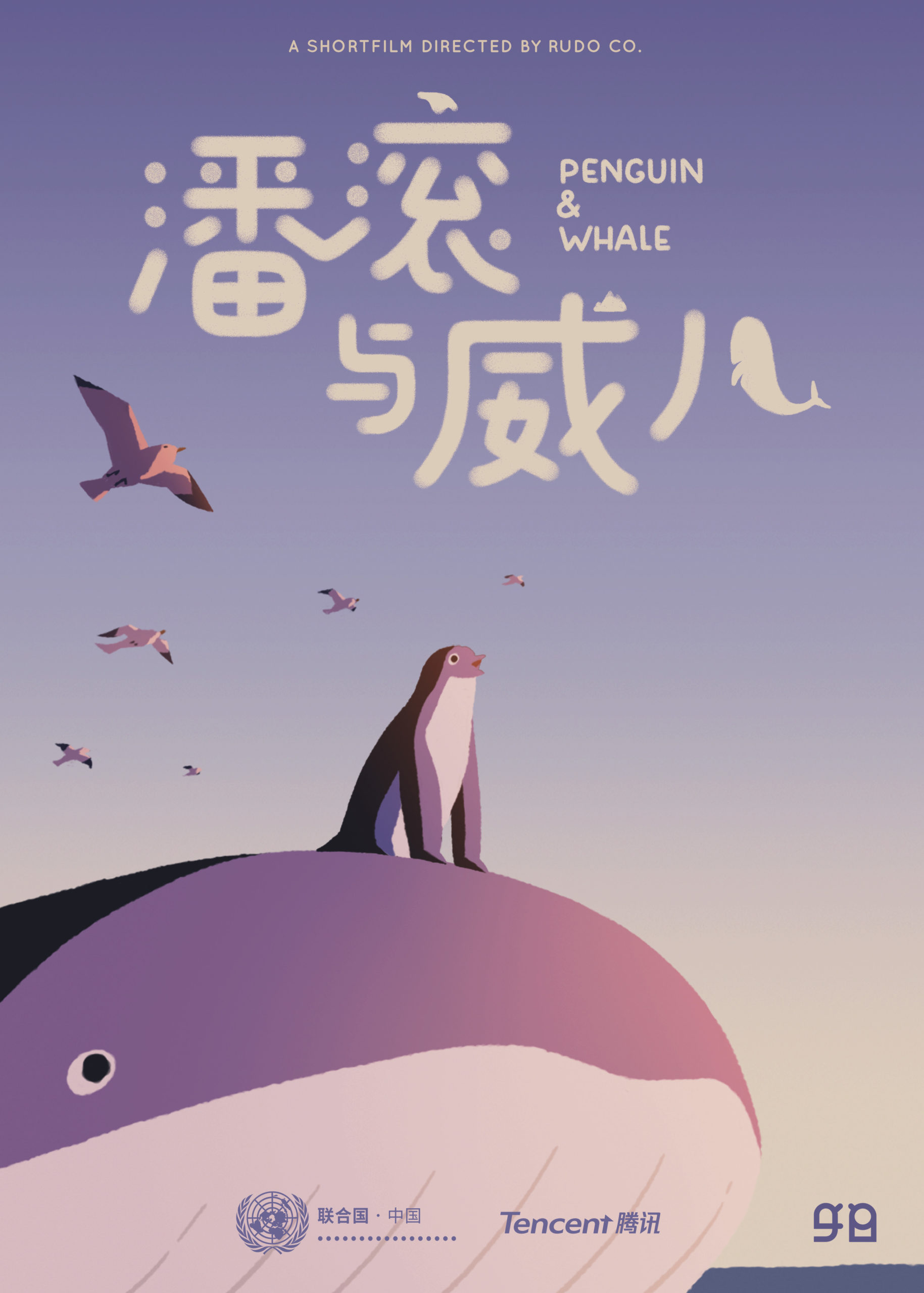
Regina, after a wild ritual, becomes the new witch.
Regina, tras un ritual salvaje, se convierte en la nueva bruja.
Short Synopsis / Sinopsis Corta:
Regina makes her way to the ritual of initiation into magic. Makeup, glitter, and a blood pact define a new attitude in Regina who is now ready for anything.
Regina, Norma e Isabel se enfrentan al espejo y se abren paso al ritual de iniciación en la magia. Maquillaje, brillos y un pacto de sangre definen una nueva actitud en Regina que ahora está dispuesta a todo.
Synopsis / Sinopsis:
Regina makes her way to the ritual of initiation into magic. Makeup, glitter, and a blood pact define a new attitude in Regina who is now ready for anything. That afternoon, she invites Roberto and Antonio to a picnic at sunset. Candles, wine, and delicacies are the setting to become the offering for the ritual. Alchemy and the desire for power stain the moment in blood and magic to obtain the necklace of consecration. Finally, Regina takes the power and begins a new cycle.
Regina, Norma e Isabel se enfrentan al espejo y se abren paso al ritual de iniciación en la magia. Maquillaje, brillos y un pacto de sangre definen una nueva actitud en Regina que ahora está dispuesta a todo. Esa tarde citan a Roberto y Antonio a un picnic al atardecer. Las velas, el vino y los manjares son el escenario para convertir a los dos amigos en la ofrenda secreta para el ritual. La alquimia, los animales sagrados, la traición y el deseo de poder tiñen el momento con una persecución entre dagas, sangre y magia para obtener el collar de la consagración. Finalmente, Regina toma el poder y da comienzo a un nuevo ciclo.
Digital artist and art director specializing in illustration and animation. Since 2018 she has worked independently in the field of 2D traditional animation. She focuses her work on fantasy and surrealism with a strong female approach.
Artista digital y directora de arte especializada en ilustración y animación. Desde 2018 trabaja de forma independiente en el campo de la animación tradicional 2D. Centra su trabajo en la fantasía y el surrealismo con un fuerte enfoque femenino.
Overview / Ficha técnica:
Script / Guión: Jesica Bianchi, Pablo Roldán
Producer / Producción: Ailin Estrella
Director / Director: Jesica Bianchi
Animation Director / Dirección de Animación: Juan Pedro Ramos
Animation / Animadores: Juan Pedro Ramos, Mariana Díaz, Emanuel Giménez, Esteban Dunand, Eugenia Beizo, Micaela Gabot, Matilda Segura, Mariano Fernández, Flora Dreer, Israel Giampietro, Mercedes De Santis, Lena Mandel, Patricio Rey
Art Director / Dirección de Arte: Jesica Bianchi
Character Design / Diseño de Personajes: Jesica Bianchi, Pablo Roldán, Gonzalo Freiganes
Layout: Jesica Bianchi, Pablo Roldán, Sofia Mercuri
Background: Jesica Bianchi, Mariano Albano, Pablo Roldán, Nolwe Tamis, Nicolas Ozuna, Diego Segura
3D: Mariano Fernández, Pablo Colabella, Juan Pedro Ramos
Digital Composition: Mariano Fernández, Pablo Fortunato
Original Music / Música Original: Siamés
Festivals and Awardss / Festivales, Premios y Nominaciones:
– 20 Pictoplasma Berlin, Festival of Contemporary Character Design & Art; 05/2024; Germany
– 64 Annecy International Animation Film Festival; 06/2024; France
– 17 Fest Anča, International Animation Festival; 06/2024; Slovakia
– 15 Anibar; International Animation Festival; 07/2024; Kosovo
– 22 IMAGINARIA, Auteur International Animation Festival; 08/2024; Italy
Rudo Company is a multi-awarded 2D animation studio founded in 2015. Directed by Ezequiel Torres and Pablo Rafael Roldán, we’ve been working in advertising, music videos, short films, and content for all types of formats. We’ve directed & produced TV commercials for Apple, Nike, Adidas, Cartoon Network, MTV, Absolut Vodka, and many other brands. We are part of the Psyop roster of directors for the US & Canada. In 2017, we produced the music video «The Wolf,» which has had more than 150 million views on YouTube. We have released 6 short films, with which we have participated in more than 150 official selections and won 30 awards. This Acknowledgement means a lot to us, as well as being able to meet an audience that likes what we do. We are always thrilled about creating new pieces with different visual universes, and now we are looking forward to starting to develop our own intellectual property projects.
Rudo Company es un multipremiado estudio de animación 2D, fundado en 2015. Dirigido por Ezequiel Torres y Pablo Rafael Roldán, trabajamos en publicidad, videoclips, cortometrajes y todo tipo de formatos. Dirigimos y producimos publicidades para TV para marcas como Apple, Nike,Adidas, Cartoon Network, MTV, Absolut Vodka y muchas otras marcas. Somos parte del roster de directores de Psyop para Estados Unidos y Canadá.En 2017 produjimos el videoclip The Wolf que tuvo más de 180 millones de reproducciones en Youtube. Hasta ahora estrenamos 6 cortometrajes, con los que participamos de más de 150 selecciones oficiales alrededor del mundo. Estamos entusiasmados por crear y producir nuevas piezas con diferentes universos visuales y ahora estamos buscando desarrollar nuestro propio contenido original.
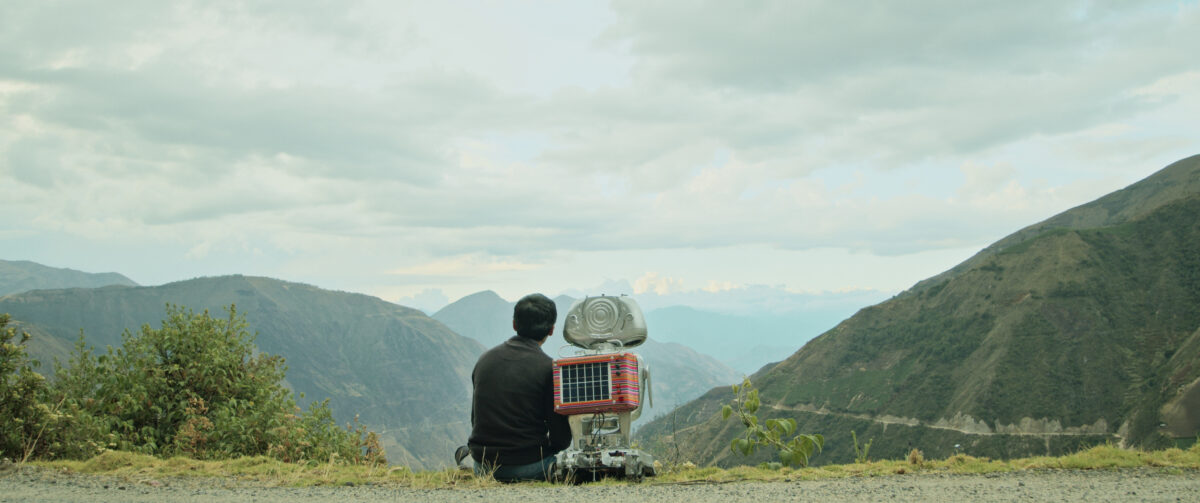
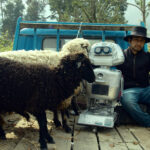
A teacher in the highlands of Peru created a female robot during the COVID-19 pandemic. He trains it and humanizes it to share learning with children in the communities he visits.
Un profesor de la sierra del Perú crea una robot en medio de la pandemia, la entrena y humaniza para compartir aprendizajes con niños y niñas de las comunidades que visita.
Synopsis / Sinopsis:
During the pandemic, rural teacher Walter Velasquez, a long-time science and technology teacher, created a female robot using computer scrap and named it Kipi. Most of Walter’s students dropped out of school in the face of Covid 19 and returned to their communities. Neither connectivity nor access had those villages because of how dispersed were those locations. Kipi becomes the teacher’s assistant and supports the educational efforts of its creator, taking the learnings to the homes and communities.
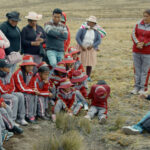
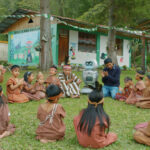
Durante la pandemia, el maestro rural Walter Velásquez, dedicado por años a la ciencia y tecnología, crea una robot usando chatarra informática y la bautiza con el nombre de Kipi. La mayoría de los estudiantes de Walter dejaron la escuela ante la Covid 19 y regresaron a sus comunidades. Sin conectividad ni acceso por tratarse de centros poblados dispersos, Kipi se convierte en la asistenta del profesor y acompaña el peregrinaje educativo de su creador llevando los aprendizajes hacia las casas y comunidades.
Sonaly Tuesta. She is a documentary filmmaker and writer. She created the travel television program COSTUMBRES rescuing the ancestral knowledge of the people and was on the air for 20 years. She is a Cultural Personality in Peru. She has directed three short films: LUCY, MAGALI, and AURORA of the documentary series “Mother Wisdom”. She has written six books on popular wisdom and a testimonial book called «Un viaje para no morir». She is a member of Nuna, an association of Peruvian filmmakers, and directed her first feature documentary: MISIÓN KIPI.
Sonaly Tuesta. Es documentalista y escritora. Creó el programa de viajes COSTUMBRES rescatando el saber ancestral de los pueblos y estuvo en el aire por 20 años. Es Personalidad de la Cultura en el Perú. Ha dirigido tres cortometrajes: LUCY, MAGALI y AURORA de la serie documental “Sabiduría Madre”. Ha escrito seis libros sobre sabiduría popular y un libro testimonial llamado “Un viaje para no morir”. Integra Nuna, asociación de cineastas peruanas y dirige su primer largometraje documental: MISIÓN KIPI.
Director’s Statement / Declaraciones del Director:
What encouraged you to make this story your own and start imagining the film? I met Walter Velásquez through social networks. The image was powerful: a teacher who invited a female robot to go to the top of the hill and teach his students. That got me excited. I managed to contact him and I did a short interview for my Facebook Live. However, what was decisive to put together a project and start with the adventure of the film, is that Kipi was not a robot but a female robot. Were you impressed that it was a female robot? Yes, totally. Then I made Walter’s explanation my own: even in many communities in Peru, it is the boys who prioritize going to school. Or, to put it another way, when it comes to deciding who leaves school, it is the girls who are chosen. That is why it is important to emphasize that Kipi inspires, she is a girl with a lot of knowledge who continues to learn. And something else: when I learned that Walter had created Kipi in Colcabamba (Tayacaja, Huancavelica) I went back to 2004, 2005 when I visited this land many times to record their festivities and this opportunity was like I had planned to return and resume the links. It has been beautiful to meet again with my comadre Zenobia who even dared to compose a song for the birthday of the female robot.
¿Qué te animó a hacer tuya esta historia y empezar a imaginar la película? Conocí a Walter Velásquez a través de las redes. La imagen era poderosa: un profesor que inventa una robot para irse hasta la punta del cerro y enseñar a sus estudiantes. Eso, me emocionó. Lo vi tantas veces hasta que logré contactarlo y le hice una pequeña entrevista para mi Facebook Live. Sin embargo, lo que fue determinante para armar un proyecto y empezar con la aventura de la peli, es que Kipi no era un robot sino una robot. ¿Te marcó que sea una niña? Sí, totalmente. Luego hice mía la explicación de Walter: aún en muchas comunidades del Perú son los niños quienes tienen la prioridad para ir a la escuela. O, dicho de otra manera, cuando se tiene que decidir quien deja el colegio, son a las niñas a quienes se elige. Por eso es importante resaltar que Kipi inspira, es una niña con muchos conocimientos que sigue aprendiendo. Y algo más: cuando supe que Walter había creado a Kipi en Colcabamba (Tayacaja, Huancavelica) me remonté al 2004, 2005 en que estuve muchas veces en esta tierra para registrar sus fiestas y esta oportunidad era como un designio para volver y retomar los vínculos. Ha sido hermoso reencontrarme con mi comadre Zenobia que hasta se animó a componer una canción para el cumpleaños de la Niña Robot.
La innovación tecnológica desde la ruralidad. El cómo un maestro rural crea una robot para que sus estudiantes sigan aprendiendo. El aprendizaje a través del saber popular de la gente. La participación de las y los niños en el proceso creativo de la robot. Se trata de una robot que inspira a las niñas a seguir aprendiendo. En muchas de las comunidades en el Perú aún se prioriza que los niños vayan a la escuela y no las niñas. Desde la ruralidad se puede crear innovación. En el recorrido de Walter y Kipi se lleva la escuela a la comunidad. Sonaly Tuesta es una documentalista conocida en el Perú porque creó el programa de televisión Costumbres y durante 20 años mostró la diversidad cultural del Perú. Misión Kipi es su ópera prima.
Overview / Ficha técnica:
Director / Director: Sonaly Tuesta
Script / Guión: Sonaly Tuesta, Wilmer Gutiérrez
Production / Producción: Sonaly Tuesta
Executive Productor / Producción Ejecutiva: Sonaly Tuesta, Javier Anaya
DoF & Camera / DF y Cámara: Wilmer Gutiérrez
Art Director / Dir. de Arte: Gabriela Baca
Film Editor / Montaje: Mana García
Sound design / Diseño de sonido: Guillermo Sempronii
Original Music / Música Original:
Cast: Walter Velásquez, Kipi
Festivals and Awards / Festivales, Premios y Nominaciones:
– 15 Pérou Pacha, Festival de Cinéma Péruvien de Paris; 04/2024; France
– 18 Cine+Video Indígena Festival; 08/2024; Chile
– 14 FEMCINE, Women Film Festival; 09/2024; Chile
– 11 Zero Plus, International Children Film Festival; 09/2024; Russia
– 13 Voces Contra el Silencio, Human Rights Film Festival (Best Film); 09/2024; Mexico
– 21 Tegernsee International Mountain Film Festival; 10/2024; Germany
– 11 FECIT, Trujillo Film Festival; 10/2024; Peru
– 20 INKAFEST, Mountain Film Festival; 10/2024; Peru
– 19 Arica Nativa, Native Film Festival; 11/2024; Chile
– 11 Huánuco Film Festival (Best Film); 11/2024; Peru
– 8 Bajo Nuestra Piel, Human Rights Film Festival; 11/2024; Bolivia
– 4 Hanan Int’l Film Festival; 12/2024; Peru
– 3 Filmed in Peru, Peruvian Film Festival; 04/2025; US
– 73 Trento Film Festival; 04/2025; Italy
– 56 Diablerets Film Festival – Mountain/Exploits/Environment; 08/2025; Switzerland
(2022) / 00:04:31 / 16:9 / Color / Stereo / NTSC / 24 FPS / Canon 6D / Dragon Frame y Adobe Premiere / stop motion / Animation short film: musical, country life, animals, childhood, children, educational / Buenos Aires, Argentina
Logline:
A northwestern winter is full of ponchos, mates, and warm stories.
Un invierno norteño lleno de ponchos, mates y cuentos que abrigan.
Synopsis / Sinopsis:
Among the hills of northwestern Argentina, a girl spends the winter in her hut. She weaves colored ponchos and goes in search of her friends, native animals of the area, to keep them warm with her wool and to invite them to her hut to drink mate together and warm up with a story and a song.
Entre los cerros del noroeste argentino, una chica pasa el invierno en su choza. Teje ponchos de colores y va en busca de sus amigos, animales nativos de la zona, para abrigarlos con sus lanas e invitarlos a su choza a tomar mate y calentarse con un cuento y una canción.
Director´s Biography / Biografía del Director:
BELÉN RICARDES
She studied Image and Sound Design at the University of Buenos Aires, and Piano at Manuel de Falla Conservatory. She composed soundtracks for web series, films, and video games. In 2016, she directed her first short film and founded the Audiovisual Production Company Ojos de Ciclope, which she directs. Currently, she is directing an animated series for children for a renowned public channel.
Estudió Diseño de Imagen y Sonido en la UBA, en paralelo al Conservatorio de Piano. Realizó bandas sonoras para series web, largometrajes y videojuegos. En 2016 dirigió su primer cortometraje y fundó la Productora Audiovisual Ojos de Ciclope, que actualmente dirige y con la que se especializo en técnicas 2D y 3D de animación. Actualmente dirige una serie animada infantil para un reconocido canal de la televisión pública.
Director’s Statement / Declaraciones del Director:
“With a Wool Ball” was born from a trip I made to the northwest of Argentina, where I was able to learn a little about the magic of the place and the warmth of its people. From that trip, this project grew with the aim of bringing children closer to the sounds, native animals, landscapes, beauty, and magic of this place. The needle felting technique that was used in the short film is a technique widely used and developed in the area in which it takes place. For this reason and because of the warmth of the technique, because of the material it uses, which directly alludes to the winter coat, it found it to be the right technique to make the short film. The technique, as well as the color palette and the sound palette, were inspired by the nature and spirit of northwestern Argentina, with the search to transmit something of that magic that I consider so necessary for childhoods in particular and for our culture in general.
“Con un Ovillo de Lana” nació de un viaje que realicé al noroeste de Argentina, en el cual pude conocer un poco la magia del lugar y la calidez de su gente. A partir de ese viaje, este proyecto creció con el objetivo de interiorizar a las infancias en los sonidos, los animales nativos, los paisajes, la belleza y la magia de este lugar. La técnica de lana y aguja a la que se acudió para realizar el cortometraje es una técnica muy utilizada y desarrollada en la zona en la que transcurre. Por esta razón y por la calidez de la técnica y el material que utiliza, el cual alude directamente al abrigo del invierno, me pareció que se trataba de la técnica justa para llevar a cabo el cortometraje. Tanto la técnica, como la paleta de colores y la paleta sonora fue inspirada en la naturaleza y el espíritu del noroeste argentino, con la búsqueda de transmitir algo de esa magia que considero tan necesaria para las infancias en particular y para nuestra cultura en general.
Overview / Ficha técnica:
Script & Director / Guion y dirección: Belén Ricardes
Producer / Producción: Belén Ricardes
Animation & Art Director / Animación y Dir. de Arte: Belén Ricardes
Stage Design / Escenografía: Belén Ricardes, Emilia Uriarte, Victoria Ricardes
Sound Design / Dirección de Sonido: Andres Fortunato
Original Music / Músca Original: Belén Ricardes
Festivals and Awards / Festivales, Premios y Nominaciones:
– 11 Ojo de Pescado, International Children Film Festival; 08/2022; Chile
– 21 Chulpicine, Children & Youth Film Festival; 08/2022; Ecuador
– 32 BAB Festival, Biennial of Animation Bratislava; 10/2022; Slovakia
– 17 Animest, International Animation Festival; 10/2022; Romania
– 21 Florianópolis Children’s Film Festival; 10/2022; Brazil
– 39 Chicago International Children’s Film Festival; 11/2022; US
– 24 FILMAR, America Latina Film Festival: Children Program; 11/2022; Switzerland
– 5 ZINETXIKI ZINEMALDIA, Int Film Festival for Children & Youth (Best Film); 12/2022; Spain
– 18 Children’s Film Festival Seattle; 02/2023; US
– 14 Providence Children’s Film Festival; 02/2023; US
– 10 Play, Lisbon International Children Film Festival; 02/2023; Portugal
– 5 Louisville Children’s Film Festival; 03/2023; US
– 16 Curta Taquary, ISFF (Special Mention); 03/2023; Brazil
– Bellingham Children’s Film Festival; 03/2023; US
– 66 SFFILM Festival, San Francisco International Film Festival; 04/2023; US
– 12 CMS, International Chilren’s Film Festival (ICFF); 04/2023; India
– 26 New York Int Children Film Festival; 04/2023; US
– 5 Cachinus de Cine, Int Short Film Festival for Children & Young People; 04/2023; Spain
(2022) / 00:17:00 / Documentary Short Film / Portugal-Mexico / Student Short Film: Portrait, Drama, relationship, love, migration / 16:9 / COLOR / Stereo / Sony Z-90, iPhone 7 / 24 fps
Short Synopsis / Sinopsis Corta:
Is love something that happens to all of us? Is it normal to feel lonely in such a big city? Daniela is looking for short, exciting encounters so she doesn’t feel alone while she is away from home. “The Things I Tell You” is a film about deep and fast connections in a world where you can be vulnerable and free through cell phone messages and romantic dates.
¿Es el amor algo que nos pasa a todos? ¿Es normal sentirnos solos en una ciudad tan grande? Daniela busca tener encuentros cortos y emocionantes para no sentirse sola mientras está lejos de casa. “Las Cosas Que Te Digo” es una película sobre conexiones profundas y rápidas en donde se puede ser vulnerable y libre a través de mensajes de celular y de citas amorosas.
Synopsis / Sinopsis:
Is love something that happens to all of us? Is it normal to feel lonely in such a big city? The desire to connect with people, in short, exciting encounters is present in Daniela when she is away from home. “The Things I Tell You” is a film about deep and fast connections in a world where you can be vulnerable and free through cell phone messages and romantic dates.
¿Es el amor algo que nos pasa a todos? ¿Es normal sentirnos solos en una ciudad tan grande? Daniela busca tener encuentros cortos y emocionantes para no sentirse sola mientras está lejos de casa. “Las Cosas Que Te Digo” es una película sobre conexiones profundas y rápidas en un mundo donde se puede ser vulnerable y libre a través de mensajes de celular y de citas amorosas.
Director´s Biography / Biografía del Director:
DANIELA SILVA SOLÓRZANO
Mexican
Mexican director and producer who graduated from the University of Audiovisual Media in Guadalajara. Her documentary “Where Things Remain” (2018) premiered in Guadalajara IFF and is currently being distributed by Amazon. “Off the Road”, her first film as a producer, was premiered and awarded in Visions du Reel (2020). She is a co-founder and producer at the audiovisual cooperative Tardigrada. She’s currently part of the documentary master Docnomads funded by the European Union.
Daniela Silva es una directora y productora mexicana. Su documental “Donde se quedan las cosas” (2018) se estrenó en Guadalajara (FICG) y es distribuido por Amazon. “Off The Road”, su primera película como productora se estrenó y fue premiada en Visions du Réel (2020). Es co-fundadora del colectivo audiovisual Tardigrada. Actualmente es parte de la maestría internacional Docnomads, financiada por la Unión Europea.
Director’s Statement / Declaraciones de la Directora:
I started mixing visual formats in my first film, where I used different materials that my grandfather had in his house: film footage, photographs, and audio cassettes. For me, films are spaces that we create for viewers to enter, and film collages allow me to play with that space and create different sensations in the same fraction of time to enter different worlds. In “The Things I Tell You”, I wanted to use the materials that I relate to every day: Instagram, cell phone messages, voice notes, images, and sounds that are usually forgotten and lost. At the same time, I wanted to propose a game for myself, a way to live the reality I wanted to live but with the excuse of a film. For a few months, I filmed everything, sent hundreds of messages, and felt that I experienced my emotions under a kind of dream that was “The Things I Tell You”. Living and making films at the same time allows me to understand the world in an exciting way: it gives another meaning to my life and an extra layer of understanding to my daily life. In the end, I edited without knowing very well what was going to happen, trying to show how vulnerable we are when we fall in love and how lonely we can feel in a big city.
Empecé a trabajar mezclando materiales y formatos desde mi primera película, en donde usé archivos que mi abuelo tenía guardados en su casa. Para mí las películas son espacios que creamos para que los espectadores entren, el collage me permite jugar con ese espacio y crear diferentes sensaciones en una misma fracción de tiempo, entrar a diferentes mundos. En este cortometraje quería usar los materiales con los que yo me relaciono todos los días, el Instagram, los mensajes de celular, las notas de voz, las imágenes y sonidos que usualmente se olvidan y se pierden. Al mismo tiempo quería proponerme un juego, una forma de vivir la realidad que quería vivir pero con la excusa de una película. Durante unos meses filmé todo, mandé cientos de mensajes y sentí que viví las emociones bajo una especie de sueño que era “Las Cosas Que Te Digo”. Vivir y hacer películas al mismo tiempo me permite entender el mundo de una forma emocionante, le da un sentido a mi vida y una capa extra de entendimiento a mi cotidianidad. Al final, edité sin saber muy bien lo que iba a pasar intentando mostrar lo vulnerables que somos al enamorarnos y los solos que nos podemos sentir en una gran ciudad.
Overview / Ficha técnica:
Script / Guión: Daniela Silva Solórzano
Producer / Productor: Daniela Silva Solórzano
Co-Producers: Guillermo Pérez de la Mora, Guillermo Zouain, Wendy V. Muñiz
Director / Director:Daniela Silva Solórzano
Camera / Cámara: Daniela Silva Solórzano, Diogo Neves Marques
Film Editor / Montaje: Daniela Silva Solórzano
Sound design / Diseño de sonido: Pedro Martínez Negrete
Cast: Diogo Neves Marques, Marianne Cebrián Tiesen, Daniela Silva Solórzano
Festivals, Awards and Nominations / Festivales, Premios y Nominaciones:
– 20 FICM, Morelia Film Festival (Best Documentary Short Film); 10/2022; Mexico
– 62 Semaine de la Critique; 05/2023; France
– 7 ECRA, Experimental Film Festival; 06/2023; Brazil
– 7 Black Canvas, Contemporary Film; 09/2023; Mexico
We are Rudo Company, a 2D animation studio funded and directed by Ezequiel Torres and Pablo Rafael Roldán. We produce publicity projects and content for music videos, short films, and films. In 2017 we produced the music video «The Wolf» which has had more than 145 million views on Youtube. We are thrilled about creating pieces with different universes and intellectual property projects.
Somos Rudo Company, un estudio de animación 2D fundado y dirigido por Ezequiel Torres y Pablo Rafael Roldán. Realizamos proyectos de publicidad y contenido para video clips, cortometrajes y películas. En 2017 realizamos el videoclip “The Wolf”, que lleva más de 145 millones de vistas en Youtube. Nos entusiasman los proyectos de propiedad intelectual y crear piezas con diferentes universos.
Filmography / Filmografía:
– The Wolf (2017) Music Video / co-director
– Mr. Fear (2019) Music Video / co-director
– Tomorrow (2019) Music Video / co-director
– Summer Nights (2020) Music Video / co-director
– Penguin and Whale (2021) commissioned short film / co-director
Overview / Ficha técnica:
Script / Guión: Pablo Roldán, Ezequiel Torres
Producer / Producción: Ezequiel Torres, Pablo Roldán
Director / Director: Ezequiel Torres
Animation Direction / Dirección de Animación: Ezequiel Torres
Animator / Animadores: Patricio Rey, Juan Pedro Ramos, Ezequiel Torres, Emanuel Gimenez, Esteban Dunand, Sol Ferrari, Eugenia Beizo, Mariano Fernandez, Stepan Nikitin, Leandro Vargas, Iván Greco, Alice Sien
Art Director / Dirección de Arte: Pablo Roldán
Character Design / Diseño de Personajes: Pablo R Roldán, Matias Basla
Layout: Malena Medel, Elisa Rey
Lead Drawing: Malena Medel
Background: Pablo R. Roldán, Mariano Albano, Elisa Rey, Ines Fragueiro
Original Music / Música Original: Siamés
Festivals and Awardss / Festivales, Premios y Nominaciones:
– 13 Golden Kuker, International Animation Festival (Best Music Video); 05/2022; Bulgary
– 13 Anibar, Animation Film Festival; 07/2022; Kosovo
– 12 ANIMA, Córdoba International Animation Festival (Best Commissioned Film); 10/2022; Argentina
– 17 Animest Bucharest International Animation Film Festival; 10/2022; Romania
– 4 BAMV Fest, Buenos Aires Music Video Festival (Best Animation); 10/2022; Argentina
– 8 ANIMAFEST GDANSK, International Animation Film Festival; 11/2022; Poland
– 7 BMV Festival, Bogota Music Video Festival; 12/2022; Colombia
– 27 ANIMAC IAFF; 02/2023; Spain
– 4 Kaboom, Int. Animation Film Festival; 03/2022; The Netherlands
– 6 Cine en Grande Film Festival; 05/2023; Argentina
– 12 Chilemonos, IAFF: 05/2023; Chile
– 15 Psarokokalo Int Short Film Festival; 06/2023; Greece
– 16 Fest Anča, IAFF (Best Music Video); 06/2023; Slovakia
– 13 Supertoon, IAFF; 07/2023; Croatia
– 11 Insomnia International Open-Air Animation Film Festival; 07/2023; Russia
– 7 Chaniartoon, International Comic & Animation Festival; 09/2023; Greece
(2021) / 00:17:33 / COLOR / SOUND 5.1 / Argentina / Graduation Thesis, experimental short film, LGBTIQ, author point of view
Short Synopsis / Sinopsis Corta:
A personal and sexual diary. A fake user’s manual whose sophistication and audaciousness free it from the traps of what has to be said and the agenda of the commonplace. A discourse with disconcerting and without instructions, with an exploring spirit and without restrictions.
Un diario personal y sexual. Un falso manual de uso cuya sofisticación y audacia lo eximen de las trampas de lo que debe ser dicho y de la agenda de lugares comunes. Un discurso con desconcierto y sin instrucciones, con espíritu explorador y sin condicionamientos.
Synopsis / Sinopsis:
Ob Scene is an experimental documentary short film that takes academic texts on sexuality written by a psychiatrist in Cuba in the 1980s and establishes a link with today’s pornography. It is a reflection of the place of social control discreetly infiltrated into the representation of sex.
Ob Scena es un cortometraje documental-experimental que retoma textos académicos sobre sexualidad escrito por un psiquiatra en Cuba en los ’80 y establece un vinculo con la pornografía actual. Una reflexión sobre el lugar de control social infiltrado discretamente en la representación del sexo.
Paloma Orlandini Castro lives in Buenos Aires, where she got a degree in Documentary Film from the National University of San Martín. At the same time, she was trained in the Digital Restoration of film archive material (UNSAM-FNA Program) and works as an ad honorem teacher in the Chair of Ethics and Deontology at the IAMK – UNSAM.
Paloma Orlandini Castro vive en Buenos Aires, donde se recibió de Licenciada en Cine Documental en la Universidad Nacional de San Martín. Paralelamente se formó en Restauración Digital de material de archivo fílmico (Programa UNSAM- FNA) y trabaja como docente ad honorem en la Cátedra de Ética y Deontología del IAMK – UNSAM.
Director’s Statement / Declaraciones de la Directora:
Provengo de una familia de médicxs dedicadxs principalmente a la psiquiatría y la sexología. Recién casadxs y recibidxs, mis abuelxs paternos deciden asentarse en Cuba en 1960, meses después del inicio de la Revolución. Entre la profesión y la paternidad mi abuelo escribe un tratado sobre Psiquiatría que incluye un apartado dedicado a las disfunciones sexuales, desviaciones y parafilias. Rescato el carácter de avanzada que tiene la investigación que realizó mi abuelo. Detecto que es un texto que promueve la educación sexual y la comunicación como herramientas para la salud y plenitud sexual. Sin embargo, no puedo ignorar el abordaje de la diversidad sexual como una patología, con su epidemiología, diagnóstico y tratamiento curativo. Entro en contradicción. Avanzo. Descubro un mar de categorías y clasificaciones, criteriosamente organizadas. Esquemas, escalas, estadísticas, diagnósticos, tratamientos. El límite entre la normalidad y la enfermedad. Me río y juego con todas las nóminas que leo. Me pregunto: del 1 al 7 ¿Qué tan homosexual «soy»? Repaso la enumeración de parafilias: voyeurísmo, exhibicionismo, pedofília, gerontofília, incesto, frotación, sexo en grupo, masoquísmo, sadismo, travestismo. Pienso inmediatamente en el porno y leo una relación que me resulta más que evidente. Repaso las categorías, los filtros de búsqueda de los videos que encuentro en cualquier página al azar y detecto un tratamiento similar al que se propone en los documentos. El discurso pornográfico y el académico-científico dialogan entre sí, se necesitan, se complementan. Googleo porno. Repito el ejercicio las suficientes veces como para detectar un elemento clave, y bastante obvio, por cierto, en cuanto a la estructura narrativa y composición visual de los videos: todos son iguales. Me propongo intervenirlos: selecciono frames de distintos videos que tengan la misma o casi exacta puesta de cámara y posición de lxs actores/ actrices para luego dibujar los cuerpos en pantalla como si se tratara de un story board. De esta forma, los recursos plásticos abrieron nuevos potenciales a los archivos que, tantas veces vistos, me parecían absolutamente perdidos. Intervenir con mi propio trazo me habilitó a encontrarme, a proponer una aproximación más íntima. Del pudor y la incomodidad surgió una fisura – ¿una contradicción, un deseo? – sobre la cual pararme. Entre «el tema» que abordo y mi recorrido – anidado al de mi familia – encontré zonas grises: el punto de contacto entre eso que erotiza y también asusta; aquello conocido que guarda zonas inadvertidas; y, por último, la voluntad de disputar ciertas normas y la necesidad de encontrar nuevas formas de nombrarnos.
Overview / Ficha técnica:
Script / Guión: Paloma Orlandini Castro
Producer / Productor: Manuel Pasik
Executive Producer / Producción Ejecutiva:
Director / Director: Paloma Orlandini Castro
DoP / Dirección de Fotografía: Felipe Bozzani
Camera / Cámara: Felipe Bozzani, Manuel Pasik
Production Designer / Dirección de Arte: Lucila Manara
Film Editor / Montaje: Zoe Fahler
Sound design / Diseño de sonido: Zoe Fahler
Narrator / Narrador: Paloma Orlandini Castro
Festivals and Awards / Festivales, Premios y Nominaciones:
– 22 BAFICI, Buenos Aires Int Independent Film Festival (Best Short Film); 03/2021; Argentina
– 37 Kurzfilm Festival Hamburg; 06/2021; Germany
– 32 FIDMarseille; 07/2021; France
– 16 Festival Tucumán Cine; 07/2021; Argentina
– 69 San Sebastián IFF: Nest Competition; 09/2021; Spain
– 17 Festifreak, International Independent Film Festival; 10/2021; Argentina
– 12 Lateinamerikanische Tage (Latin American Days); 10/2021; Germany
– 8 Asterisco, International Queer Film Festival (Special Mention); 10/2021; Argentina
– 23 Belo Horizonte International Short Film Festival; 11/2021; Brazil
– 25 Internationale Kurzfilmtage Winterthur (Best Short Film Award); 11/2021; Switzerland
– 11 BIAFF, Bucharest International Experimental Film Festival; 11/2021; Romania
– 10 AntofaCine International Film Festival (Best Short Film); 11/2021; Chile
– 38 Kassel Documentary Film and Video Festival; 11/2021; Germany
– 34 IDFA, Amsterdam International Documentary Film Festival; 11/2021; The Netherlands
– 9 FIDBA, Buenos Aires International Documentary Film Festival; 12/2021; Argentina
– 3 Excentrico, Porn Film Festival; 01/2022; Chile
– 19 Zinegoak, LGBT Int Film Festival; 02/2022; Spain
– 12 FICUNAM; 03/2022; Mexico
– 44 FIFF, Festival International de Films de Femmes de Créteil; 03/2022; France
– 36 BFI Flare: London LGBTQIA+ Film Festival; 03/2022; UK
– 28 International Short Film Week Regensburg; 03/2022; Germany
– 5 Porn Film Festival Vienna; 04/2022; Austria
– 51 Sehsüchte International Student Film Festival; 04/2022; Germany
– Brussels Porn Film Festival; 04/2022; Belgium
– 3 Image+Nation Festival Courts Queer (Best Short Film); 04/2022; Canada
– Cellu l’art Short Film Festival; 05/2022; Germany
– 11 FICIC, Cosquin International Independent Film Festival; 05/2022; Argentina
– 12 Sicilia Queer, International New Visions Film Festival; 05/2022; Italy
– 16 XPOSED, Queer Film Festival Berlin; 05/2022; Germany
– Post Pxrn Film Festival Warsaw; 06/2022; Poland
– 5 SEFF; 06/2022; Argentina
– 26 Mostra Fire! Barcelona LGBT Film Festival; 06/2022; Spain
(2020) / 00:02:40 / HD 1920×1080 / 2d Cel Animation / Software: / 24 fps / 16:9 / Color / Sound: Stereo / Argentina / commissioned film, animation short film, environmental film
Logline:
A blue whale starts a journey to find a new iceberg for his friend Penguin who has lost his home due to extreme global warming.
Una Ballena azul inicia una travesía para encontrar un nuevo iceberg para su amigo Pingüino que ha perdido su hogar debido al extremo calentamiento global.
Short Synopsis / Sinopsis Corta:
Extreme global warming has left a little Penguin homeless. His friend the Whale goes out in search of a new home for the Penguin, but day after day, the heat prevents him from arriving in time with the solution. Perhaps, working as a team with other animals, he can achieve his mission.
El extremo calentamiento global ha dejado sin hogar a un pequeño Pingüino. Su amiga la Ballena sale en busca de un nuevo hogar para el Pingüino, pero día tras día, el calor impide que llegue a tiempo con la solución. Tal vez, trabajando en equipo con otros animales, pueda lograr su misión.
Synopsis / Sinopsis:
A little Penguin is visited by his friend Whale every year, until one day the Penguin has almost nowhere to go: the Glaciers have melted due to the extreme global warming that increases every year. The Whale begins its journey in search of a glacier where his friend Penguin can live, but day after day, the heat prevents him from arriving in time with the solution. Perhaps, by working as a team with other animals, he can achieve his mission.
Un pequeño Pingüino es visitado por su amiga Ballena cada año, hasta que un día el Pingüino ya casi no tiene donde hacer pie: los Glaciares se han derretido por el extremo calentamiento global que aumenta cada año. La Ballena comienza su travesía en busca de un glaciar donde su amigo Pingüino pueda vivir, pero día tras día, el calor impide que llegue a tiempo con la solución. Tal vez, trabajando en equipo con otros animales, pueda lograr su misión.
We are Rudo Company, a 2D animation studio funded and directed by Ezequiel Torres and Pablo Rafael Roldán. We produce publicity projects and content for music videos, short films and films. In 2017 we produced the music video «The Wolf» which has had more than 110 million views on Youtube. We are thrilled about creating pieces with different universes and intellectual property projects.
Somos Rudo Company, un estudio de Animación 2D fundado y dirigido por Ezequiel Torres y Pablo Rafael Roldán. Realizamos proyectos de publicidad y contenido para video clips, cortometrajes y películas. En 2017 realizamos el videoclip “The Wolf”, que lleva más de 110 millones de vistas en Youtube. Nos entusiasman los proyectos de propiedad intelectual y crear piezas con diferentes universos.
Filmography / Filmografía:
– The Wolf (2017) Animation Music Video
– Mr. Fear (2019) Animation Music Video
– Tomorrow (2019) Animation Music Video
– Summer Nights (2020) Animation Music Video
Overview / Ficha técnica:
Producer / Producción: Ruby Valls
Director / Director: Ezequiel Torres, Pablo Roldán
Animation Direction / Dirección de Animación: Ezequiel Torres
Art Director / Dirección de Arte: Pablo Roldán, Pablo Cuello
Character Design / Diseño de Personajes: Pablo Roldán
(2021) / 00:20:30 / ratio 1.89 / COLOR / SOUND 5.1 / HD / 24 FPS / NTSC / Mexico-Argentina / documentary short film: essay, women, social issues – student film
Short Synopsis / Sinopsis Corta:
The smoke emerging from the volcano augurs a repressed but rebellious heart. Is there empathy between the volcanic eruption and the social claim?
El humo que emerge del volcán augura un corazón reprimido pero rebelde. ¿Existe una empatía entre la erupción volcánica y el hervor social?
Synopsis / Sinopsis:
A personal diary of a period living in Mexico and a portrait of the Popocatepetl, an active volcano. During the conquest, the Mexican revolution, the rise of the EZLN, and nowadays the feminist outburst, the volcano replied with its eruptions to the social claim. ¿Can a mountain recall? The smoke emerging from the crater augurs a rebel but suffocated heart, in the line that draws in the horizon a see a scar.
El diario de un período vivido en México y un retrato del Popocatépetl, un volcán activo. Durante la conquista, la revolución mexicana, el alzamiento del EZLN y hoy el estallido feminista el volcán replicó el hervor social con sus erupciones. ¿Puede una montaña recordar? El humo que emerge del cráter augura un corazón rebelde y sofocado, en la línea que dibuja en el horizonte veo una cicatriz.
Delfina Carlota Vazquez, 1993, Mendoza, Argentina. Studied audiovisual arts in the UNA in Argentina and the BUAP in Mexico. She developed as DoP in several documentaries and video clips. Her photo book Kypros was a finalist in CDF Montevideo. Since 2018 she participates in Asolar and Proyectorazo, both artivist collectives. In 2021 she wrote and directed “Can a mountain recall”.
Delfina Carlota Vazquez, 1993, Mendoza, Argentina. Estudió cine en la UNA (Argentina) y en la BUAP (Mexico). Su foto-libro KYPROS participó como finalista en el encuentro de foto-libros de CDF Montevideo. Desde 2018 participa en los colectivos artivistas ASOLAR y PROYECTORAZO que intervienen el espacio público con proyecciones visibilizando reclamos de igualdad de género y derechos humanos. Escribió y dirigió el corto documental “Puede una montaña recordar” ganador de la competencia internacional de cortometrajes en E tudo verdade 2021.
Director’s Statement / Declaraciones del Director:
The morning I learned that in Argentina the decriminalization of abortion had been rejected by congress I felt a deep disappointment and remoteness, I went to the window and saw the volcano, it had launched a huge fumarole, then I felt that the tension between the people and the volcano existed. At distance from my place of origin, I wondered what it is that unites us to places. I learned that this volcano reacts to the transformative events that the society that surrounds it is going through and then the Popocatepetl revealed itself to me as the suffocated heart of the people.
Cuando me enteré que en Argentina la despenalización del aborto había sido rechazada me sentí aún más lejos, me acerqué a la ventana y ví el volcán, había lanzado una enorme fumarola. Supe que este volcán reaccionó a los sucesos que pusieron en disputa el territorio que lo rodea y entonces el Popocatepetl se me develó como el corazón sofocado del pueblo. Este trabajo nace desde el desarraigo, como una forma de sensibilizar acerca de la empatía entre lxs sujetxs y la tierra que habitan.
Overview / Ficha técnica:
Script / Guión:Delfina Carlota Vázquez
Producer / Productor: Florencia Azorin
Director / Director:Delfina Carlota Vázquez
DoP / Dirección de Fotografía:Evelyn Muñoz, Delfina Carlota Vázquez
Film Editor / Montaje:Tatiana Mazú González
Sound design / Diseño de sonido:Nina Corti
Narrator / Narrador: Delfina Carlota Vázquez
Festivals and Awards / Festivales, Premios y Nominaciones:
– 26 It’s All True, International Documentary Film Festival (Best Int Short Film); 04/2021; Brazil
– 32 Curta Kinoforum, Sao Paulo ISFF; 08/2021; Brazil
– 5 Black Canvas, Contemporary Film Festival; 10/2021; Mexico
– 17 FestiFreak, International Independent Film Festival; 10/2021; Argentina
– 24 RIDM, Montreal International Documentary Festival; 11/2021; Canada
– 16 Pravo Ljudski Film Festival; 12/2021; Bosnia & Herzegovina
(2021) / 00:08:08 / 4:3, 1:1, 16:9 / Color / Sound: Stereo / Panasonic Digital 8mm, celular Samsung, Mini DV / experimental documentary short film: portrait, chilhood, LGBTIQ, gender identity / Buenos Aires, Argentina
Short Synopsis / Sinopsis Corta:
After finding the video material from her childhood, the director reprograms her mythology as an infant and reflects on her body traversed by affections, fiction, and years.
Ante el hallazgo del material videográfico de infancia, Bárbara Lago reprograma su mitología de infante y reflexiona sobre su cuerpo atravesado por afectos, ficciones y años.
Synopsis / Sinopsis:
Faced with the discovery of videographic archive material from their childhood, Bárbara Lago reprograms their childhood mythology and reflects on their body traversed by affections, fiction, and the passing of time. In these intimate materials, they finds a possibility of thinking about dissident sexualities, the relationship between technology and the human body, language, and childhood. The images capture what cannot be named and prepare for the possibility of a fragmented and subjective metamorphosis. Jonathan/Yon is the body outside of social domestication. How does such a body grow in our contemporary societies?
Ante el hallazgo del material videográfico de infancia, Bárbara Lago reprograma su mitología de infante y reflexiona sobre su cuerpo atravesado por afectos, ficciones y años. En esos materiales íntimos, encuentra la posibilidad de pensar sexualidades disidentes, la relación entre tecnología y cuerpo, lenguaje y niñez. Las imágenes capturan lo que no se puede nombrar y anuncian la posibilidad de una metamorfosis fragmentada y subjetiva. Yon es el cuerpo fuera de la domesticación social. ¿Cómo crece un cuerpo así en nuestras sociedades contemporáneas?
Long Synopsis / Sinopsis Larga:
Faced with the discovery of videographic archive material from their childhood, Bárbara Lago reprograms their childhood mythology and reflects on their body traversed by affections, fiction, and the passing of time. In these intimate materials, they finds a possibility of thinking about dissident sexualities, the relationship between technology and the human body, language, and childhood. Mothers, fathers, children, and siblings coexist in this ecosystem, assembling a fabric of affections where the different times that weave the family history circulate. Bodies grow, images change their texture, and in these metamorphoses, we find ways of how childhood can be experienced freely. The images capture what cannot be named and announce the possibility of a film that also recovers the formal procedures of that filmed body. A fragmented and subjective narrative runs through Jonathan/Yon: is the body outside of social domestication. How does such a body grow in our contemporary societies? Is filming a way to generate new social utopias?
Ante el hallazgo del material videográfico de infancia, Bárbara Lago reprograma su mitología de infante y reflexiona sobre su cuerpo atravesado por afectos, ficciones y años. En esos materiales íntimos, encuentra la posibilidad de pensar sexualidades disidentes, la relación entre tecnología y cuerpo, lenguaje y niñez. En ese ecosistema cohabitan madres, padres, hijxs, hermanxs armando un tejido afectivo donde circulan los distintos tiempos que van tramando la historia familiar. Los cuerpos crecen, las imágenes cambian su textura y en esas metamorfosis encontramos las formas de vivir la niñez sin velos. Las imágenes capturan lo que no se puede nombrar y anuncian la posibilidad de una película que también recupere los procedimientos formales de ese cuerpo filmado. Una narrativa fragmentada y subjetiva recorre a Yon: es el cuerpo fuera de la domesticación social. ¿Cómo crece un cuerpo así en nuestras sociedades contemporáneas? ¿Filmar es una forma de generar nuevas utopías sociales?
Director´s Biography / Biografía del Director:
BÁRBARA LAGO
Bárbara Lago is an audiovisual creator based in Buenos Aires, Argentina. They studied Film Directing at the FUC (Universidad del Cine) and works as a scriptwriter and director in various fiction and documentary projects. They work to explore links between the media and their narratives, in a discursive and material hybridization with video, cinema, and digital technologies.
Bárbara Lago es unx realizadorx audiovisual con base en Buenos Aires, Argentina. Estudió Dirección cinematográfica en la FUC (Universidad del Cine) y se desempeña como guionistx y directorx en diversos proyectos de ficción y documental. Sus trabajos exploran vínculos afectivos entre los soportes y sus narrativas, en una hibridación discursiva y material con el video, el cine y las tecnologías digitales.
Overview / Ficha técnica:
Script & Director / Guion y dirección: Bárbara Lago
Producer / Producción: Bárbara Lago
Executive Production / Producción Ejecutiva: Florencia Jaworowski, Florencia Caset
DoP / Dirección de Fotografía: Diego Lago, Bárbara Lago
Editing / Montaje: Germán Cortes, Bárbara Lago
Sound Design / Dirección de Sonido: Bárbara Lago
Post Production / Post Producción: Iván Cardoso
Coloring / Corrección de Color: Pedro Razzari
Cast / Intérpretes: Bárbara Lago
Graphic Design / Diseño Gráfico: Josefina Alonso
Festivals and Awards / Festivales, Premios y Nominaciones:
– 22 BAFICI, Buenos Aires International Independent Film Festival; 03/2021; Argentina
– 5 Bendita Tú, Women’s Film Festival with Gender & Diversity Perspective; 10/2021; Argentina
– 4 GRABA, Audiovisual Film Festival (Special Mention); 11/2021; Argentina
– 9 FIDBA, Buenos Aires International Documentary Film Festival; 12/2021; Argentina
– 68 Oberhausen Int Short Film Festival (Best International Film); 04/2022; Germany
– 8 Bogotá Experimental Film Festival; 08/2022; Colombia
– 33 São Paulo International Short Film Festival (Best Int Short Film); 08/2022; Brazil
– 20 VLAFF, Vancouver Latin American Film Festival (Special Mention); 08/2022; Canada
– 8 Espacio Queer, International Queer Film Festival; 08/2022; Argentina
– 17 Shorts Mx, Mexico International Short Film Festival; 09/2022; Mexico
– 18 Camden Int Film Festival; 09/2022; US
– 26 Queer Lisboa, International Queer Film Festival; 09/2022; Portugal
– 10 FAB, Bariloche Film Festival; 09/2022; Argentina
– 5 PORTO FEMME International Film Festival; 09/2022; Portugal
– 41 VIFF, Vancouver Int Film Festival; 09/2022; Canada
– 30 GAZE, Ireland LGBT Film Festival; 09/2022; Ireland
– 2 Muestra del Círculo de la Industria Mesoamericana; 10/2022; Guatemala
– 9 Corriente, Non Fiction Latin American Film Festival; 10/2022; Peru
– 24 Festival des Cinémas Différents et Expérimentaux de Paris; 10/2022; France
– 4 FICCE, Corporalidad Expandida Int Short Film Festival (Best Experimental Film / MUA Award); 10/2022; Argentina
– 7 EUREKA, International Film Festival; 10/2022; Colombia
– 5 Eneagrama International Experimental Film Festival; 10/2022; Argentina
– 21 EDOC, Non-Fiction International Film Festival; 10/2022; Ecuador
– 9 Asterisco, International LGBT Film Festival; 10/2022; Argentina
– 11 Ultracinema, Experimental Film Festival; 10/2022; Mexico
– 38 Cipolletti Film Festival (CineAr Award); 11/2022; Argentina
– 3 Giornate di Cinema Queer, LGBT+ Film Festival; 11/2022; Italy
– 28 Rosario Latin American Film Festival; 11/2022; Argentina
– 7 Nahia, International Short Film about Sex, Gender, Diversity & Eroticism; 11/2022; Spain
– 30 MixBrazil Festival Of Diversity; 11/2022; Brazil
– 67 Cork International Film Festival; 11/2022; Ireland
– 29 L’Alternativa, International Independent Film Festival; 11/2022; Spain
– 15 Primeiro Plano Film Festival (Best Edition); 11/2022; Brazil
– 25 ICARO, International Film Festival; 12/2022; Guatemala
– 9 Transcinema Non Fiction Film Festival; 12/2022; Peru
– Ibértigo: Muestra de cine iberoamericano; 12/2022; Spain
– 5 Hecho por Mujeres, Women Film Festival; 03/2023; Peru
(2018) / 00:09:14 / ratio 16/9 / COLOR / SOUND: Stereo / Camera: Canon 518 – Super 8mm / Lentes C-8 / 24 FPS / 2k / 2048 x 1080 / Argentina / Documentary, Fiction
– Storyline:
A summer away from home. The afternoons at the cemetery. Storm and destruction.
Un verano lejos de casa. Las tardes en el cementerio. La tormenta y la destrucción.
– Short Synopsis / Sinopsis Corta:
Michel wanders through the fields surrounding the town. Kill time by driving your motorcycle on dirt roads. Night falls in the old cemetery and the boys swim among the dead. It’s a summer away from home. The storm and the destruction reign.
Michel deambula por los campos aledaños al pueblo. Mata el tiempo conduciendo su motocicleta por caminos de tierra. Anochece en el viejo cementerio y los chicos nadan entre los muertos. Es un verano lejos de casa. Reinan la tormenta y la destrucción.
Santiago Reale (1988, Casbas, Argentina). Holds a degree in audio-visual arts from the National University of La Plata. Studied film critic at the Federico Fellini Institute. Reale directed the short film “This is my jungle” (FICIC & FICUNAM: Best Short Film Award). He is currently developing his first feature film “La noche es de los animales”, produced by Juan Schnitman and Paolo Donizetti of Los Salvajes Cine.
Santiago Reale. Casbas 1988. Es guionista y director. Es Licenciado en Artes Audiovisuales por la Universidad Nacional de La Plata. Realizó como director el cortometraje “Esta es mi selva” (Ficunam ‘15). En 2016 participó de Talent Campus BA. En 2017 resulto ganador de las becas Campus Arché + Hangar Lisboa + Márgenes Madrid. En 2018 su cortometraje “Aquel verano sin hogar” tuvo su estreno mundial en Doclisboa y obtuvo el premio a Mejor Cortometraje en el Festival Internacional de Cine de Mar del Plata. Trabajó como jurado de preselección en el Fondo Nacional de las Artes. Actualmente se encuentra desarrollando su ópera prima “La noche es de los animales” producida por Juan Schnitman, Paolo Donizetti, Paula Zyngierman y Roberto Doveris.
– Director’s Statement / Declaraciones del Director:
Aquel verano sin hogar forma parte de una trilogía sobre Laguna Alsina. Un pequeño pueblo de la provincia de Buenos Aires rodeado de campo que sufre históricamente de inundaciones que afectan a la región. Mi relación con el lugar parte de haber vivido hasta los doce años en la zona y permanecer en contacto con diferentes jóvenes del pueblo. Conocí a Michel durante el rodaje de Esta es mi selva y seguimos en contacto durante años. En aquel momento él tenía once años y su vínculo con el pueblo me trasladaba al pasado. A mi infancia repleta de mitos y leyendas sobre la laguna. Aquel verano sin hogar parte de estas historias para reconstruir la memoria de un pueblo y de sus jóvenes. Pero mi intención es hablar desde el presente. Poder transformar la realidad a través de los cuerpos. Michel es un joven perdido en el campo, pero también es un lobo que por las noches recorre la laguna esperando la destrucción. Las historias del pasado regresan desde un lugar lejano, cerca del mar.
– Overview / Ficha técnica:
Script / Guión: Santiago Reale
Producer / Productor: Juan Protto, Daniela Echeverri
Executive Producer / Productor Ejecutivo: Santiago Reale
Director / Director: Santiago Reale
Director Assistant / Asistente de Dirección: Franco D´Alessandro
DoP & Camera / Dirección de Fotografía y Cámara: Franco D´Alessandro
First Assistant Camera / 1er Asistente Cámara: René Pérez
Film Editor / Edición: Santiago Reale
Sound design / Diseño de sonido: Santiago Reale
Sound / Sonido: Joaco Caminos, Juan Protto
Música / Music: Manque La Banca
Cast / Elenco: Michel Fernández
– Festivals and Awards / Festivales, Premios y Nominaciones:
– 16 Doclisboa, Int’l Documentary Film Festival; 10/2018; Portugal
– 33 Mar del Plata International Film Festival (Best Short Film); 11/2018; Argentina
– 3 GRABA, Festival Audiovisual; 03/2019; Argentina
– 5 Pico Fest, Festival Nacional de Cine; 08/2019; Argentina
– 67 Condor de Plata Award (Best Short Film); 08/2019; Argentina
– 15 FestiFreak, Festival Internacional de Cine Independiente de La Plata; 09/2019; Argentina
– 7 FIDBA, Festival Internacional de Cine Documental de Buenos Aires (Special Mention); 09/2019; Argentina
– 26 Festival de Cine Latinoamericano de Rosario; 09/2019; Argentina
– 2 FICMAI, Festival Internacional de Cine de Maipú (Best Short Film); 10/2019; Argentina
– 17 Shnit Worldwide Short Film Festival; 10/2019; Argentina
– 7 Festival Latinoamericano de Cortometrajes Cortópolis (Special Mention); 10/2019; Argentina
– 35 Concurso Nacional de Cine Independiente de Cipolletti (Best Short Film); 11/2019; Argentina
– 8 FECILBBA, Festival Latinoamericano de Cine Independiente de Bahía Blanca; 11/2019; Argentina
– 6 Tlanchana Fest, Festival de Cine y Arte Digital; 08/2020; Mexico
– 6 Bogotá Experimental Film Festival; 08/2020; Colombia
– 5 FCEE, Festival de Cine Etnográfico de Ecuador; 09/2019; Ecuador
(2020) / 01:17:00 / ratio 16:9 / COLOR / SOUND 5.1 / Camera: DSRL / Santa Fé, Argentina / Documentary feature, Drama, LGBT, Family, gender identity, Trans
Short Synopsis / Sinopsis Corta
Áyax Grandi, an architect 48 decided to become Canela. This film narrates the parenthesis in the life of Canela where she is torn between having gender reassignment operating surgery or not. A search begins. She consults with healthcare professionals, her sons, and old friends until she realizes something about her desire that she didn’t really expect.
A los 48 años, Ayax Grandi, un arquitecto decidió ser Canela. Esta película narra un paréntesis en la vida de la protagonista, que se debate entre intervenir quirúrgicamente su cuerpo o no. Comienza una búsqueda. Consulta a profesionales de la salud, a sus hijos y amistades hasta darse cuenta de algo que la sorprende acerca de su propio deseo.
Synopsis / Sinopsis
Áyax Grandi, an architect from the city of Rosario, at 48 he decided to become Canela. This film narrates the parenthesis in the life of Canela where she is torn between having gender reassignment operating surgery or not. With that concern, a search begins. She consults with healthcare professionals, her sons, and old friends until she realizes something about her desire that she didn’t really expect.
A los 48 años, Ayax Grandi, un arquitecto de la ciudad de Rosario, decidió ser Canela. Esta película narra un paréntesis en la vida de la protagonista, que se debate entre intervenir quirúrgicamente su cuerpo o no. Con esa inquietud, comienza una búsqueda. Consulta a profesionales de la salud, a sus hijos y amistades hasta darse cuenta de algo que la sorprende acerca de su propio deseo.
Director´s Biography / Biografía del Director:
Studied at the Universidad del Cine in Buenos Aires. Teacher of the workshops Introduction to the cinematographic script; «From literature to cinema» within the framework of the National University of Rosario Literature degree. She studied Dramaturgy with Mauricio Kartun and Ariel Barchilón Director and producer of «Dilemas de un abandono», «Cinco» and «Canela» INCAA Documentary.
Realizadora Audiovisual, cursó estudios en la Universidad del Cine en Buenos Aires. Docente de los talleres Introducción al guion cinematográfico; “De la literatura al cine” en el marco de la carrera de letras Universidad Nacional de Rosario. Estudió Dramaturgia con Mauricio Kartun y Ariel Barchilón. Directora y productora de “Dilemas de un abandono», «Cinco» y “Canela».
Director’s Statement:
Making this documentary, making any documentary is a journey in which you take a one-way ride ticket. Once, I read a book about sculpture that said what we see contemplates us. Anything you look at is your responsibility. Thus, record without replicating others’ speeches; listen to the story and the person. Letting the film be the one that speaks and not you is fundamental. I’ve learned that with Canela. Also, you have to give the time a character needs to reveal and rebel itself. Those two were the most stunning lessons. As an independent production in my country, that time is expensive. Economically and emotionally. So I have worked almost five years filming lots of material and writing and editing as the development of events told the story. The story of a middle-aged man who is an architect, professor of architecture, with three children realizes he wants to dress and live as a woman. But I quickly noticed that it wasn’t enough for my film. I did not want to make a reminiscent film. I wanted a continuous present. The passing of time shows a parenthesis in Canela’s life where she wonders how to continue with that decision already taken. She goes through a life crisis, understands that gender and sexual orientation are not the same. She also wonders about having a vaginoplasty done to feel a woman, consults her family and health professionals about her concerns. She realizes she had always placed herself as a provider so never had the opportunity nor allowed her to receive affection. And in the middle of this journey, she falls in love. That turned out to be the film while I was filming it, a portrait of her quest. My questions did not get answers but gave rise to Canela’s questions. And I accompanied that tour. When we give time to the encounter, the encounter becomes an experience. An experience that taught me that the documentary has to do with taking out and not putting in. And of course, with love and empathy. Without these last two things, I can’t imagine doing anything.
Hacer este documental, hacer un documental, es un viaje en donde uno saca el pasaje de ida y no el de vuelta. Alguna vez leí un libro sobre escultura que decía que lo que vemos nos contempla. Cualquier cosa que uno mira es responsabilidad de uno, por ende, registrar sin replicar discursos ajenos, escuchar la historia y a la persona y no hablar en lugar de tu película es fundamental. De todas las cosas que aprendí con Canela, esa, y que hay que darle tiempo al personaje para que se revele y se rebele, fueron las que más me marcaron. Y ese tiempo, en producciones independientes en mi país es realmente muy costoso. En lo económico y en lo emocional. Así transité casi cinco años de trabajo, filmando mucho material y escribiendo y montando mientras el devenir mostraba la historia. La historia de alguien que a mediana edad siendo arquitecto, profesor de arquitectura, con tres hijos, entiende que quiere vestirse y vivir como mujer. Pero me di cuenta rápidamente de que eso no bastaba para contar mi película. Que no quería hacer una película evocativa sino en presente continuo. La película con el pasar del tiempo muestra un paréntesis en la vida de Canela donde ella se pregunta cómo seguir con esa decisión ya tomada, atravesando la crisis del crédito vital, entendiendo que género y orientación sexual no son lo mismo, preguntándose si necesita hacerse una vaginoplastía para sentirse una mujer, consultando con sus familiares y profesionales de la salud sus inquietudes, dándose cuenta de que al haberse colocado siempre en un lugar de proveedora nunca tuvo la oportunidad ni se permitió recibir afecto. Y en el medio de este periplo, se enamora. Esa resultó ser la película mientras la filmaba, un retrato de su búsqueda. Mis preguntas no obtenían respuestas, sino que daban lugar a preguntas de Canela. Y yo acompañé ese recorrido. Cuando le damos tiempo a un encuentro, el encuentro se transforma en experiencia. Una experiencia que me enseñó que el documental tiene que ver con sacar y no con poner. Y claro, con el amor y la empatía. Sin estas dos últimas cosas, no concibo hacer nada.
Overview / Ficha técnica:
Script / Guión: Cecilia del Valle
Producer / Producción: Cecilia del Valle
Director / Director: Cecilia del Valle
Production Manager / Jefe de producción: Roxana Bordione
Associated productor: Pamela Carlino
Director of Photography and Camera / Dirección de Fotografía y Cámara: Lucas Pérez
Film Editor / Montaje: Veronica Rossi
Sound design / Diseño de sonido: Santiago Zecca
Original Music / Música Original: Juani Favre
Cast / Elenco: Canela Grandi
Festivals and Awards / Festivales, Premios y Nominaciones:
– 7 Asterisco, International LGBTIQ+ Film Festival (Special Mention); 11/2020; Argentina
– 18 ZineGoak, Bilbao International LGBT Film & Performing Arts Festival; 03/2021; Spain
– 2 Vanda Duarte Festival de Cine de Mujeres y Disidencias Latinxs; 04/2021; Argentina
– 5 Out & Loud – Pune International Queer Film Festival; 05/2021; India
– 16 Internationales Frauen Film Fest Dortmund/Koln; 06/2021; Germany
– 18 OutFest Perú, LGBT Film Festival; 07/2021; Peru
– 10 Rio Festival de Cinema LGBTQIA+ (Best Film, Best Director, Audience Award); 07/2021; Brazil
– 6 AMOR, LGBT+ International Film Festival (Best Film); 07/2021; Chile
– 3 FilmPride, Brighton & Hove Pride’s Queer Film Festival; 08/2021; UK
– 19 VLAFF, Vancouver Latin American Film Festival (Critics’s Award: Best Film); 08/2021; Canada
– 12 KASHISH Mumbai International Queer Film Festival (Best Documentary Feature); 09/2021; India
– 8 MAFICI (Special Mention); 09/2021; Argentina
– 25 Mix México, Cinema and Sexual Diversity Festival; 09/2021; Mexico
– 14 Florence Queer Festival; 09/2021; Italy
– 8 OUT at the Movies International Film Fest; 09/2021; US
– 9 FAB, Festival Audiovisual Bariloche (Best Film Editing); 09/2021; Argentina
– Llamale H, LGBTIQ+ Film Festival (Special Mention); 10/2021; Uruguay
– 13 Desperado LGBTQ Film Festival; 10/2021; US
– 35 MIX COPENHAGEN Film Festival; 10/2021; Denmark
– 23 MIDBO, Bogota Documentary Film Festival; 10/2021; Colombia
– 7 Espacio Queer, LGBT Film Festival; 10/2021; Argentina
– 13 Festival del Cinema dei Diritti Umani di Napoli (Special Mention); 11/2021; Italy
– 29 Mix Brasil, LGBTIQ Film Festival; 11/2021; Brazil
– 17 MCYTV, Muestra Internacional de Mujeres en el Cine y la TV; 11/2021; Mexico
– 8 Playa del Carmen, International Queer Film Festival; 11/2021; Mexico
– 18 El Lugar Sin Límites, LGBT Film Festival (Best Documentary Feature); 11/2021; Ecuador
– 23 Festival FILMAR en América Latina; 11/2021; Switzerland
– 7 Felina, Linares International Film Festival; 11/2021; Chile
(2020) / 01:09:00 / ratio 2.35 / COLOR / SOUND 5.1 / Camera: Sony FS5 / 24 FPS / NTSC / La Merced, Salta, Argentina / Drama: LGBT, Family / +13
Logline
A teacher of great vocation lives a turn in his routine when a friend in trouble arrives in town. The relationship between their raises rumors about his sexuality and forces him to face his surroundings.
Un maestro de gran vocación vive un vuelco en su rutina cuando un amigo en problemas llega al pueblo. La relación entre ambos levanta rumores sobre su sexualidad y lo enfrenta a su entorno.
Short Synopsis / Sinopsis Corta
Natalio is a passionate village teacher. When Juani a friend comes to live in the town, the habitants confirm the rumors about his homosexuality. The parents of their students don´t approve of the teacher’s behavior with another man and harass the director so that Natalio does not continue in front of the classroom. Natalio must face the people and their surroundings.
Natalio es un apasionado maestro. Cuando Juani un amigo llega a vivir al pueblo los habitantes confirman los rumores sobre su homosexualidad. Los padres de sus alumnos no aprueban el comportamiento del maestro con otro hombre y hostigan a la directora para que Natalio no siga al frente del aula. Natalio deberá enfrentar al pueblo y su entorno.
Synopsis / Sinopsis
The nineties, Natalio is a passionate town teacher. He gives private lessons to Miguel, the son of his employee. When Juani, a friend of Natalio comes to live in the town, the habitants confirm the rumors about his homosexuality. Parents upset by the teacher’s attitudes remove their children from the play. Natalio chooses Miguel to play the protagonist, which annoys Hugo, his stepfather, who doesn´t accept Miguel’s close relationship with the teacher. The parents harass the principal so that Natalio doesn´t continue in front of the classroom.
Años noventa, Natalio es un apasionado maestro de pueblo. Da clases particulares a Miguel, el hijo de su empleada. Cuando Juani un amigo de Natalio llega a vivir al pueblo los habitantes confirman los rumores sobre su homosexualidad. Los padres molestos por las actitudes del maestro quitan a sus hijos de la obra de teatro. Natalio elige a Miguel para interpretar al protagonista, lo que molesta a Hugo, su padrastro, que no acepta la estrecha relación de Miguel con el maestro. Los padres hostigan a la directora para que Natalio no siga al frente del aula.
Director´s Biography / Biografía del Director:
CRISTINA TAMAGNINI
Cristina Tamagnini es licenciada en Cine y Tv de la UNC. Magister en Guión de Cine de la Universidad Internacional Menéndez Pelayo, Valencia, España. Luego de trabajar varios años en España donde se desarrolló como Productora, se radica en Salta, y junto a Lalo Mamani crean “Caschi Cine” donde desarrollan numerosas producciones en el NOA para largometrajes, series de TV y cortometrajes. Es guionista, productora y codirectora del largometraje “El Maestro” su ópera prima.
She studied film at the UNC, Argentina and her Master’s degree in Screenwriting in Valencia, Spain. She has a vast experience as a producer. Since 2012 they reside in Salta. She is co-founder of Caschi Cine where she develops projects for film and tv as Executive Producer, Screenwriter and Director. The Teacher is her first film.
Cursa sus estudios en cine en la UNC, Arg. y en Valencia, España. Tiene una vasta experiencia como productora. Desde el año 2012 residen en Salta. Es cofundadora de Caschi Cine donde desarrolla proyectos para cine y tv como Productora Ejecutiva, Guionista y Directora. El Maestro es su ópera prima.
JULIÁN DABIEN
Desde el 2004 desarrolla su formación estética, fotográfica y audiovisual junto a artistas y técnicos destacados a nivel nacional e internacional. Trabaja como fotógrafo y realizador audiovisual free-lance para producciones de cine, publicidad y televisión. Actualmente dirige diferentes proyectos cinematográficos en Argentina y México. Es Codirector, de su primer largometraje “El Maestro”.
Always focused on his aesthetic, photographic and audiovisual training. He works as a photographer, camera technician and lights for film productions, advertising, video clips. Directs film projects in Argentina and Mexico. He is Co-director of his first feature film «The teacher».
Siempre abocado a su formación estética, fotográfica y audiovisual. Trabaja como fotógrafo, técnico en cámara y luces para producciones de cine, publicidad, video clips. Dirige proyectos cinematográficos en Argentina y México. Es Codirector de su primer largometraje “El Maestro”.
(2020) – 00:20:41 – ratio 16/9 – COLOR – 5.1 – Camara Sony Alpha S7- 2K – 24 FPS – México – Drama, LGBT, Friendship, Relationship
Short Synopsis / Sinopsis Corta:
Camila and Abril grew up together in a small town on the coast and are best friends. April’s family will move to the city, their paths will have to separate forever.
Camila y Abril han crecido juntas y son mejores amigas. La familia de Abril se mudará a la ciudad, sus caminos tendrán que separarse para siempre.
Synopsis / Sinopsis:
Camila and Abril grew up together in a small town on the coast and are best friends. There´s an obvious and uncomfortable attraction between them. April’s family will move to the city, their paths will have to separate forever. No one understand how to say goodbye to the person they love.
Camila y Abril han crecido en un pequeño pueblo en la costa y son mejores amigas. Existe entre ellas una atracción evidente, aunque incómoda. La familia de Abril se mudará a la ciudad, sus caminos tendrán que separarse para siempre. Ninguna entiende cómo decir adiós a la persona a la que aman.
México, 1988. Screenwriter and director gratuated from the National University Center of Cinematographic Studies (CUEC-UNAM) in México. Her work has participated in more than 20 festivals in México and other countries. She received the Young Creators Fellowship Program of the National Fund for Culture and Arts. Selected from Berlinale Talents Guadalajara, 2020.
México, 1988. Egresada del Centro Universitario de Estudios Cinematográficos de la UNAM. Su trabajo como guionista y directora – enfocado principalmente en una visión de género y diversidad sexual- ha participado en distintos festivales en México y a nivel internacional. Ha sido becaria del programa Jóvenes Creadores del Fondo Nacional para la Cultura y las Artes y seleccionada para participar en el Berlinale Talents Guadalajara, 2020.
Director’s Statement / Declaraciones del Director:
In this work, I wanted to explore the idea of desire, of a first impulse, and the discovery of sexual desire. I wanted to approach this concept from a very feminine point of view (from the plastic, the calorimetry, and the camera): to represent our desire and to be the desired subject. I also wanted to talk about the loss of the innocence of youth, about the impossibility of naming love when you grow up in a place where what you desire and what you are is prohibited; where traditions mark how a woman should be and what a woman is allowed to desire. I also wanted to talk about saying goodbye to the place where you grew up and the impossibility of saying goodbye to the person you love most in that place. I wanted to work on a very intimate story, very adolescent, to develop a conflict with a few characters and look for the atmospheres and spaces that would reinforce the feminine, humid and wild world where the characters’ desires belong.
En este trabajo quería explorar la idea del deseo, de la primera pulsión y descubrimiento del deseo sexual. Quería abordar este concepto desde un punto de vista muy femenino (desde la plástica, la colorimetría y la puesta en cámara): representar nuestro deseo y ser el sujeto deseado. Quise hablar también de la pérdida de la inocencia de la juventud, de la imposibilidad de nombrar el amor cuando creces en un lugar dónde lo que deseas y lo que eres está prohibido; donde las costumbres marcan cómo debe ser una mujer y qué está permitido que una mujer deseé. También quería hablar de la despedida del lugar donde creciste y de la imposibilidad de despedirte de la persona que más amas en ese lugar. Quise trabajar una historia muy íntima, muy adolescente, desarrollar un conflicto con pocos personajes y buscar las atmósferas y espacios que reforzaran el mundo femenino, húmedo y de naturaleza salvaje a dónde los deseos de los personajes pertenecen.
Overview / Ficha técnica:
Script / Guión: Nancy Cruz
Producer / Producción: Karen Martín del Campo Franco
Director / Director: Nancy Cruz
Cinematography and Camera / Dirección de Fotografía y Cámara: Laura Miranda
Art Director / Dirección de Arte: Simone Bucio Dovalí
Sound / Sonido Directo: Aldonza Contreras Castro
Sound design / Diseño de sonido: Isabel Barajas
Editing / Montaje: Macarena Hernández Abreu
Original Music / Música Original: Emiliano Mendoza Uribe
Cast / Elenco: Victoria White, Ari Albarrán, Azucena Evans
Festivals and Awards / Festivales, Premios y Nominaciones:
– 15 Shorts México International Short Film Festival (Best Mexican Short Film / Special Mention: Critics Award); 09/2020; México
– 33 Image+Nation LGBT Film Festival; 10/2020; Canada
– 18 FICM, Morelia Film Festival; 10/2020; México
– 28 Festival Mix Brasil de Cultura da Diversidade; 11/2020; Brazil
– 46 Huelva Iberoamerican Film Festival; 11/2020; Spain
– 35 FICG, Guadalajara International Film Festival; 11/2020; México
– 6 FICMY Festival Internacional de Cine de Mérida y Yucatán; 11/2020; México
– 29 CineFestPy, Paraguay International Film Festival; 12/2020; Paraguay
– 4 SANFICI, Santander International Independent Film Festival; 02/2021; Colombia
– 37 Chicago Latino Film Festival; 04/2021; US
– 5 Out & Loud – Pune International Queer Film Festival; 05/2021; India
– 25 Mostra Fire! LGBT Film Festival; 05/2021; Spain
– 34 OutFilmCT, Connecticut LGBTQ Film Festival; 06/2021; US
– 23 Rencontres du Cinéma Sud-Américain; 06/2021; France
– 18 OutFest Perú, LGBT Film Festival; 07/2021; Peru
– 6 AMOR, LGBT+ International Film Festival; 07/2021; Chile
– 32 Honolulu Rainbow Film Festival; 07/2021; US
– 10 MIC Género, Muestra Internacional de Cine con Perspectiva de Género; 08/2021; Mexico
– 6 FICQ, Quito International Film Festival (Best Actress); 08/2021; Ecuador
– 17 FIC Monterrey, Monterrey International Film Festival (Special Mention); 08/2021; Mexico
– 34 Prism, Austin LGBTQIA+ FilmFestival (AGLIFF); 08/2021; US
– 3 FilmPride – Brighton & Hove Pride’s Official Queer Film Festival; 08/2021; UK
– 12 KASHISH Mumbai International Queer Film Festival; 08/2021; India
– 11 Sicilia Queer FilmFest; 09/2021; Italy
– 3 Visible, LGBTI+ International Film Festival; 09/2021; Panama
– 25 Mix México, Cinema and Sexual Diversity Festival; 09/2021; Mexico
– 14 Florence Queer Festival; 09/2021; Italy
– 28 Long Beach QFilm Festival; 09/2021; US
– 31 Oslo/Fusion Int’l Film Festival; 10/2021; Norway
– 36 Reel Q: Pittsburgh LGBTQ+ Film Festival; 10/2021; US
– Cinemagic International Youth Film Festival Belfast; 10/2021; UK
– 7 Espacio Queer, International Queer Film Festival; 10/2021; Argentina
– 26 LesGaiCineMad, Madrid LGBTI+ Film Festival; 11/2021; Spain
– 36 Trieste Ibero-Latin American Film Festival; 11/2021; Italy
– 8 Playa del Carmen Queer International Film Festival; 11/2021; México
– 17 MCYTV, Muestra Internacional de Mujeres en el Cine y la TV; 11/2021; Mexico
– 6 Nahia Film Fest: Sex, Gender, Diversity & Erotism Film Festival; 11/2021; Spain
– 15 Grand Off, Independent Short Film Festival (Best Director); 11/2021; Poland