


The Death of a Bird
- Technical Info / Información Técnica:
2026 / 00:14:00 / Colombia
Fiction Short Film: Debut film, Drama, Latin American, Lost Childhood, Bonds, Spiritual Trip, Ghosts, Death, Purgatory
4K / Color / 16:9 / 5.1 / Arri Alexa Mini / 24 FPS / NTSC / Spanish
Shooting: Silvania, Cundinamarca
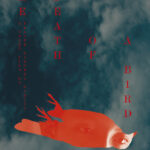
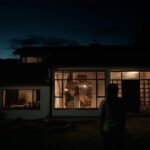
- Logline:
Two lost souls live for a moment the dream of a life that was never theirs, until they hear the call of the river.
Dos almas errantes encuentran refugio en una vida que no les pertenece. Por unos días habitan la calma imposible hasta que el río las llama de regreso.
- Short Synopsis / Sinopsis Corta:
Fabio and Leonor, two lost souls adrift in oblivion, take refuge in a house that isn’t theirs, living for a moment the illusion of a peaceful life that was never theirs, until the river calls, and the dream fades into awakening.
Fabio y Leonor están muertos, aunque aún no lo saben. Dos almas errantes se refugian en una casa ajena y, por unos días, habitan el sueño de una vida tranquila que nunca fue suya. Pero el sueño termina cuando el río los llama para sellar su inevitable destino.
- Synopsis / Sinopsis:
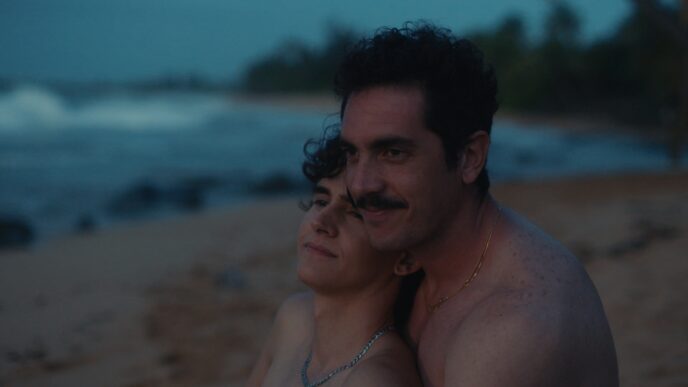
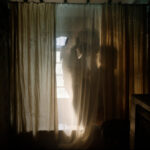
Fabio and Leonor are dead, but they don’t know it yet. Two wandering souls adrift in oblivion, they flee after committing a violent act that would seal their fate. They find shelter in the holiday home of an upper-middle-class family, where for a few days they live the dream of a peaceful life that was never theirs. But every dream brings its awakening, and theirs comes when the river calls to seal their inescapable fate.
Fabio y Leonor están muertos pero aún no lo saben. Dos almas errantes perdidas en el olvido, huyen tras haber protagonizado un hecho violento que selló su destino. Se refugian en la casa de descanso de una familia acomodada donde, por unos días, viven la fantasía de una vida doméstica, tranquila, que nunca les perteneció. Pero todo sueño trae su despertar, y el suyo llega con el llamado del río.
Director’s Biography / Biografía del Director:
FELIPE SÁNCHEZ GARCÍA
Colombia
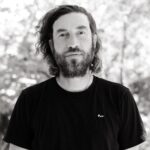
He is a director, DoP, and screenwriter, and the founder of Iceberg Cine. He earned a BA in Cinema from CIC in Buenos Aires and a diploma in Cinematography from the Argentine School of Cinema. He worked at the Argentine production house Tresmilmundos Cine until returning to Colombia in 2016. Since then, he has worked as a DoP for documentaries, public television, and fiction productions.
Director, DF y guionista colombiano, fundador de Iceberg Cine. Es egresado del programa de cine del (CIC) en Buenos Aires, y del programa de dirección de fotografía de (SICA). Trabajó en la productora argentina Tresmilmundos Cine hasta su regreso a Colombia en 2016. Desde entonces se desempeña como DF en proyectos documentales, de televisión pública y de ficción.
- Director’s Statement / Declaraciones del Director:
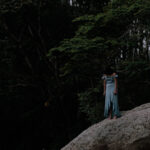
The selective dehumanization of children and adolescents has become a normalized practice, a cruel demand of the macabre games of power. In Colombia, childhood is a disputed territory, and children’s bodies, part of the spoils. Power has commoditized those fragile lives, turning death and disappearance into grim certainties. It is the reign of oblivion, in a land inhabited by ghosts. THE DEATH OF A BIRD is my attempt to listen to those ghosts, to add, from a small corner, to the tireless effort of Colombian cinema to narrate the almost unimaginable realities of our country. It is an act of fidelity to a cinema that dreams of itself as a vessel of memory, joining the chorus of voices calling for justice and accountability. Our film embraces the poetics of the spectral to weave that memory. It seeks to illuminate the collective through the intimate, opening a brief space for contemplation, an instant of radical attention. It offers a sensitive, respectful gaze upon childhood, understood both as a stage of profound vulnerability and as a witness to our society’s deepest wounds. The Death of a Bird distances itself from gratuitous violence and spectacle, and above all from despair. Born of empathy and respect, it suggests that within the simple gestures of caring for another lies a path toward possible alternate futures. Rather than a literal depiction of Colombian violence, the film proposes an intuitive, sensory journey through its wounds and its lingering shadows. The story unfolds without dialogue. Words yield to bodies and breathe, to the friction of light on skin, to the quiet orchestration of the countryside. Gazes, the house, and the land become the narrators. Silence is their language, the silence of death as a voice extinguished, but also the silence that shelters an intimate conversation. We believe in a cinematic space where silence becomes a form of listening, and the off-screen realm an invitation to imagine the unsayable. At the center stands Leonor, a young girl from rural Colombia who lends her body to embody death itself. In doing so, she gives form to a mother, a sister, a river, a fractured country. Leonor is made of luminous contradictions: vulnerable yet strong, executioner and redeemer, love and defiance, the force of liberation. Her choice to guide Fabio toward death is not punishment, but an act of radical tenderness and release. Fabio, in turn, becomes the body of all who are absent: the abandoned children, the denied griefs, the forgotten names, the lost bodies. He is the nation’s wound. Together, these two wandering souls find in a house that is not theirs a purgatory disguised as refuge, a home filled with someone else’s memories, a postcard of what could have been. Ultimately, THE DEATH OF A BIRD is a poem about the healing power of care. Amid violence, precariousness, dispossession, and forgetting, persists the possibility of genuine connection, of tenderness that insists on existing against all odds. It is not an elegy of defeat, but an affirmation of life that filters quietly through the cracks of pain.
La deshumanización selectiva de infancias y adolescencias es una práctica naturalizada. Así lo exigen sin concesión los macabros juegos del poder. En Colombia, la infancia es un territorio en disputa. Y sus cuerpos, parte del botín. El poder ha mercantilizado esos cuerpos frágiles, haciendo de la muerte y la desaparición, ineludibles certezas. El reino del olvido en una patria de fantasmas. LA MUERTE DE UN PÁJARO es mi intento por escuchar a esos fantasmas. De sumar desde un pequeño lugar a la incansable lucha del cine nacional por narrar las realidades casi inimaginables de nuestro país. Abogar por ese cine colombiano que se sueña a sí mismo como un vehículo para la construcción de memoria. Un cine que se une a los gritos de clamor por justicia y reconocimiento de los hechos. Nuestra película apuesta por la poética de lo espectral como elemento para la construcción de esa memoria, e intenta hablar desde lo íntimo para reflexionar sobre lo colectivo; un esfuerzo transparente por abrir un pequeño pero honesto espacio de contemplación, un instante de atención radical; una mirada sensible y respetuosa de la infancia, entendida como un momento de vulnerabilidad de los cuerpos y reflejo de las profundas heridas de nuestra sociedad. LA MUERTE DE UN PÁJARO se aleja de la violencia gratuita y lo efectista, pero sobre todo del pesimismo. La película parte de la empatía y el respeto y encuentra en el retrato de un fugaz pero genuino intento por acceder a una vida doméstica ajena, la idea de que en el amor y el cuidado del otro yace un camino hacia otros posibles futuros. La obra no persigue una representación literal de la violencia colombiana, pero sí un viaje intuitivo y sensorial a sus heridas y fantasmas. La historia se cuenta sin diálogos: la palabra cede el lugar al cuerpo, a la respiración, al roce de la luz sobre la piel, al sonido del campo. Acá hablan las miradas, la casa, el territorio. El silencio es su voz. El silencio perpetuo que trae la muerte da cuenta del fin de una voz única. Del fin del habla. El silencio en la película, en su estado más mínimo, intenta ser el sello de autenticidad de una conversación íntima y auténtica. Apostar con convicción por un espacio cinematográfico donde el silencio sea una forma de escucha; el fuera de campo, una invitación a imaginar lo innombrable. En el centro de este universo está Leonor, una adolescente de la ruralidad colombiana que presta su cuerpo para encarnar la muerte. En el proceso y de esta forma, le da sustancia a una madre, a una hermana, a un río, a un país roto. Leo está llena de hermosas contradicciones: es vulnerable y a la vez capaz de una fuerza extraordinaria; es verdugo y redentora, es amor, es impugnación, es fuerza de liberación. Su decisión de guiar a Fabio hacia la muerte no es castigo, sino un acto radical de amor y liberación. Fabio, a su vez, es el cuerpo de todos los que no están. En él viven todos los niños abandonados, todos los duelos negados, todos los nombres olvidados, todos los cuerpos perdidos. Es la herida de la nación. Estas dos ánimas errantes encuentran en una casa que no les pertenece, un purgatorio vestido de refugio. Un hogar lleno de recuerdos ajenos, una postal de lo que pudo haber sido.
- Overview / Ficha técnica:
Script / Guión: Felipe Sánchez García
Producer / Producción: Sergio Tapias Suárez
Executive Producer / Productor Ejecutivo: Felipe Sánchez García, Lina Rincón Barrios, Sergio Tapias Suárez
Co-Producer / Co-Productor: Felipe Sánchez García, Lina Rincón Barrios
Director / Director: Felipe Sánchez García
DoP & Camera / Dirección de Fotografía y Cámara: Diego Galvis
Art Director/ Dirección de Arte: Gina Ospina
Make-Up / Maquillaje: Natalia Bohórquez
Costume / Vestuario: Gina Ospina
Film Editor / Montaje: Juan Sebastián Quebrada
Sound / Sonido Directo: María Alfaro
Sound Direction / Dirección de sonido: Juana Lugo, Simón Jaramillo
Original Music / Música Original: Juan Pablo Luna
Cast / Elenco: Leo: Valeria Campos; Fabio: Juan Manuel Ochoa; Clarinetista: Laura Arias
Casting: Sergio Pulido Velásquez
Distribution / Distribución: FilmsToFestivals
- Festivals and Awards / Festivales, Premios y Nominaciones:
– 42° Warsaw International Film Festival; 10/2026; Poland
- Links:
Trailer: https://vimeo.com/1148938161
Social Network:
https://www.instagram.com/sg.felipe
https://www.instagram.com/tapiassergio
https://www.instagram.com/icebergcine
https://www.instagram.com/postalesmedia
https://instagram.com/films.to.festivals
https://facebook.com/films2festivals
www.twitter.com/films2festivals
- Contact / Contacto:
Gisela Chicolino
FilmsToFestivals Distribution Agency